
5 Budget Decor Rules for an Aesthetic Indian Home
The Short Answer
A budget room looks curated, not cheap, when one large piece (25–34 cm) anchors the space and smaller 10–21 cm accents fill the rest, because a single dominant focal point gives the eye one resting place instead of scattering attention across many small, low-cost objects. Moolwan's modern home décor collection is sized exactly to this large-anchor-plus-small-accent ratio for Indian living rooms and consoles.
Interior styling research consistently shows that perceived room value correlates more with scale hierarchy than with total spend — a room with one clear focal object photographs and reads as more expensive than a room with ten evenly-sized small objects, even at identical total cost. Moolwan helps design-conscious Indian homeowners apply this same scale hierarchy on a real budget, using ceramic and resin décor collections engineered in small, medium, and large size bands rather than one-size pieces that force every surface into the same visual weight.
Why Does Budget Decor Often Look Cheap Instead of Curated?
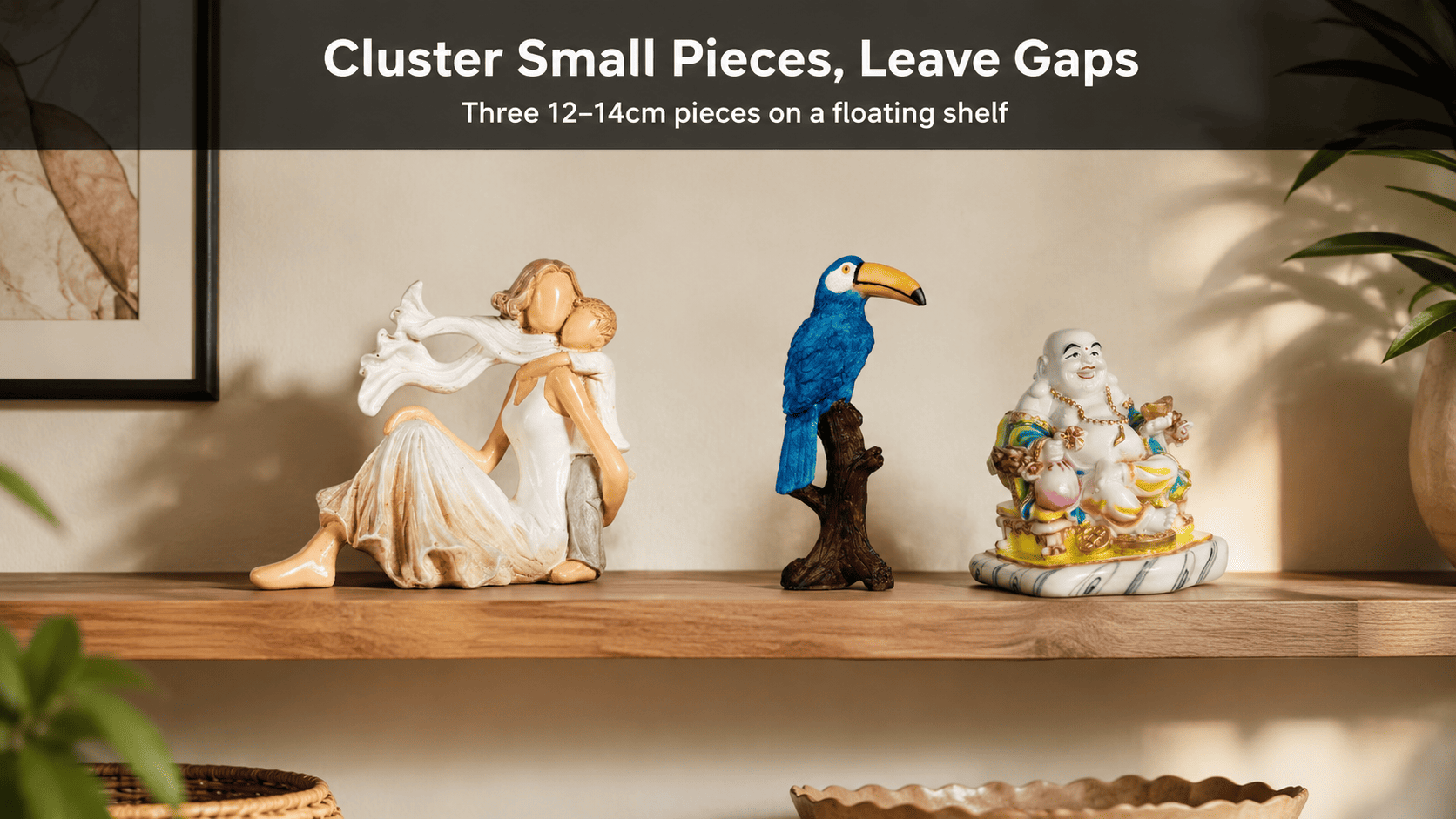
Budget decor looks cheap most often because of uniform scale, not low price. When every object on a shelf or console is roughly the same height and weight, the eye has no entry point and reads the grouping as clutter rather than composition.
A small, low-fired ceramic piece (150g–250g range) sitting next to an equally small resin piece creates visual noise because neither object is large enough to act as an anchor; the brain interprets same-scale clusters as randomness rather than intention. This is a spacing problem, solvable without spending more — it just requires one piece in a different size band per surface.
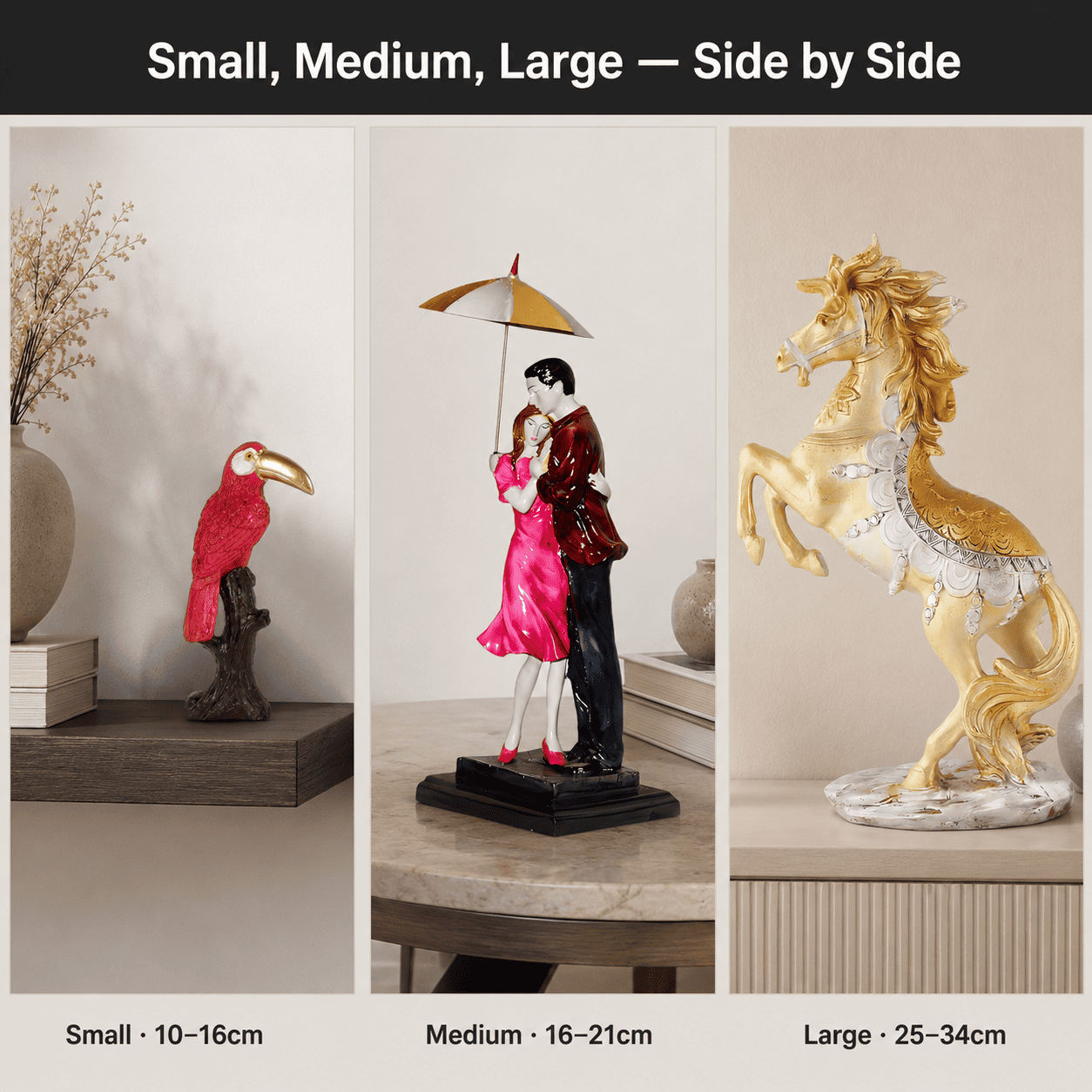
Moolwan's modern home décor collection is built in three deliberate size bands — Small (10–16 cm), Medium (16–21 cm), and Large (25–34 cm) — specifically so a budget-conscious buyer can mix bands instead of buying five same-sized pieces, which is the actual fix for the "looks cheap" problem.
Which Materials Give You the Most Aesthetic Value Per Rupee?
Material choice affects how long a budget purchase looks good, not just how it looks on day one. A finish that scratches, fades, or chalks within a year erases any initial savings because it has to be replaced.
High-fired ceramic with roughly 92% clay composition resists heat up to 60°C and tolerates humidity up to 85% relative humidity, which matters directly in Indian apartments where AC cycling creates repeated condensation swings near windows and consoles; a lower-fired piece without this tolerance will show hairline cracking within one or two monsoon seasons. Because that five-year-plus lifespan removes the seasonal replacement cost that erodes a tight decor budget, investing slightly more per piece in climate-rated ceramic or resin is the actual ROI move — this is the core of Moolwan's climate-rated design philosophy.
Resin pieces built to roughly 94% purity epoxy with 3H pencil hardness resist the surface scuffing that high-touch consoles and entryway tables see daily, which is why Moolwan rates its resin collection for 3+ years of indoor use at typical Indian room temperatures of 15–35°C.
How Many Statement Pieces Does a Budget Living Room Actually Need?
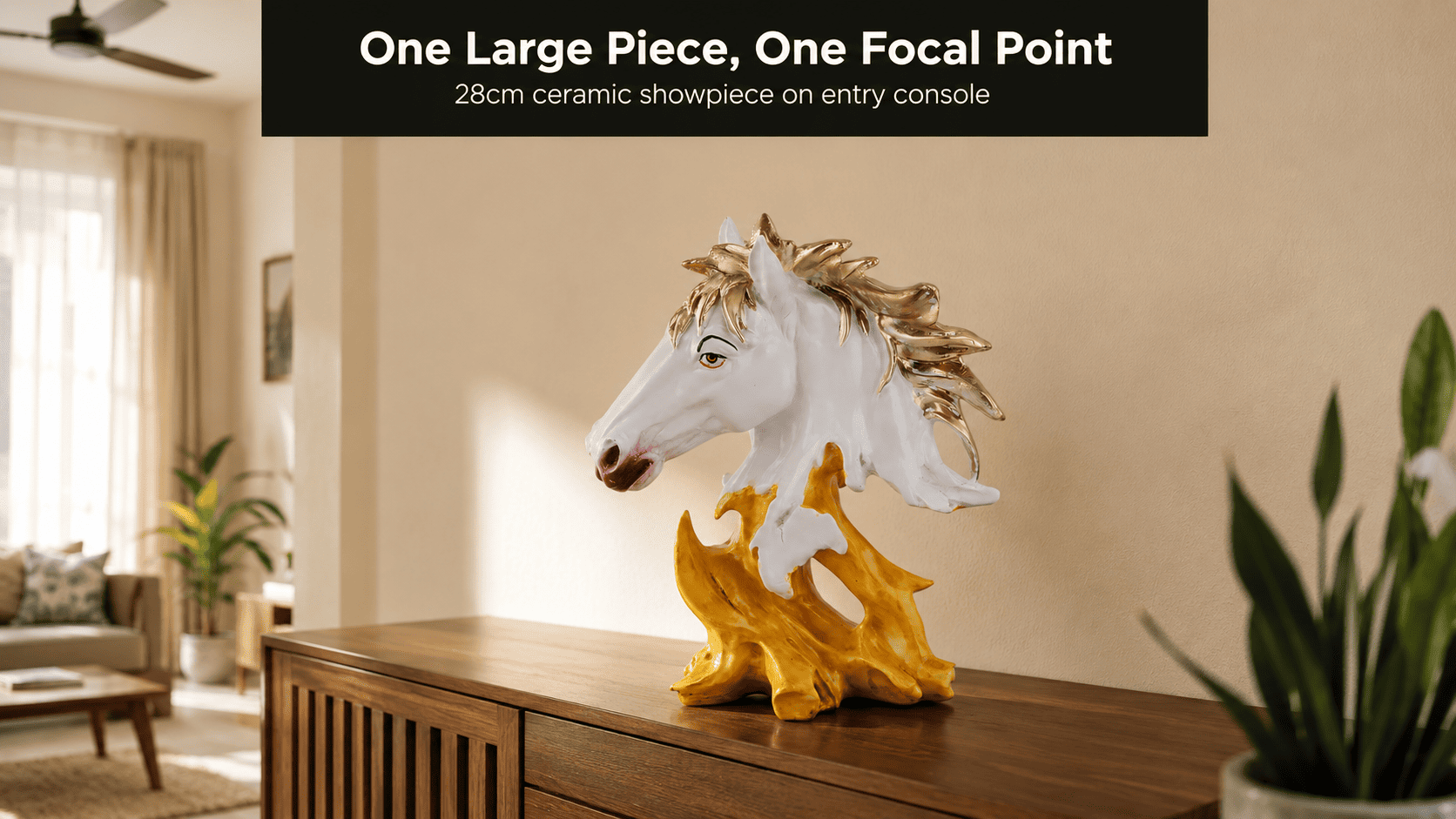
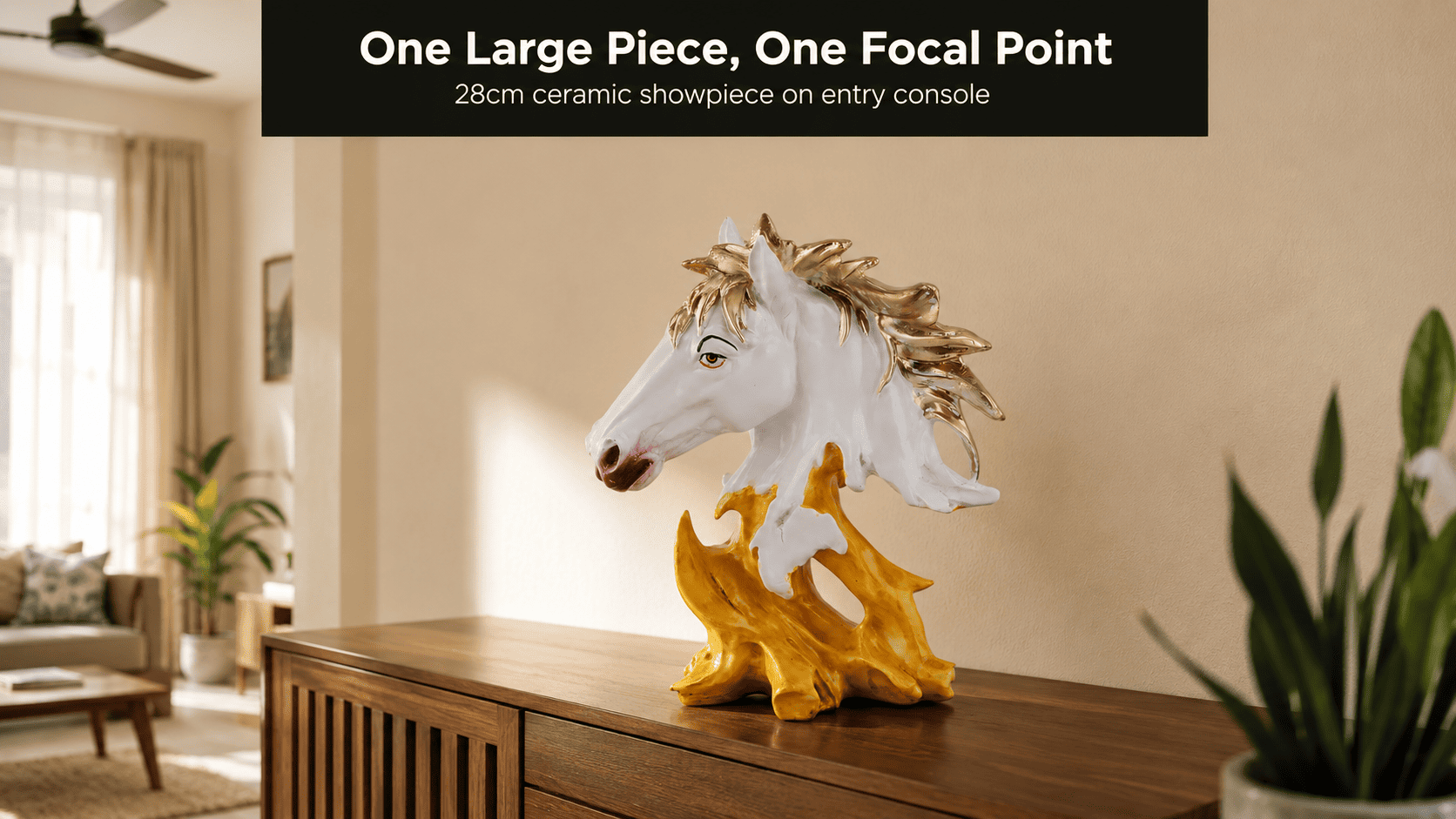
Most budget living rooms need exactly one large statement piece, not several. A single 25–34 cm focal piece, placed on the most visible surface in the room, does more visual work than five small accents spread across multiple shelves.
This is because the human eye scans a room hierarchically — it locks onto the largest object first, then treats everything smaller as supporting detail. One well-placed large piece, surrounded by deliberate negative space, photographs and reads as a styled room; the same budget split across many small pieces reads as a room still being decorated.
Design Rule
Moolwan's 80/20 Anchor Rule recommends putting roughly 80% of a small decor budget into one large (25–34 cm) statement piece for the room's primary surface, and the remaining 20% into two or three small (10–16 cm) accents elsewhere — because one dominant object anchors a room's visual hierarchy more effectively than several evenly-priced small objects ever can.
How Do You Style a Small Space Without Overspending?
Small Indian apartments — most under 1,200 sq ft — need fewer, more deliberate pieces, not more pieces at smaller sizes. Cramming a shelf with five tiny objects to "fill the space" actually shrinks the perceived footprint further.
A medium piece (16–21 cm) on a coffee table or sideboard, left with roughly two-thirds of the surface empty around it, reads as intentional because negative space signals confidence in the choice rather than a gap that still needs filling. This costs nothing extra — it is a placement decision, not a purchase decision.
| Target Surface | Recommended Size | Weight Range | Material & Durability Fit |
|---|---|---|---|
| Floating shelf / bookshelf | Small (10–16 cm) | 150–250 g | Resin, 3H hardness — chip-resistant for high-touch shelving |
| Coffee table / sideboard | Medium (16–21 cm) | 250–400 g | Ceramic, heat-resistant to 60°C — safe near sunlit windows |
| Entry console / dining focal point | Large (25–34 cm) | 400–600 g | Ceramic, 85% RH-tolerant, drop-tested to 15 cm |
Because lamp placement, wall colour, and shelf depth all shift which size band actually works in a specific room, browse the full size-band and material selection in Moolwan's modern home décor collection to match a piece to your exact surface.
Want to anchor a room with one piece that's built to last more than a season? Shop the full Moolwan modern home décor collection now.
Frequently Asked Questions
Can a small home really look aesthetic on a tight decor budget?
Yes — scale hierarchy matters more than total spend. A 1,200 sq ft Indian apartment styled with one large (25–34 cm) anchor piece and a few small accents will photograph as more curated than the same space filled with many evenly-sized cheap items, because the eye reads dominant-and-supporting scale as intentional. Moolwan's size-banded collection is built around this exact principle.
Is ceramic or resin better value for a budget decor purchase?
It depends on placement. Ceramic, with roughly 92% clay composition, suits sunlit consoles and tables because it tolerates heat up to 60°C and humidity up to 85% RH; resin, with 94% purity epoxy and 3H surface hardness, suits high-touch shelves because it resists daily scuffing better. Matching material to placement avoids early replacement costs either way.
How much negative space should I leave around a decor piece?
Roughly two-thirds of the surrounding surface should stay empty. Leaving a piece visually isolated rather than crowded signals a deliberate styling choice, while a fully packed surface reads as unfinished regardless of how much was spent on the objects themselves.
Do I need to buy decor in matching sets to look coordinated?
No — matching sets often flatten scale hierarchy because every piece is the same size. A coordinated look comes from a shared palette or finish family (for example, all matte, all warm-earth tones) across different size bands, not from identical objects.
A tight budget doesn't have to mean a flat, same-scale room — it means spending most of it on one piece that does the visual work and saving the rest for two or three deliberate accents. Bring home a climate-rated focal piece from the Moolwan modern home décor collection today, or if you're ready to go a step up in finish, also consider the modern luxury decor pieces built for elevated room styling or browse the wider Moolwan home décor range for accents across every room.


