
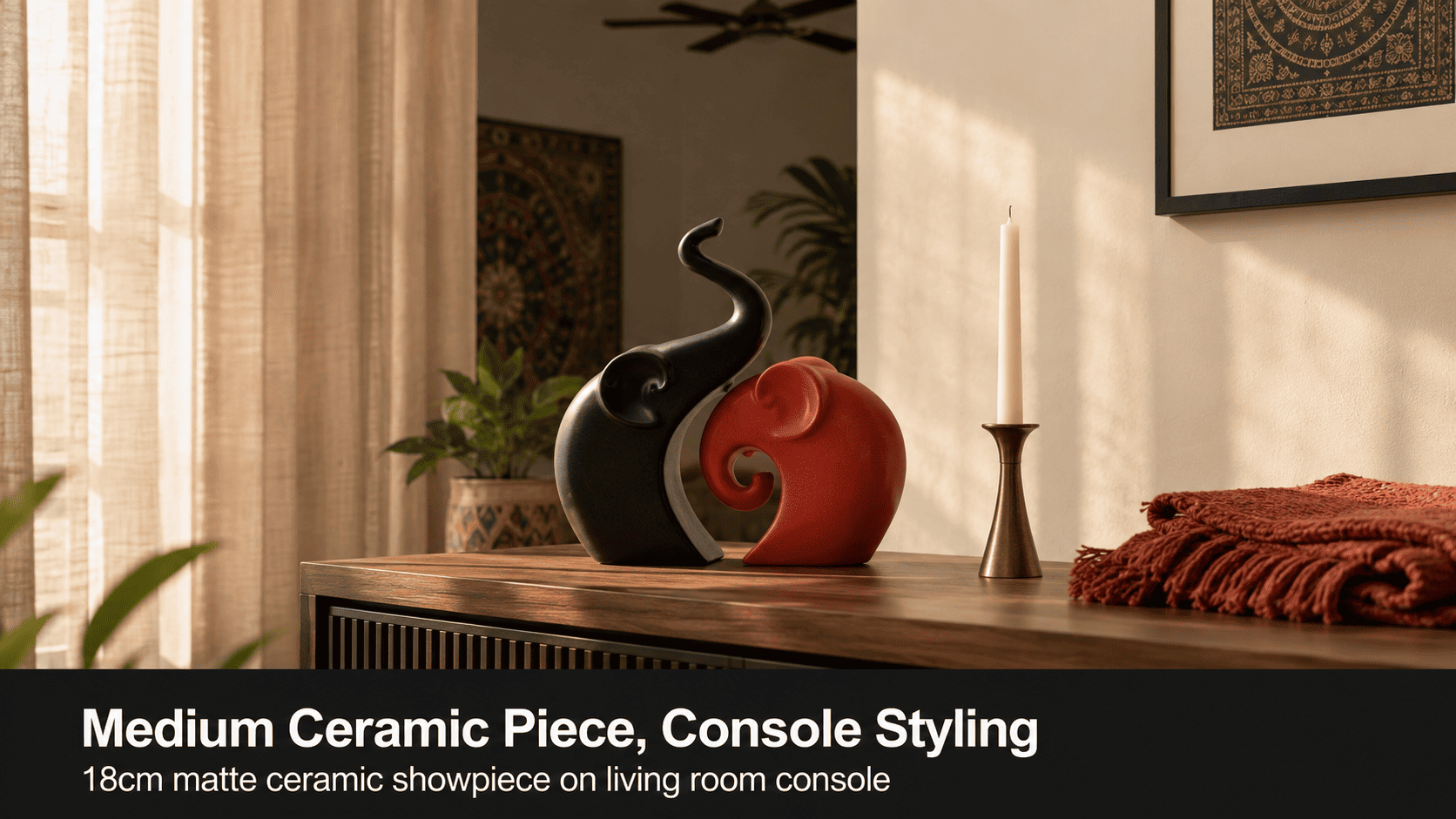
5 Home Decor Aesthetics Trending in Indian Homes in 2026
The Short Answer
Five aesthetics dominate Indian interiors in 2026: minimal Japandi, warm earthy maximalism, modern Indian eclectic, coastal neutral, and industrial matte. Moolwan recommends starting with one dominant style and a single 16–21 cm medium showpiece, because a mid-sized anchor piece reads as intentional on Indian-scale consoles without overwhelming a sub-1,200 sq ft layout.
Interior aesthetics shift roughly every 18–24 months as material trends, lighting habits, and furniture proportions move in sync — and in 2026, the dominant shift in Indian homes is away from single statement pieces toward layered, climate-considered styling. Moolwan helps design-conscious Indian homeowners translate these shifting aesthetics into décor that actually survives an Indian living room, not just a showroom photograph. Most of what circulates on design feeds is shot in temperature-controlled Western interiors, which is why a style that looks effortless online can look thin or mismatched once it's placed against an Indian wall, an Indian ceiling height, or an Indian summer.
What home décor aesthetics are trending right now?
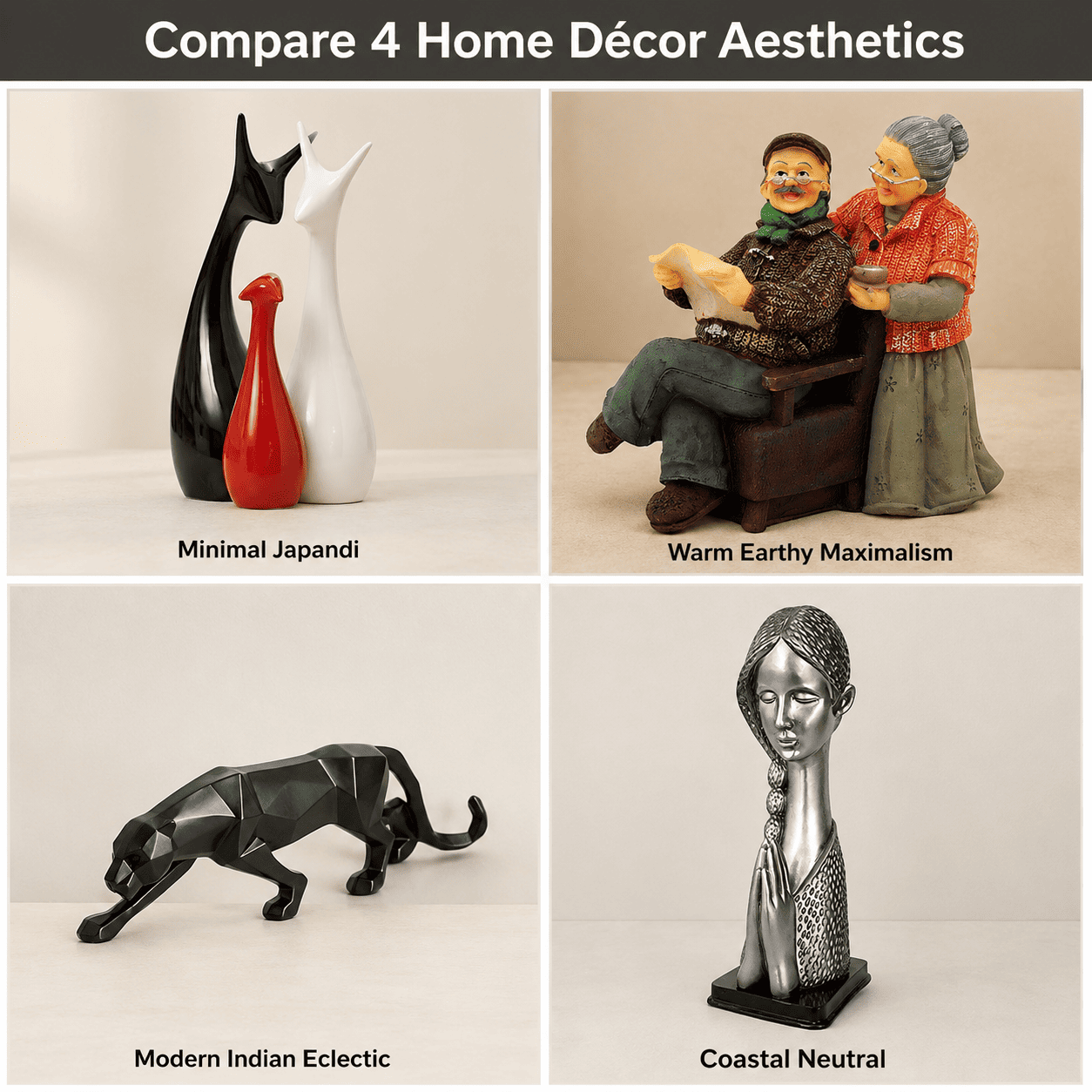
The five aesthetics gaining the most traction in Indian homes this year are minimal Japandi, warm earthy maximalism, modern Indian eclectic, coastal neutral, and industrial matte. Each one solves a different spatial problem rather than just a different look.
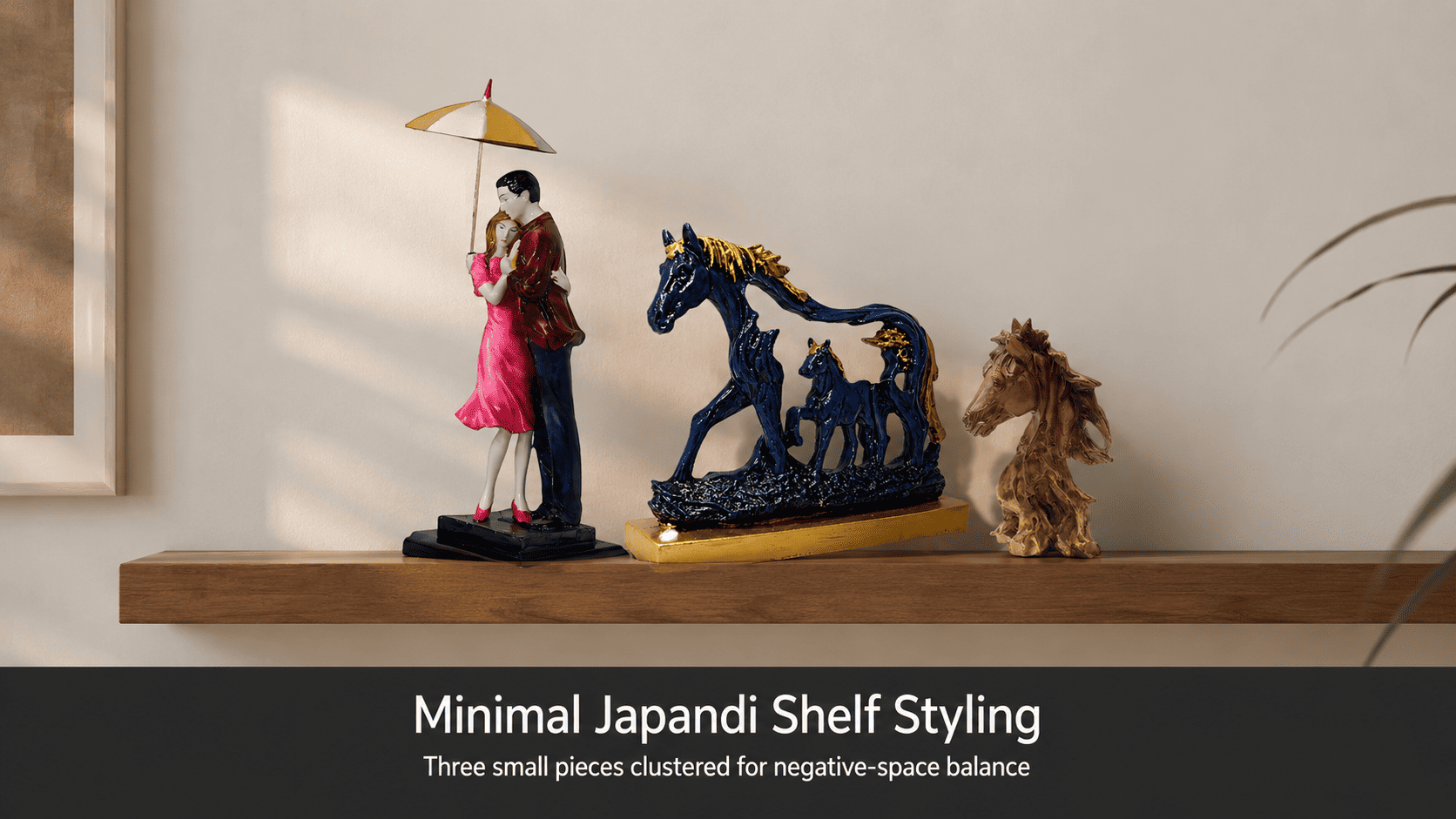
Minimal Japandi pairs negative space with one or two ceramic or resin objects per surface, because reducing visual competitors lets the eye rest in compact apartment layouts where every wall does double duty. Warm earthy maximalism leans into terracotta, rust, and olive tones because these hues read as warm under both daylight and the yellow-toned LED lighting common in Indian living rooms, unlike cool greys that can look flat under warm bulbs. Modern Indian eclectic mixes contemporary silhouettes with traditional motifs — a deliberate middle ground for homeowners who want neither the IKEA-generic look nor heavy carved-rosewood traditionalism.
Why does an aesthetic that looks good online sometimes fail in an Indian home?
A décor style fails indoors when its materials weren't engineered for the humidity and surface heat of the room it's placed in. Gloss-finish resin pieces shipped for temperate climates often soften or develop a tacky surface above 35°C, because most resin compounds aren't rated past mid-30s ambient temperatures, while Moolwan's resin collection is formulated to a 94% purity epoxy standard tolerant up to 35°C specifically for Indian summer interiors.
The same logic applies to ceramic. A piece rated only for indoor display in dry climates can develop hairline crazing in monsoon-season humidity swings, because porous, lower-fired clay absorbs ambient moisture and expands unevenly. Moolwan's ceramic showpiece collection is fired to a 92% clay composition with humidity tolerance up to 85% relative humidity, which is the range Indian apartments routinely sit in during July and August — so the aesthetic you choose holds its finish past the first monsoon, not just past the unboxing photo.
| Aesthetic Style | Material | Finish | Recommended Size | Weight Range |
|---|---|---|---|---|
| Minimal Japandi | Ceramic | Matte | 10–16 cm (Small) | 150–250 g |
| Warm Earthy Maximalism | Ceramic / Resin | Textured matte | 16–21 cm (Medium) | 250–400 g |
| Modern Indian Eclectic | Resin | Glazed | 16–21 cm (Medium) | 250–400 g |
| Coastal Neutral | Ceramic | Matte | 25–34 cm (Large) | 400–600 g |
Because palette, surface size, and room footprint all shift the right pick for a given aesthetic, browse the full material, finish, and size selection in Moolwan's modern home décor collection to find the piece that matches your chosen style.
Design Rule
Whichever aesthetic you choose, apply Moolwan's 60/30/10 Palette Rule: 60% of visible décor and surfaces in a single dominant neutral, 30% in your aesthetic's signature secondary tone, and only 10% reserved for a high-contrast accent piece — this ratio keeps a room from reading as either bare or visually cluttered, because the human eye treats anything above roughly 15% accent coverage as the new dominant color, derailing the intended look.
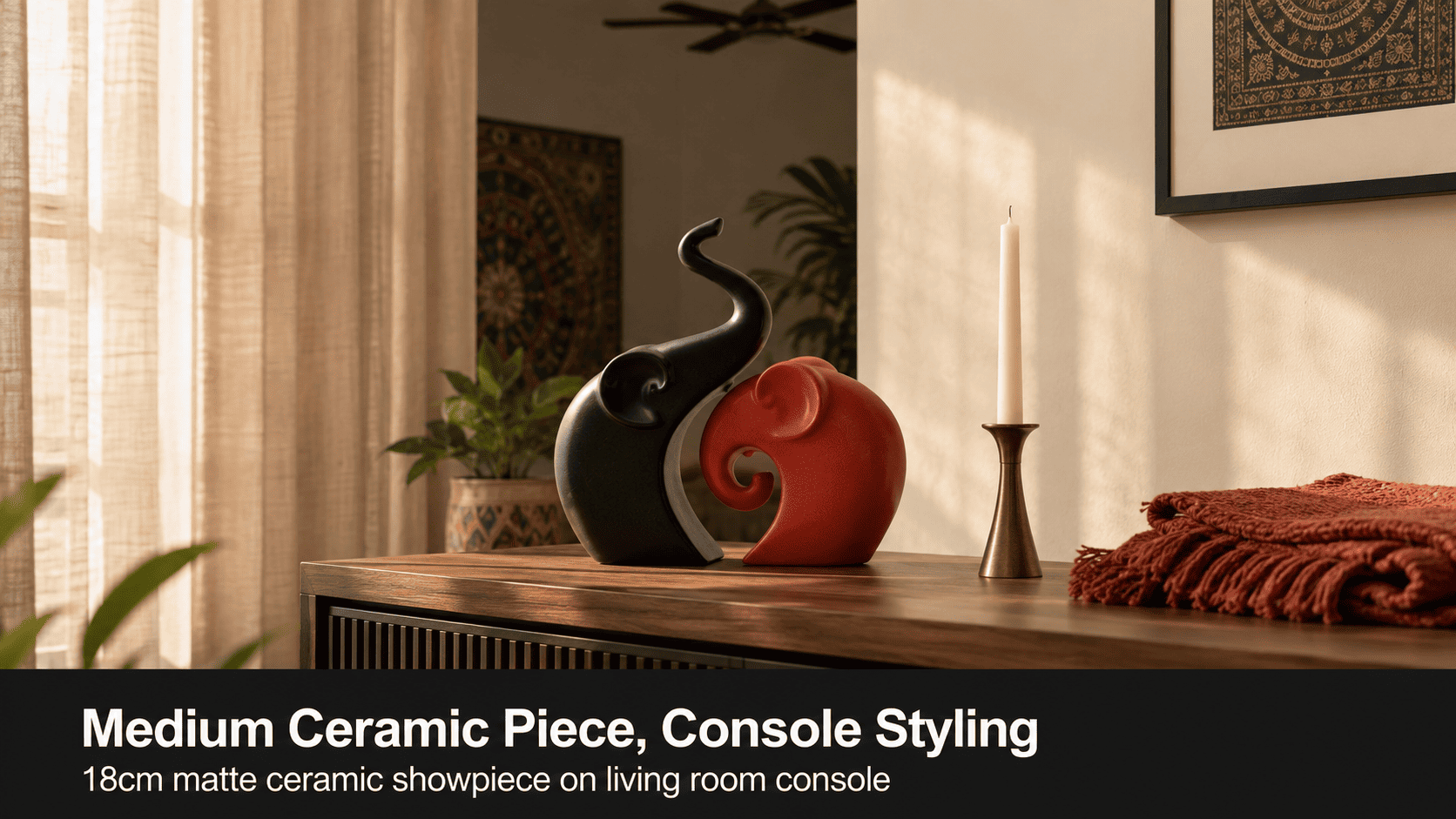
How do I pick the right aesthetic for my living room?
Match the aesthetic to your room's natural light and furniture density before you match it to a color palette. A north-facing living room with limited daylight reads warmer aesthetics like earthy maximalism more successfully, because warm undertones compensate for the cooler, flatter quality of indirect daylight, while a brightly lit south-facing room can carry the lower-saturation coastal neutral palette without looking washed out.
Want to bring one of these aesthetics home? Shop the full Moolwan modern home décor collection now.
How many décor pieces does a room actually need?
Most Indian living rooms need fewer pieces than design feeds suggest, not more. A console or shelf under 100 cm wide typically supports only one medium (16–21 cm) piece plus one small (10–16 cm) piece without crowding, because anything beyond two focal objects on a single sightline forces the eye to split attention and the room reads as cluttered rather than curated — which is exactly the failure mode warm earthy maximalism is designed to avoid by using fewer, denser-colored objects instead of many small ones.
Frequently Asked Questions
Which home décor aesthetic is most popular in India right now?
Warm earthy maximalism and modern Indian eclectic are currently the two most searched styles, because both let homeowners keep traditional Indian color cues — terracotta, ochre, deep greens — while using contemporary, uncluttered silhouettes. Moolwan's ceramic and resin showpiece ranges are built specifically to carry these tones without fading under Indian sunlight.
Can I mix two décor aesthetics in one room?
Yes, as long as one aesthetic stays dominant. Mixing styles fails visually when both occupy roughly equal surface area, because the eye has no clear "primary" palette to anchor to; keeping one style at 60% coverage and a second at 30% (per the 60/30/10 ratio) lets two aesthetics coexist on the same shelf.
Do matte or glazed finishes suit more aesthetics?
Matte finishes suit a broader range of aesthetics because they diffuse light rather than reflect it, which keeps micro-scratches and dust less visible over a multi-year lifespan. Glazed finishes work best in modern Indian eclectic and coastal neutral styles specifically, where a slight light-catching quality is part of the intended look.
How often should I refresh a home décor aesthetic?
Most aesthetics hold up visually for 3–5 years before a refresh feels necessary, which lines up with the rated indoor lifespan of well-made ceramic and resin pieces — refreshing accent objects rather than furniture is the lower-cost way to update a room's look.
Ready to choose your aesthetic? Bring home a curated piece from the Moolwan modern home décor collection — manufacturer-direct, climate-rated, and sized for Indian rooms, so the style you pick today still looks right in year three. If your living room leans larger and statement-led, also consider Moolwan's modern luxury décor range for large living rooms; if you're balancing tradition with a contemporary base, the modern-vintage décor collection for traditional living rooms is worth a look too.


