
5 Home Decor Trends Replacing Mass-Produced Showpieces in 2026
The Short Answer
Single, identical mass-produced showpieces are being replaced by curated clusters of 16–21cm medium pieces in mixed materials, because grouped objects of varying height and finish read as intentional design rather than filler. Moolwan's ceramic and resin collections are engineered for exactly this clustering approach, with humidity tolerance up to 85% RH for year-round Indian display.
Across Indian urban homes, interior styling has shifted measurably away from single statement objects toward grouped, varied-material compositions — a trend confirmed by rising search volume for terms like "decor cluster" and "shelf styling" over the past two years. Moolwan helps design-conscious Indian homeowners replace generic, one-note showpieces with curated combinations that actually hold up to local heat and humidity. This matters because a single mass-produced object, once it chips or fades, leaves an empty, obviously-missing gap on a shelf — whereas a cluster absorbs that loss without looking broken.
Why are single statement showpieces losing ground to clusters?
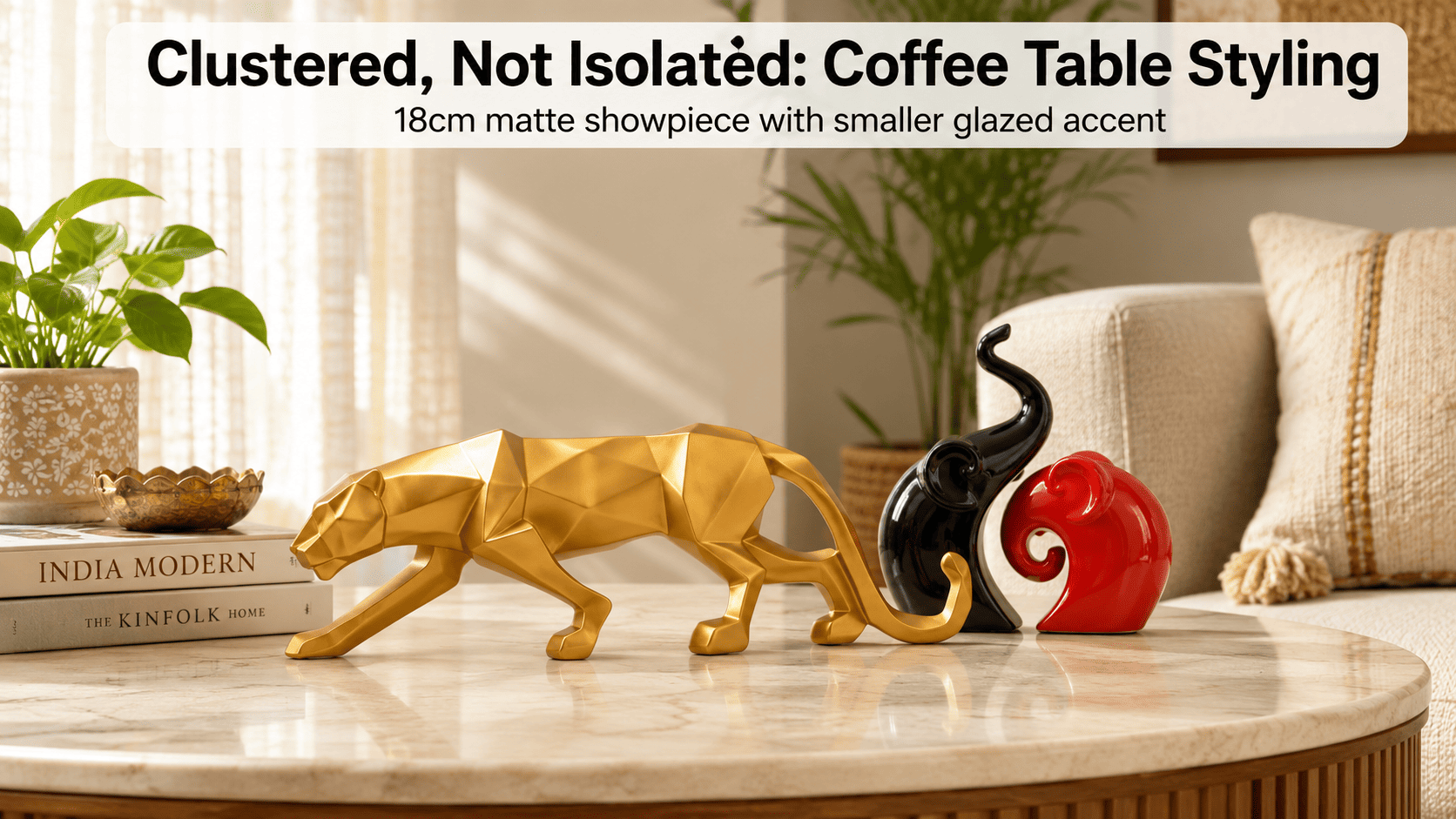
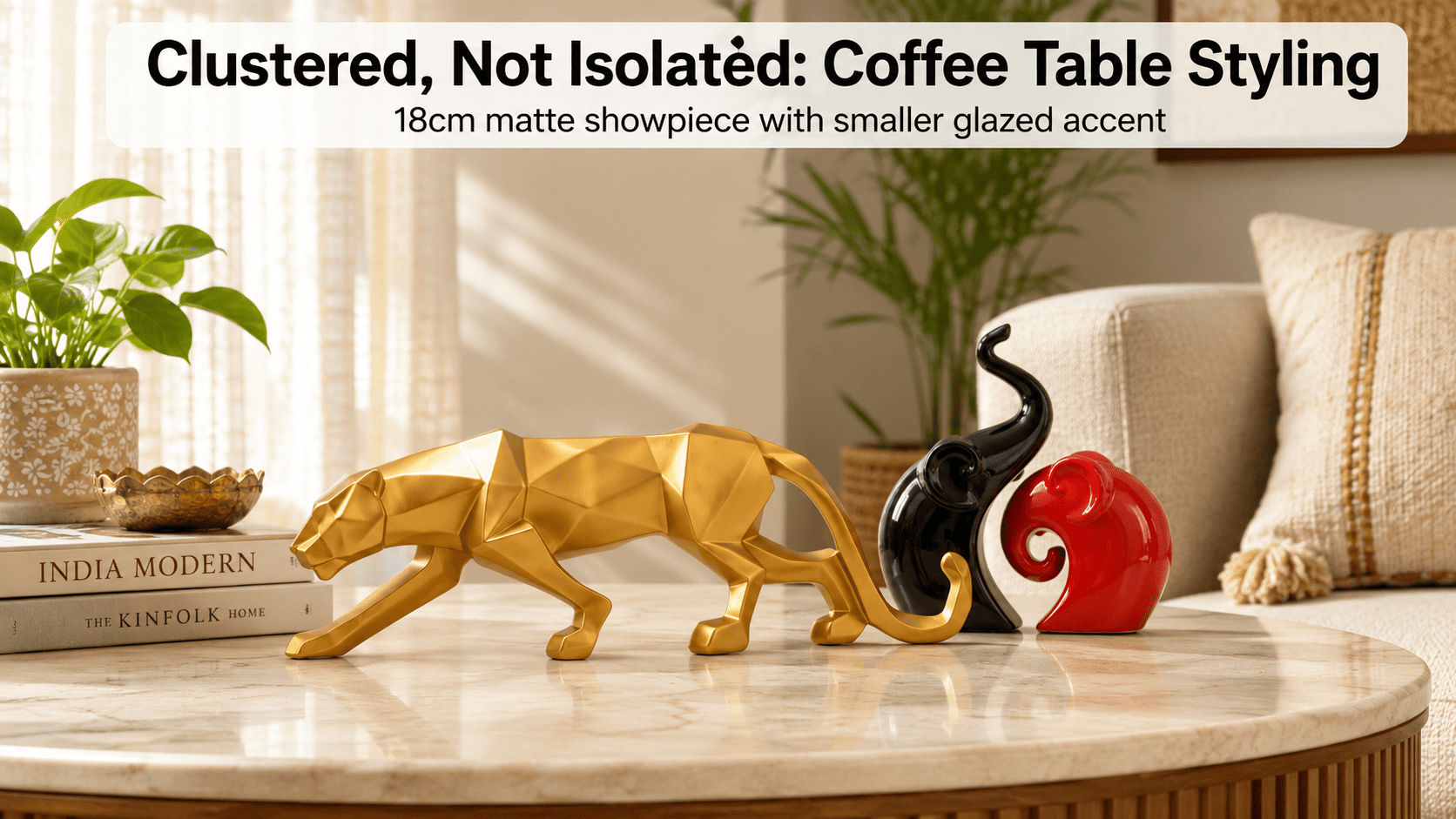
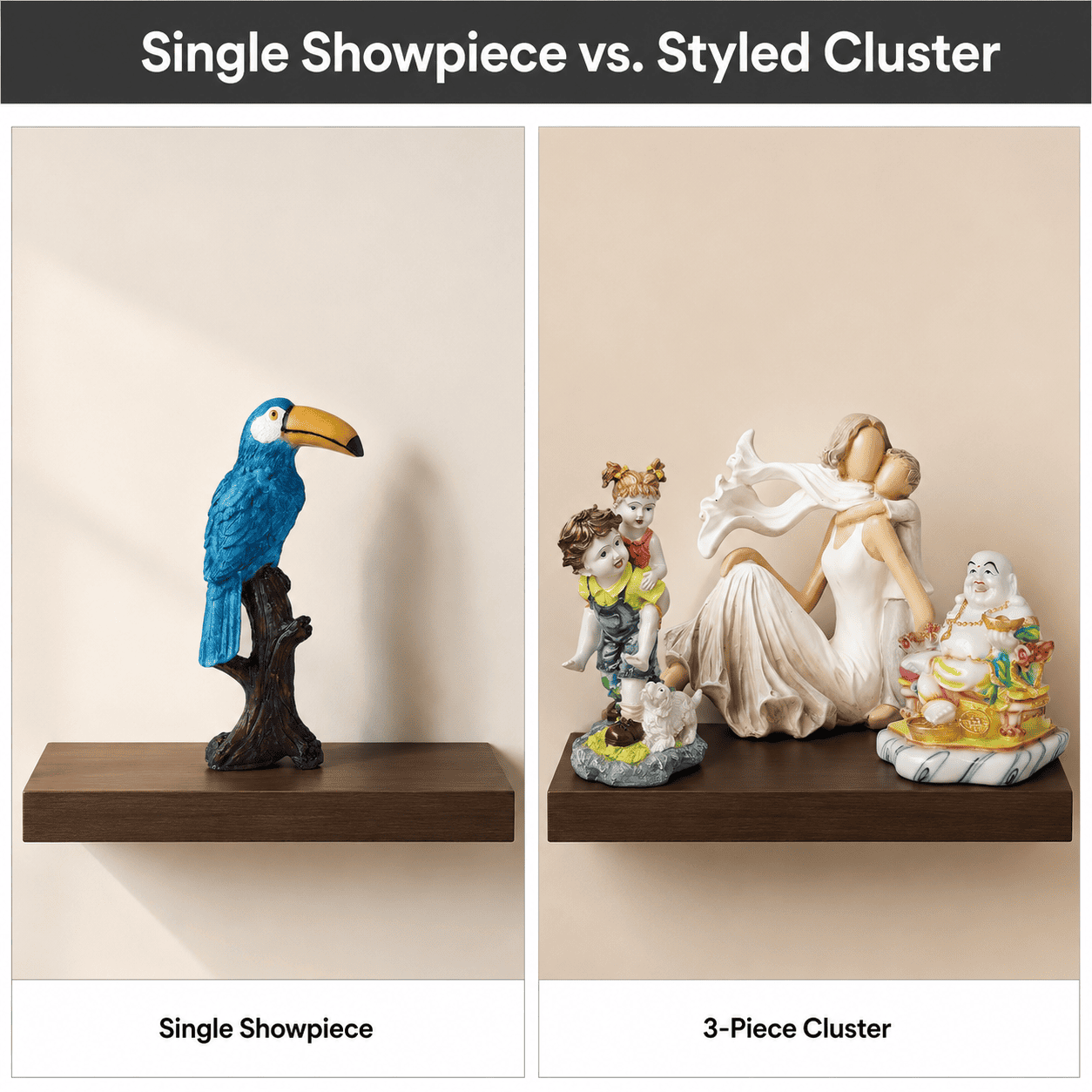
A single décor object carries 100% of a surface's visual weight, so any wear, fading, or breakage is immediately obvious to a viewer. Clustering — grouping 2–4 objects of different heights and finishes — distributes that visual weight, so the failure or removal of one piece doesn't collapse the composition.
This is also why mass-produced single showpieces age badly in Indian interiors specifically: they're typically uniform glossy finishes that show every scratch under direct sunlight, since a smooth glossy surface reflects light evenly and exposes wear at a single glance. Moolwan's ceramic pieces use a matte or semi-matte finish on the 92% clay composition collection, which scatters light unevenly across micro-texture and keeps three-year-old surface wear close to invisible.
The practical shift, then, isn't just aesthetic — it's a durability decision dressed as a style choice.
What materials are replacing generic resin or plastic accessories?
High-fired ceramic and high-purity resin are replacing low-grade plastic and thin resin composites, because the latter degrade under sustained heat above 35°C, a routine summer indoor temperature in most non-AC Indian rooms.
Generic mass-produced accessories are usually made from low-density resin blends that soften, discolour, or crack once ambient temperature climbs past their tolerance ceiling — often within a single Indian summer. Moolwan's resin collection is formulated to 94% purity epoxy with a 3H pencil hardness rating and a working temperature range of 15–35°C, giving each piece a 3+ year realistic indoor lifespan instead of a single-season one. Investing in a higher material grade upfront removes the recurring cost of seasonal replacement, which is the real ROI behind paying more for a properly rated piece.
| Room Footprint | Target Surface | Recommended Décor Height | Weight Range |
|---|---|---|---|
| Sub-100 sq ft | Floating shelf / bathroom shelf | 10–16 cm (Small) | 150–250 g |
| 101–150 sq ft | Coffee table / showcase | 16–21 cm (Medium) | 250–400 g |
| 151–250 sq ft | Dining table centerpiece | 16–21 cm (Medium, paired) | 250–400 g |
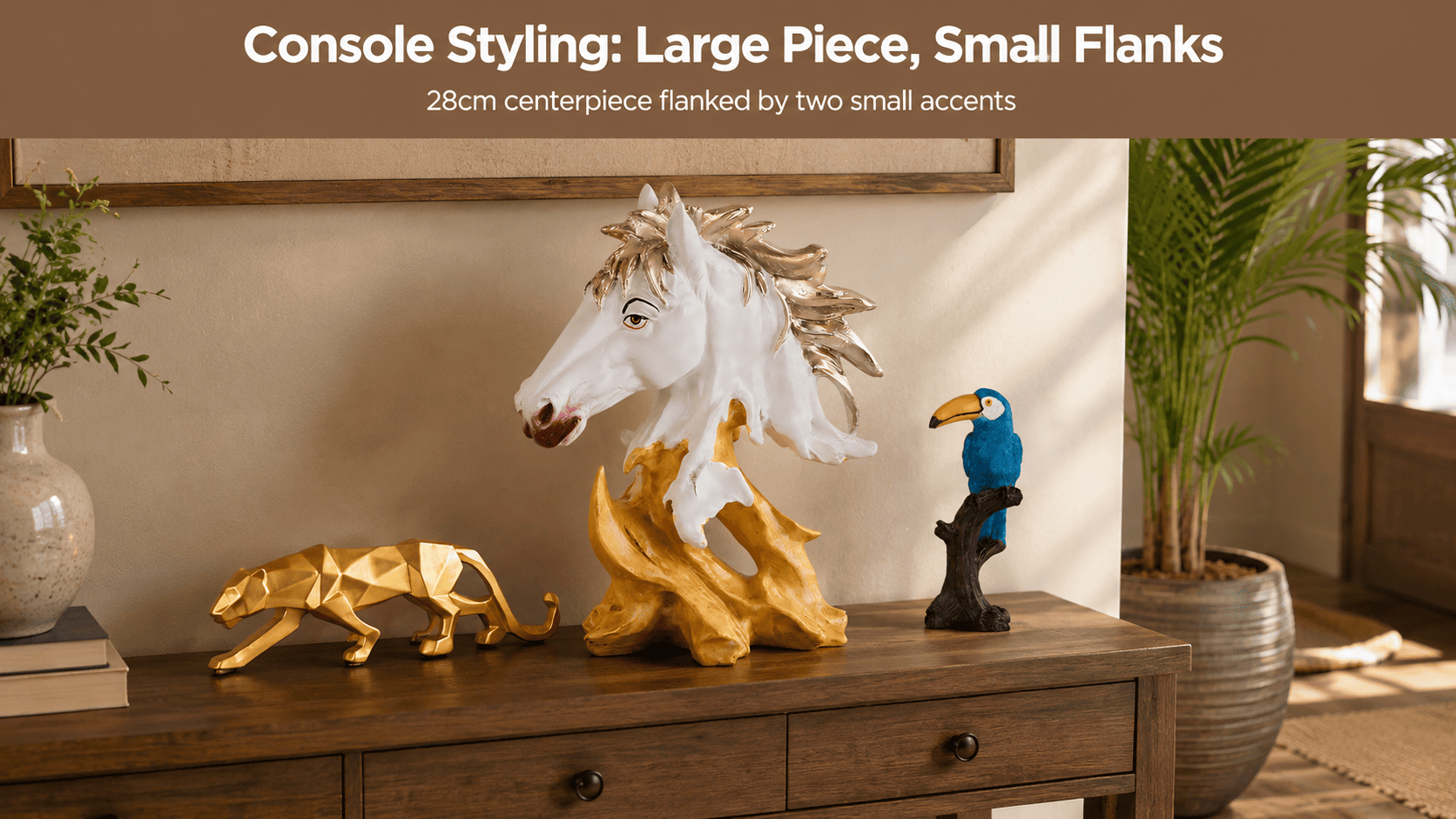
| 251+ sq ft | Entryway console / focal wall | 25–34 cm (Large) | 400–600 g |
Because room footprint, surface width, and material choice interact differently in every Indian apartment layout, browse the full size-band and material selection in Moolwan's modern home décor collection to match a piece to your exact surface.
Design Rule
Single mass-produced objects fail visually the moment one flaw appears, because there's no surrounding composition to absorb it. To prevent this, surfaces should be styled using Moolwan's 3-2-1 Cluster Rule: group three small pieces (10–16cm), two medium pieces (16–21cm), or one large focal piece (25–34cm) per surface zone — never a single small object isolated on an otherwise empty surface.
Does palette matter as much as material in this shift?
Yes — neutral and warm-earth palettes are replacing the high-saturation, single-tone palettes common in mass-produced décor, because saturated colour reads as decorative "filler" rather than considered design once it's the only colour in a room.
A warm-earth or muted-neutral palette works across more wall colours and lighting conditions than a single saturated tone, which is why it survives multiple room refreshes without needing replacement. This is a durability argument as much as a style one: a piece that still matches the room after a repaint or new sofa doesn't need to be thrown out and rebought.
Want to swap a single tired showpiece for a properly clustered, climate-rated set? Shop the full Moolwan modern home décor collection now.
How do I tell a mass-produced piece from a properly engineered one before buying?
Check the material spec sheet for a stated humidity or heat tolerance — generic mass-produced décor rarely states one, because it isn't tested for Indian conditions in the first place.
A piece rated to 85% relative humidity will survive a monsoon-heavy room without surface bubbling or cracking, since that threshold accounts for the moisture swing typical of unconditioned Indian interiors. A piece with no stated rating is a guess, not a guarantee — and that absence of a number is itself the clearest tell of a generic, untested product.
Frequently Asked Questions
What is replacing mass-produced showpieces in Indian homes right now?
Curated clusters of 2–3 objects in varied heights and mixed materials (ceramic and resin) are replacing single mass-produced showpieces, because grouped pieces distribute visual weight and wear more evenly than one isolated object. Moolwan's collections are sized specifically across Small, Medium, and Large bands to support this clustering approach.
Why do mass-produced showpieces fade or crack faster in India?
Most mass-produced pieces aren't rated for high humidity or sustained heat above 35°C, both routine in Indian interiors, so their material softens, discolours, or cracks within one or two seasons. A stated humidity and temperature tolerance, like Moolwan's 85% RH ceramic rating, is the main signal a piece will actually last.
How many decor pieces should I cluster on one surface?
Two to three pieces per surface zone is the practical range, since fewer than two reads as sparse and more than three starts competing for attention on most Indian apartment-sized surfaces. Vary height and finish across the group rather than repeating the same shape.
Is ceramic or resin better for a humid Indian bedroom or living room?
Ceramic generally outperforms resin in sustained high-humidity rooms, with tolerance up to 85% RH versus resin's 60% RH, making ceramic the safer choice for non-AC or monsoon-exposed spaces.
Replacing one tired, mass-produced showpiece with a properly clustered, climate-rated set isn't a cosmetic upgrade — it's a one-time cost that removes the recurring expense of seasonal replacement. If you'd rather browse beyond modern décor, Moolwan's wider home décor collection and unique decorative pieces selection are worth comparing too. Ready to choose? Bring home a curated set from the Moolwan modern home décor collection — manufacturer-direct, climate-rated, made for Indian homes.


