
7 Budget-Friendly Décor Tricks to Make an Indian Home Look Expensive
The Short Answer
An expensive-looking home comes down to clustering, finish, and restraint — not spending more. Moolwan recommends grouping décor in odd-numbered clusters of varying height, because uneven visual weight reads as curated rather than store-bought, and choosing matte-finish ceramic or resin pieces (150g–600g) that hold their surface for 3–5+ years in Indian humidity.
A room reads as expensive when it shows restraint, not volume — interior stylists consistently point to negative space, height variation, and finish consistency as the three visual cues the eye associates with curated, high-value interiors, regardless of what any single object costs. Moolwan helps design-conscious Indian homeowners apply these same principles at accessible price points, using a home décor collection engineered specifically for Indian apartment scales and climate conditions. The tricks below require no renovation — just smarter placement of what's already on the shelf, plus a few well-chosen additions.
Why does clutter make a home look cheaper, even with nice furniture?
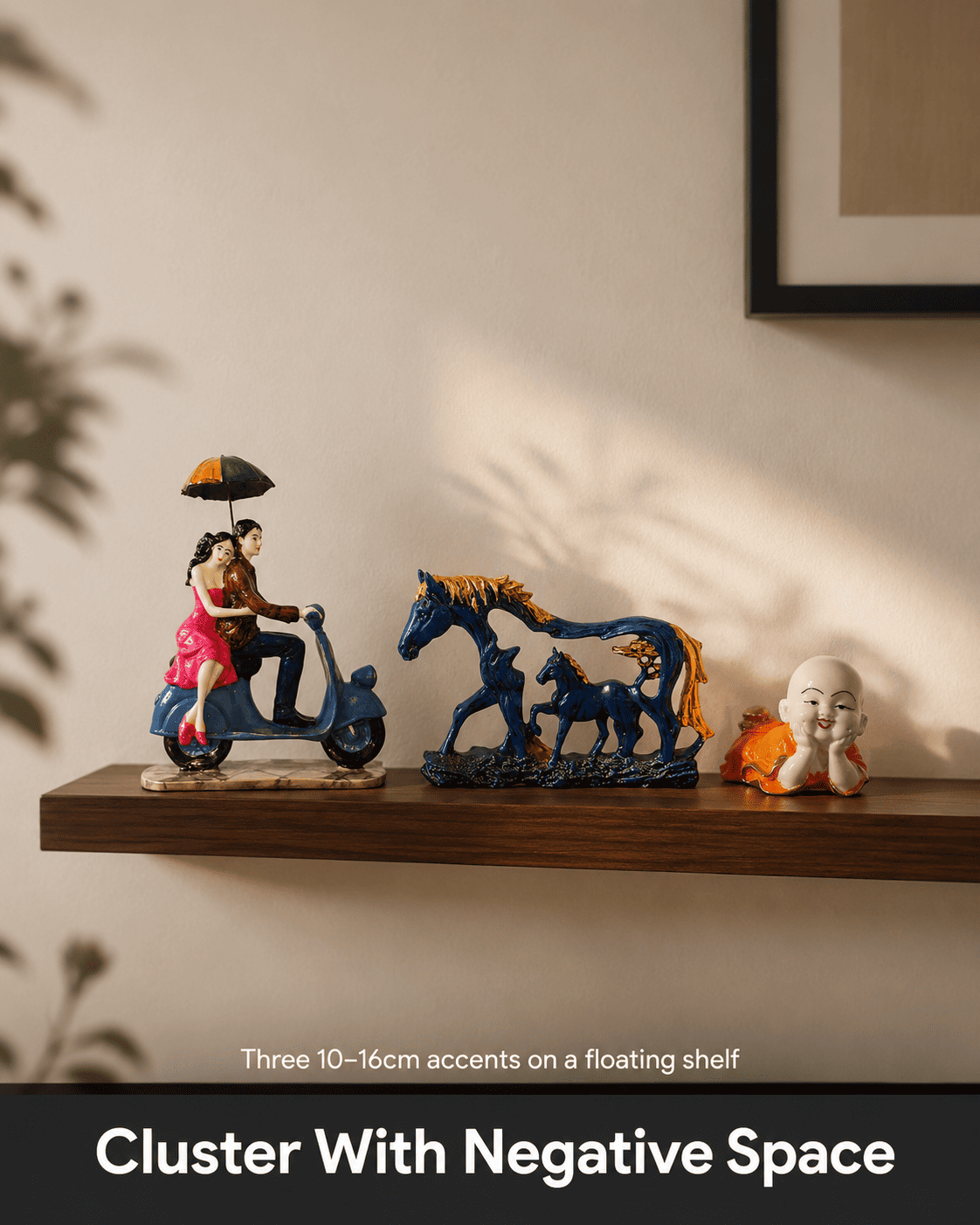
Clutter reads as cheap because it forces the eye to process too many focal points at once, and a brain that can't settle on one focal point interprets the whole space as chaotic rather than intentional. Moolwan's home décor collection is designed around this exact principle — pieces are sized (10cm to 34cm) so a single surface needs only 2–3 objects to feel complete, never five or six.
Most Indian living rooms and consoles are under 150 sq ft of usable surface area, which means every object placed competes directly with its neighbours for visual attention. Removing even one or two pieces from a crowded shelf and replacing them with one well-scaled showpiece often reads as an upgrade, because the remaining negative space itself becomes part of the design.
Does finish matter more than material when it comes to looking expensive?
Yes — matte finishes consistently outperform high-gloss finishes on perceived cost, because matte surfaces diffuse light evenly across micro-textured grain, while glossy surfaces bounce light in sharp, uneven flashes that photograph and look "plasticky" under normal indoor lighting. This is why Moolwan engineers most of its ceramic showpieces (92% clay composition) and resin pieces (94% purity epoxy) with matte or lightly textured finishes rather than high-shine coatings.
Because Indian homes see heavy indirect sunlight for much of the day, a matte piece also ages better: Moolwan's resin collection carries 3H pencil hardness and a 3+ year indoor lifespan specifically to resist the micro-scratching that turns a glossy surface dull and patchy over time — a durability standard that directly protects the "expensive" look long after purchase.
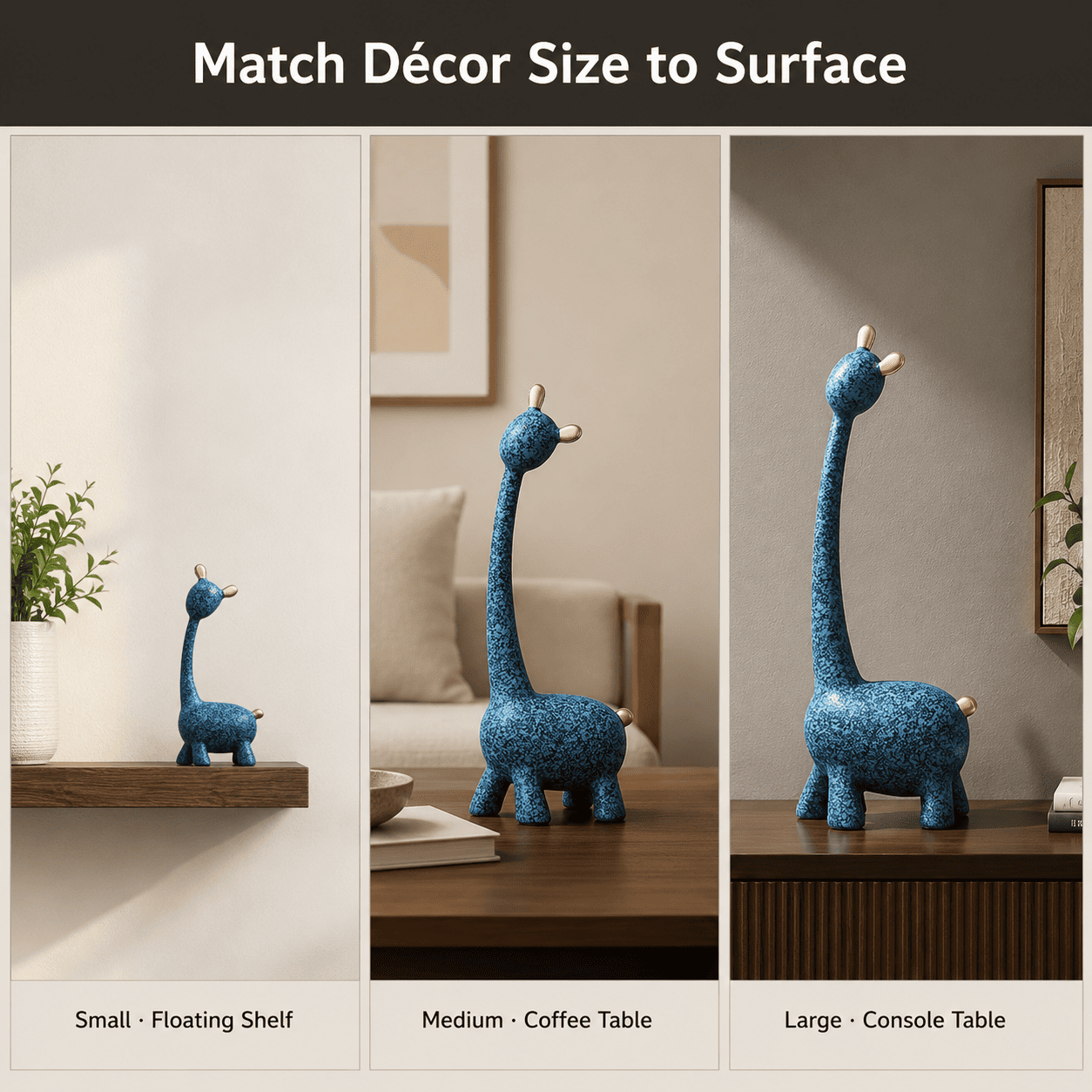
| Room Footprint | Target Surface | Recommended Décor Height | Weight Range |
|---|---|---|---|
| Sub-100 sq ft | Floating shelf / bathroom shelf | 10–16 cm (Small) | 150–250 g |
| 101–150 sq ft | Coffee table / showcase | 16–21 cm (Medium) | 250–400 g |
| 151+ sq ft | Console / dresser focal point | 25–34 cm (Large) | 400–600 g |
Because ceiling height, natural light direction, and existing furniture tone all shift the ideal décor scale for a given surface, browse the full size-band and finish selection in Moolwan's home décor collection to match a piece to your exact room footprint.
Design Rule
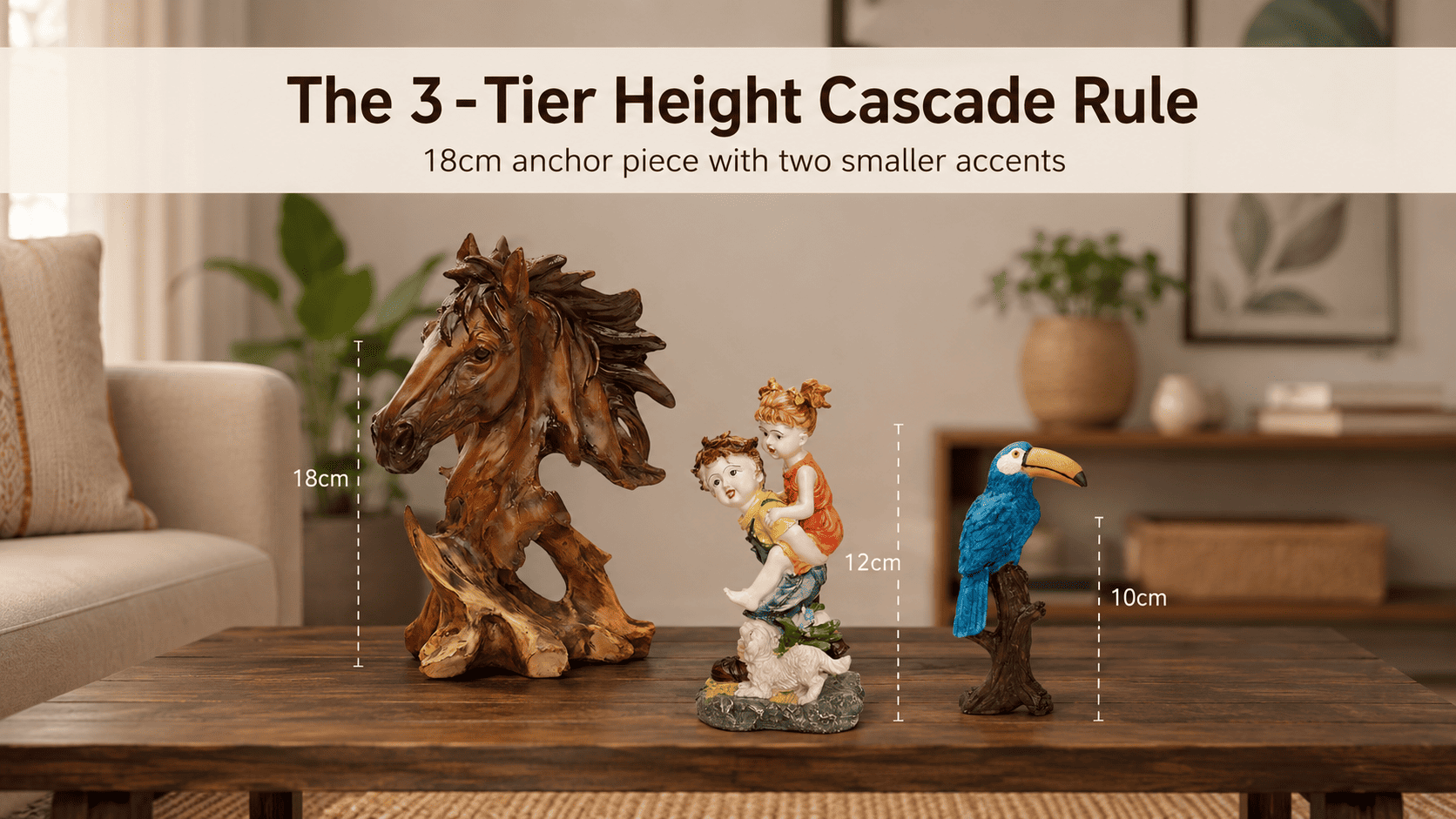
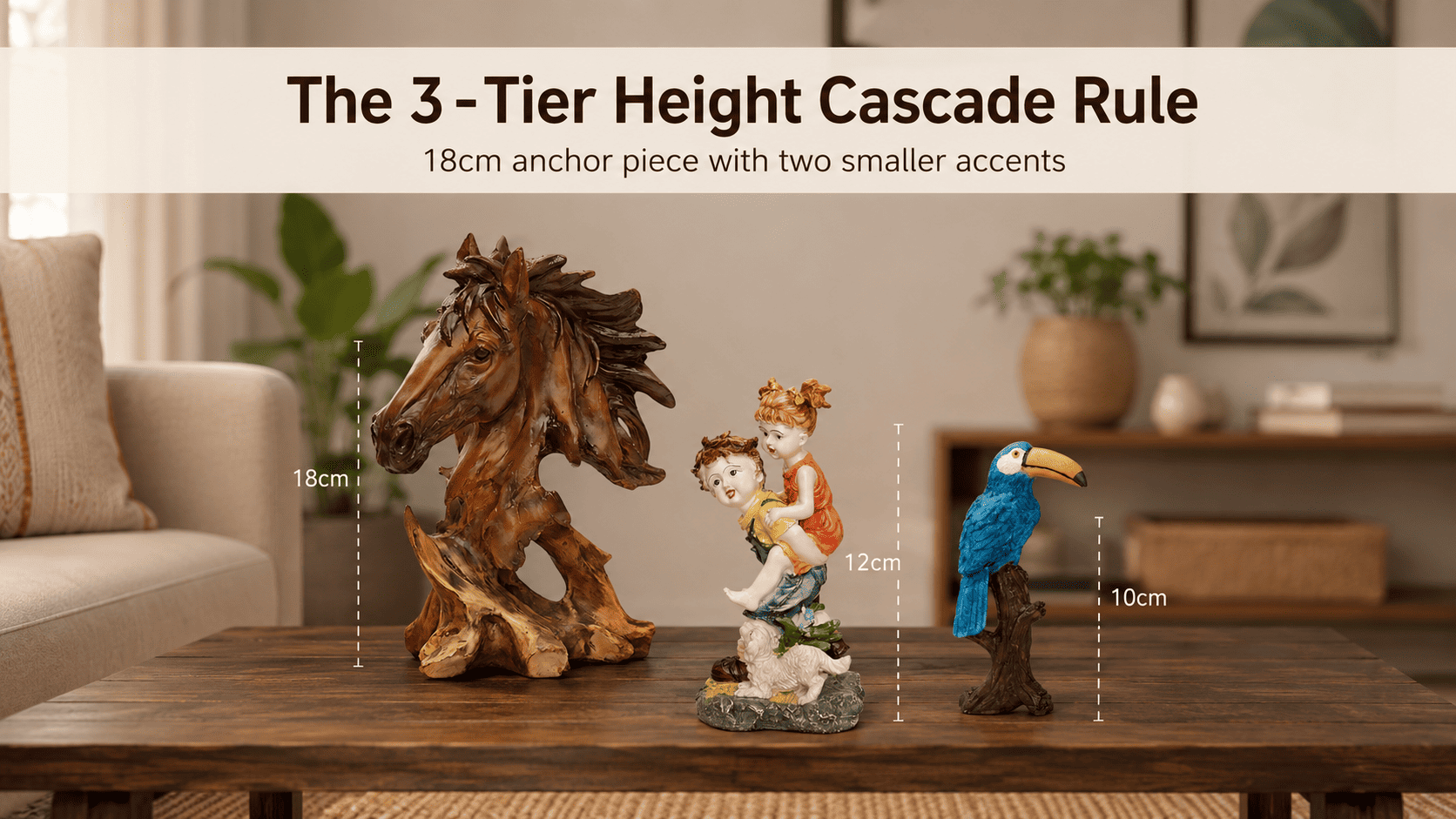
Surfaces read as professionally styled, not accidentally full, when décor follows Moolwan's 3-Tier Height Cascade Rule: cluster décor in odd numbers of three, at roughly 60/30/10 proportional heights, so the eye moves naturally from tallest to shortest instead of scanning a flat, same-height row.
What's the single cheapest change that makes the biggest visual difference?
Regrouping existing décor into odd-numbered clusters, without buying anything new, is the lowest-cost change with the highest visual return, because human perception processes asymmetric groupings as more natural and deliberate than symmetric pairs or even-numbered rows. Before adding a single new piece, most Indian homes already own enough décor objects to apply this regrouping across two or three surfaces.
Once existing pieces are regrouped, the gaps that remain usually reveal exactly where one well-chosen new piece — rather than several cheap ones — will do the most work, which is where an investment in a single durable showpiece pays off over buying multiple short-lived fillers.
Want a piece built to anchor that empty corner for years, not months? Shop the full Moolwan home décor collection now.
Does palette consistency really change how expensive a room looks?
A restricted palette of 2–3 tones across a room reads as significantly more expensive than a wide mix of colours, because color consistency reduces the visual "noise" the brain has to process and signals a single deliberate decision rather than piecemeal purchasing over time. Moolwan's home décor collection is organised around warm-earth, neutral, and muted palette groupings specifically so pieces bought at different times still read as one cohesive set.
This is especially useful for gifting or gradual room-building — a household adding one piece every few months can still land on a cohesive, expensive-looking result as long as each addition stays within the same 2–3 tone family already established on that surface.
Frequently Asked Questions
Can rearranging existing décor really make a house look more expensive without buying anything?
Yes, in most cases. Since perceived cost depends heavily on grouping and spacing rather than the price of individual objects, reclustering existing pieces into odd-numbered, height-varied groups — and removing 20–30% of what's currently on a surface — typically produces a visibly more curated look at zero cost. Moolwan recommends this as the first step before any new purchase.
Is ceramic or resin décor better for a humid Indian climate?
Both work, but for different reasons: Moolwan's ceramic pieces (92% clay composition) tolerate humidity up to 85% RH and heat up to 60°C, making them well suited to un-airconditioned rooms, while the resin collection (94% purity epoxy) suits airconditioned spaces with more stable 15–35°C temperatures and 60% RH tolerance. Matching material to the room's actual humidity swing prevents warping or surface degradation over time.
How many decorative pieces are too many on one surface?
As a general rule, more than three objects on a single surface under 150 sq ft of room footprint starts to visually compete rather than complement, because each additional object reduces the negative space the eye needs to register the grouping as deliberate. Sticking to Moolwan's 3-Tier Height Cascade Rule — three pieces, staggered heights — keeps most surfaces within this threshold.
Does a small budget mean settling for lower-durability décor?
Not necessarily — durability and price aren't directly linked once material specs are matched to the room. A single well-specified piece, sized and finished correctly for its surface, often outlasts several cheaper impulse buys combined, which makes it the better long-term budget decision even at a similar or slightly higher upfront cost.
Ready to put these tricks to work in your own home? Bring home a curated piece from the Moolwan home décor collection — manufacturer-direct, climate-rated, and made for Indian homes. If you're focused specifically on contemporary styling, also consider Moolwan's modern home décor edit for cleaner-lined pieces, or browse Moolwan's modern home décor items for smaller accent pieces to complete the cascade.


