
Bloom-bomb Framed Floral Photography Wall Art That'll Make Your Walls Blossom
You may also like


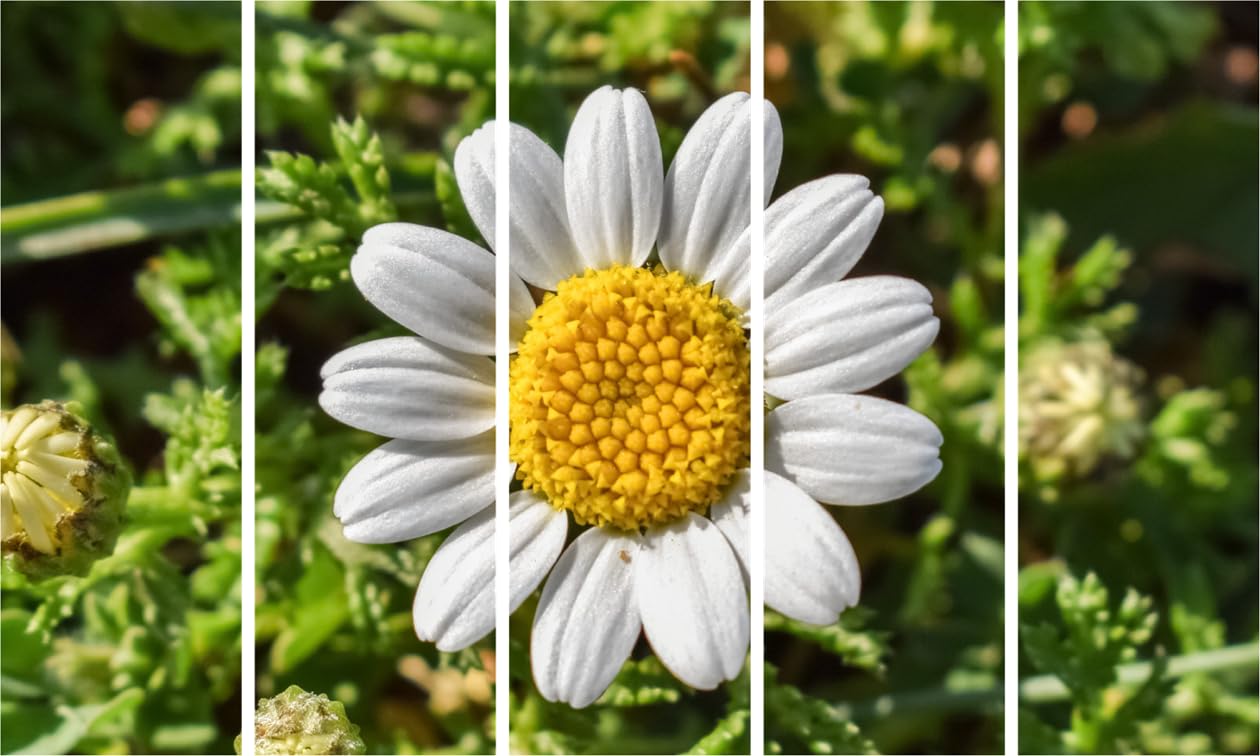
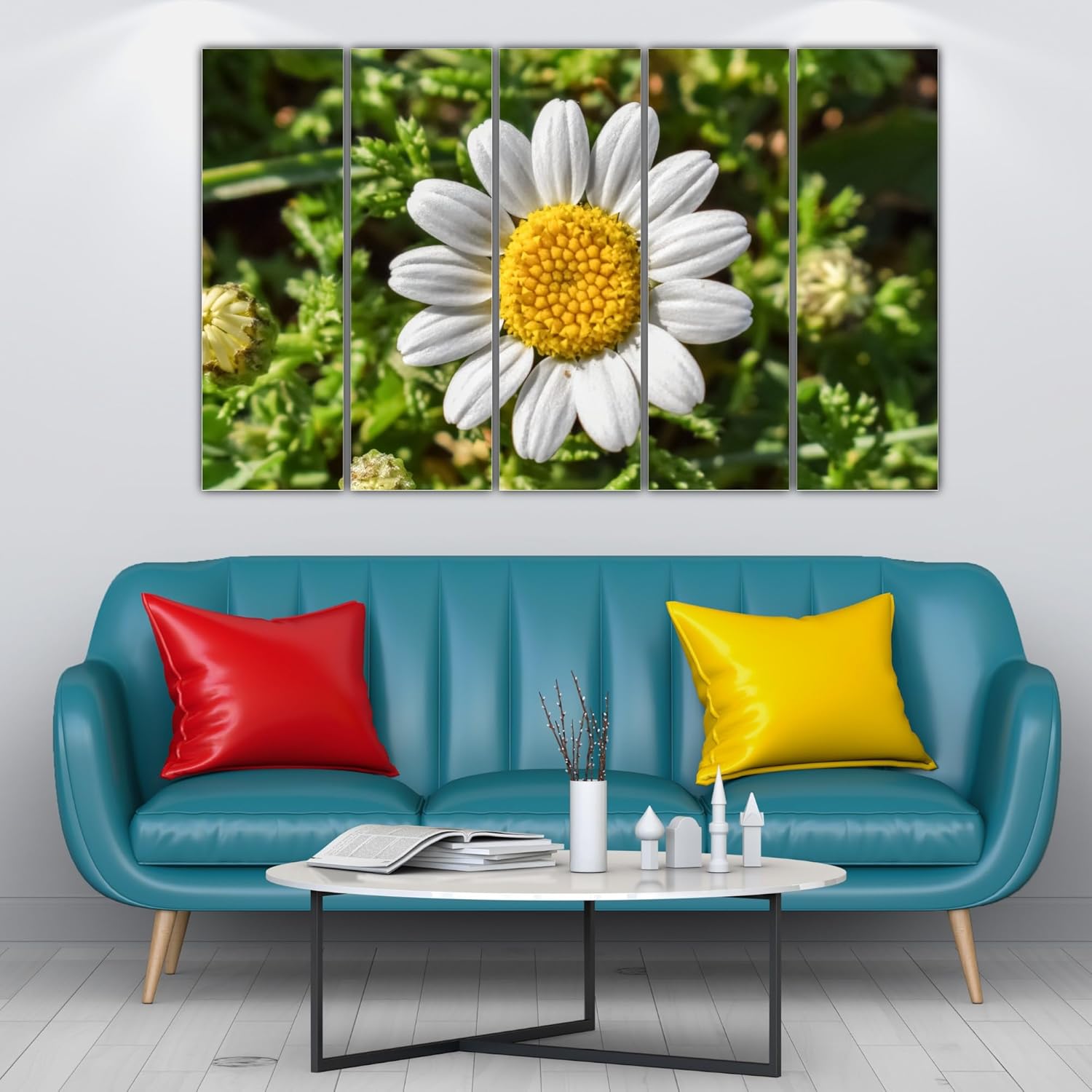
Moolwan 5-Panel Daisy Floral Vinyl Wall Art on MDF (127x76cm) – Centered Botanical Focal Point Spanning All Five Panels
When You Can't Picture What That Blank Wall Actually Needs
You've stared at that wall for months. You know it needs something—but every time you try to imagine what a canvas or print would actually look like there, your brain draws a blank. Will flowers look too feminine? Will green clash with your sofa? Will five separate panels look busy or unified?
This is where the daisy changes the equation. The 127cm width gives your eye a single, centered focal point—the white daisy with its textured golden center—that spans continuously across all five panels. The composition isn't five separate images fighting for attention; it's one cohesive botanical moment, split for dimensional interest. The surrounding bokeh greenery fades softly at the edges, which means the panels flow into each other rather than creating harsh visual breaks.
What this solves: instead of imagining abstract possibilities, you can picture exactly what this does. A white flower on green. Clean. Calm. Recognizable. Your eye knows where to land.
Why 127cm Works on 10-12ft Walls (And What Changes If You Size Up or Down)
At 127cm wide, this piece covers approximately 35-40% of a standard 10-12 foot Indian living room wall—the visual sweet spot for above-sofa placement without overwhelming the furniture below.
Here's the practical math: if your sofa is 7-8 feet wide (210-240cm), this 127cm piece sits comfortably within the 60-75% width ratio that looks proportional. You'll have roughly 40-55cm of visual breathing room on each side, which prevents the cramped look you get when art stretches too close to sofa edges.
The 76cm height works with standard 8-foot ceilings when hung 20-25cm above sofa top—your eye naturally lands on the daisy center at standing viewing height, while seated guests look slightly up at the flower, which feels intentional rather than awkward.
Panel spacing reality: each of the five panels sits approximately 1-2cm apart when mounted. This creates subtle shadow lines that add depth, but the daisy image reads as continuous from normal viewing distance (2-3 meters). Up close, you'll notice the breaks; from across the room, you see one unified floral image.
What These Colors Look Like on Cream Walls (Morning vs LED)
The palette here is specific: pure white petals, a textured golden-yellow center with almost honeycomb detail, and background greens ranging from deep forest to soft sage with natural bokeh blur.
Against cream or off-white walls (the default in most Indian apartments), here's what actually happens:
Morning light (east-facing rooms): The white petals appear crisp and cool, the yellow center looks bright and fresh, and the greens gain depth. This is when the botanical detail is sharpest.
Afternoon light (west-facing rooms): The white warms slightly to ivory tones, the yellow intensifies to almost orange-gold, and the greens become richer. The overall effect feels warmer, more golden.
Evening LED light (warm white, 3000K): The white petals pick up a subtle cream tone that matches your walls, the yellow center glows warmly, and the greens appear deeper and more saturated. This is when guests typically see your walls—and this piece looks cohesive rather than stark.
Against peach walls: The green background complements naturally; peach and sage-green are classic pairings.
Against light yellow walls: Works, but the yellow daisy center may blend slightly—consider if you want the flower to pop or harmonize.
With brown sofas and wooden furniture: The natural botanical theme echoes wood tones without matching them directly. The white flower provides clean contrast against darker furniture below.
Installation in Indian Walls (Concrete vs Drywall)
Five panels means five mounting points, and alignment matters more than with single-piece art.
The reality: You'll need to drill five sets of anchor holes and ensure all panels hang at exactly the same height with consistent spacing. This sounds intimidating but becomes straightforward with the right approach.
For concrete walls (common in older buildings):
Use masonry anchors—drill 6mm holes approximately 35mm deep at each marked point. The 3kg total weight distributed across five panels means each panel carries roughly 600 grams, well within standard anchor capacity.
For drywall (common in newer apartments):
Plastic wall anchors work fine given the distributed weight. Each panel only needs to support its own portion.
Alignment technique: Mark your first panel position with removable tape. Use a level (phone apps work) to ensure it's straight. Measure the gap you want between panels (1.5-2cm looks natural) and mark subsequent positions. Install all anchors before hanging any panels, then hang left to right.
Rental consideration: Ten small anchor holes (two per panel) are still easily patchable with wall putty when you move. The holes are smaller than standard picture hook damage.
Time investment: Budget 30-40 minutes for a 5-panel installation versus 15-20 for single canvas. The extra time is alignment, not difficulty.
Why This Works Better Than Macrame Wall Hangings
Macrame is having a moment—you've probably considered it. Here's the honest comparison:
Visual presence: Macrame creates texture but minimal color. This 5-panel daisy delivers a specific focal point (the flower) with defined colors (white, yellow, green) that read from across the room. Macrame often blends into neutral walls; this creates intentional contrast.
Maintenance reality: Macrame collects dust in its fibers and requires periodic washing or vacuuming. The splash-proof vinyl surface on this piece wipes clean with a dry cloth. In dusty Indian conditions—especially if you're near main roads or have cross-ventilation—this difference matters.
Structural stability: Macrame stretches and sags over time, especially in humid conditions. The MDF backing on each panel maintains flat, consistent shape regardless of monsoon humidity.
Proportion for large walls: Macrame large enough to fill a 10-12ft wall becomes expensive and visually heavy (all that cord creates bulk). This 127cm piece provides wall coverage without visual weight—the bokeh background literally fades to soft edges.
Style flexibility: Macrame reads specifically as bohemian. A botanical photograph works in modern, contemporary, traditional, or transitional interiors. Your grandmother won't question why there's rope on your wall.
What This Will Actually Feel Like in Your Room
From the doorway (3-4 meters): You see a horizontal spread of green with a white-and-yellow flower anchoring the center. The five panels create subtle dimensionality—the wall doesn't look flat. The overall impression is fresh, natural, and intentional.
From the sofa (1-2 meters, looking up): The daisy fills more of your field of view. You notice the texture in the yellow center, the individual petal shapes, the soft bokeh circles in the green background. It's detailed enough to hold attention up close without being overwhelming.
Dominates or complements? This piece complements rather than dominates. The colors are natural rather than bold; the subject is recognizable rather than challenging. It makes the wall feel finished without demanding attention every time you glance that direction.
Solo or with adjacent decor? The 127cm width is substantial enough to anchor a wall solo. If you have a gallery wall vision with multiple pieces, this isn't the right choice—it needs breathing room, not neighbors competing for attention.
Guest reaction prediction: "That's nice—where did you get it?" Not "Wow, that's... bold." This is the kind of piece that earns quiet approval, not polarizing reactions.
Moolwan Design Note
The daisy's golden center sits precisely at the junction of the second and third panels, creating natural balance when the eye enters from either side. The bokeh background ensures the outer panels don't feel like cutoff edges—they fade rather than stop.
Moolwan Quality Standard
Designed for Indian apartments and lighting conditions. Packed for long-distance Indian transit with corner protection for each of the five panels. Quality checked before dispatch—panel alignment and color consistency verified across all five pieces. Splash-proof vinyl resists humidity-related damage. Ships from West Bengal.
Moolwan Fit Guidance for Indian Homes
At 127cm wide, this fits above 7-8 foot sofas with proportional spacing on each side. The 76cm height works with 8-foot ceilings when mounted 20-25cm above sofa top. For walls narrower than 10 feet, this may feel slightly crowded—consider the 90cm options in the Nature Collection instead.
Quick Specifications
| Specification | Detail |
|---|---|
| Product | Moolwan 5-Panel Daisy Floral Vinyl Wall Art on MDF (127x76cm) |
| Brand | Moolwan |
| Category | Vinyl Wall Art on MDF |
| Collection | Nature Wall Art Collection |
| Dimensions | 127cm (W) x 76cm (H) x 0.6cm (D) |
| Weight | 3000 grams (total across 5 panels) |
| Material & Construction | Splash-proof vinyl print on MDF backing |
| Panel Configuration | 5-panel continuous image |
| Colors | White petals, golden-yellow center, forest green to sage green background |
| Best For | Living room walls 10-12ft wide, above 7-8ft sofas, cream or off-white wall colors |
| Ships From | West Bengal |
Frequently Asked Questions
Will the 127cm width work above my 6-foot sofa, or is it too wide?
At 127cm, this piece would extend slightly beyond a 6-foot (180cm) sofa's visual footprint—you'd have about 73% width coverage, which is at the upper limit of proportional range. It can work if your wall is 10+ feet wide and the sofa has side tables extending the furniture grouping, but for a standalone 6-foot sofa, the 90cm width options in the Nature Collection would be more balanced.
How does the white-and-green palette look under yellow-tinted LED bulbs?
Warm LED bulbs (2700-3000K, common in Indian homes) will shift the white petals slightly toward cream and intensify the yellow center. The greens become richer and deeper. The overall effect remains fresh rather than washed out—white and green both handle warm lighting well without looking dull.
Can I install five panels myself, or do I need a carpenter?
You can install this yourself in 30-40 minutes. The main requirement is patience with alignment—mark all five positions before drilling, use a level (phone apps work), and hang left to right. The weight per panel (approximately 600 grams each) is well within standard wall anchor capacity. No carpenter needed.
Will the vinyl surface handle Mumbai monsoon humidity?
The splash-proof vinyl is designed for exactly this. Unlike cotton canvas that absorbs moisture and can warp, vinyl remains dimensionally stable regardless of humidity levels. The MDF backing is more moisture-resistant than stretched canvas frames. After monsoon season, you'll see no warping, no color bleeding, no surface changes.
What's the gap between panels when mounted—will it break up the daisy image?
Recommended mounting gap is 1.5-2cm between panels. From normal viewing distance (2-3 meters), the daisy reads as a continuous image—your brain fills in the small gaps. Up close, you'll notice the breaks, but this is intentional: the panel separation adds dimension and depth that a flat single-piece print wouldn't have.
Product Snapshot
| Attribute | Detail |
|---|---|
| Brand | Moolwan |
| Product | Moolwan 5-Panel Daisy Floral Vinyl Wall Art on MDF (127x76cm) |
| Category | Vinyl Wall Art on MDF |
| Collection | Nature Wall Art Collection |
| Theme/Type | Floral botanical photography |
| Best For | Living room walls 10-12ft wide, above 7-8ft sofas, cream/off-white walls, homes seeking fresh natural focal point |
| Primary Differentiator | Centered botanical focal point with continuous daisy spanning all five panels |
| Secondary Differentiators | Fresh white-yellow-green palette complementing cream walls; Bokeh green background adding depth without visual clutter |
| Material & Construction | Splash-proof vinyl print on MDF backing, 5-panel configuration |
| Care Instructions | Wipe with dry microfiber cloth; no water or cleaning chemicals needed |
| Ships From | West Bengal |
| Packing | Long-distance transit ready with corner protection for each panel |
| Quality Check | Before dispatch—panel alignment and color consistency verified |