
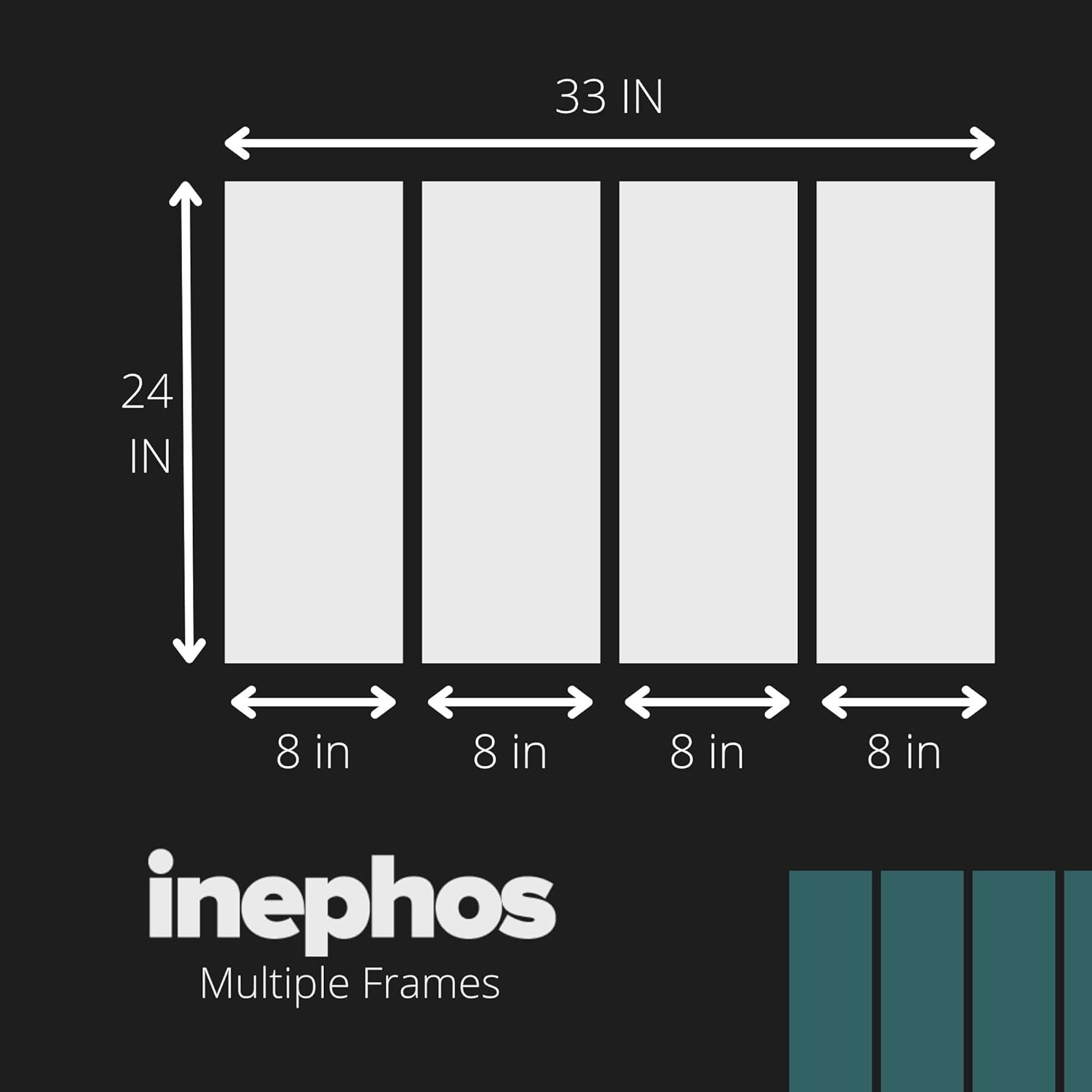
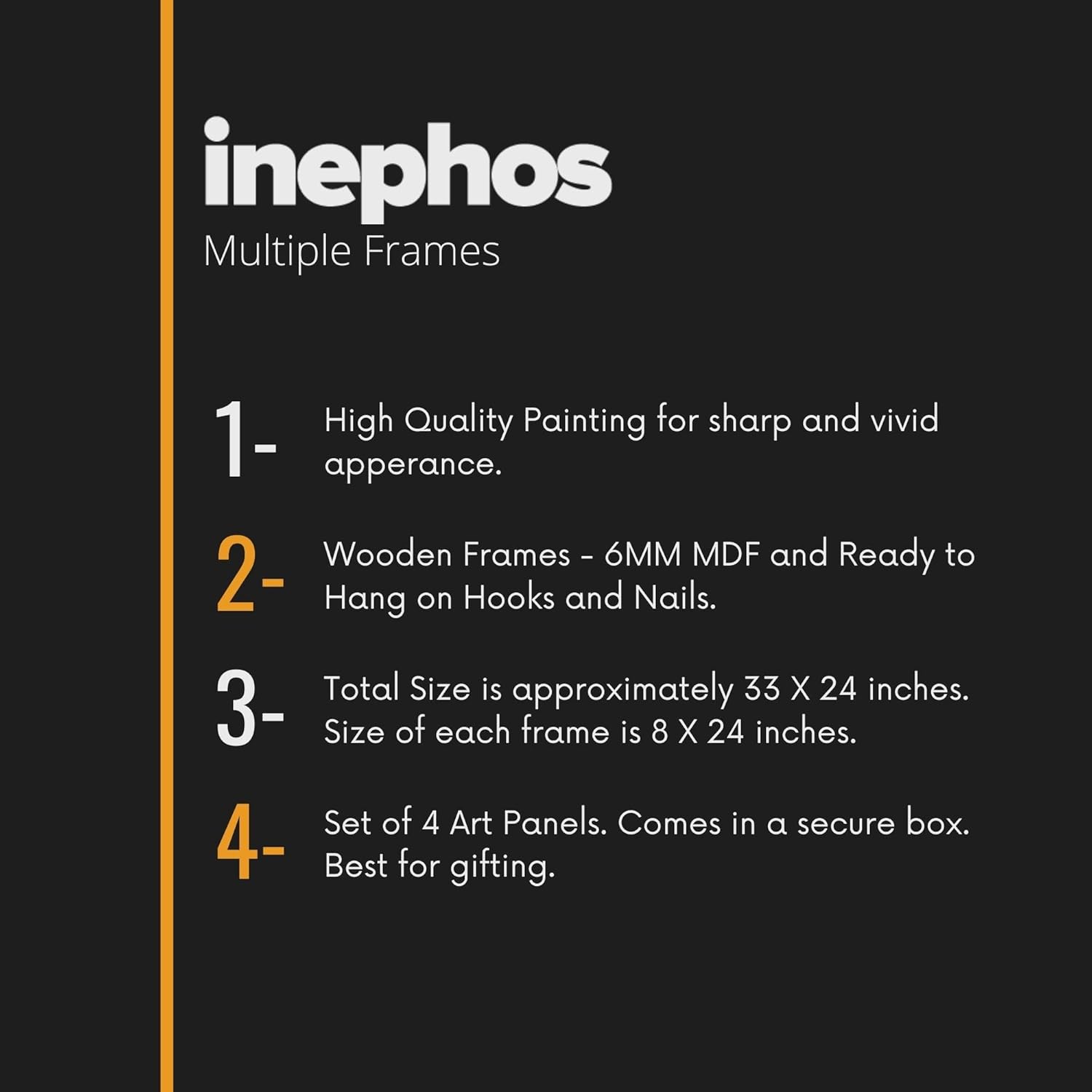
Buddha-tastic 4-Panel Framed Wall Art That'll Have Stress Saying 'Om My Goodness!' - Ready-to-Hang (33x24in)
You may also like

Moolwan 4-Panel Golden Buddha Vinyl Wall Art on MDF (85x55cm) – Side-Profile Buddha Against Garden Bokeh
You keep opening the product page, trying to mentally place this on your living room wall. But it's impossible to know for sure, isn't it? 85cm looks reasonable in the mockup, but your wall has that AC vent on one side and the switchboard on the other. You need to know this works in your specific space—not just styled photos with blank walls and perfect lighting.
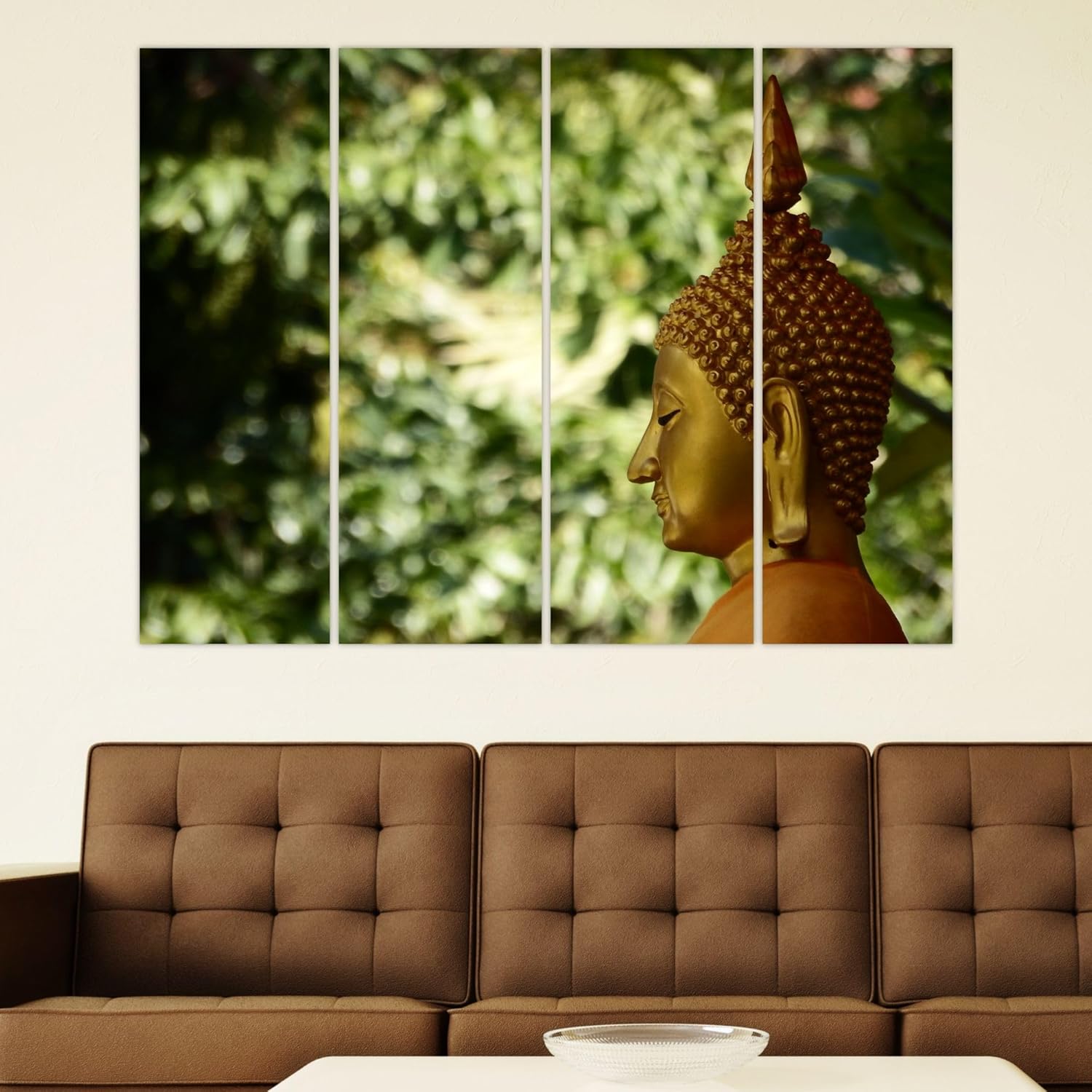
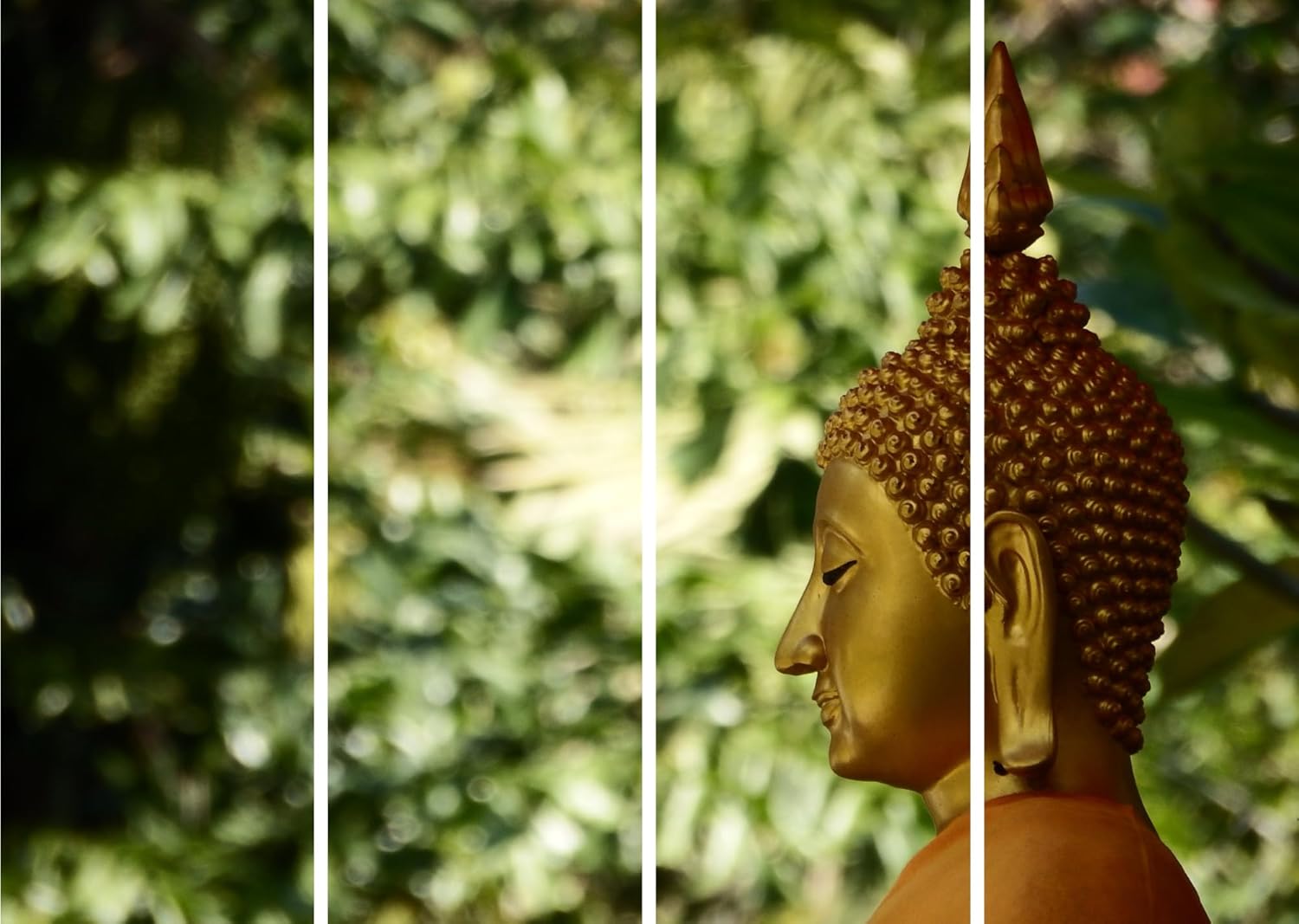
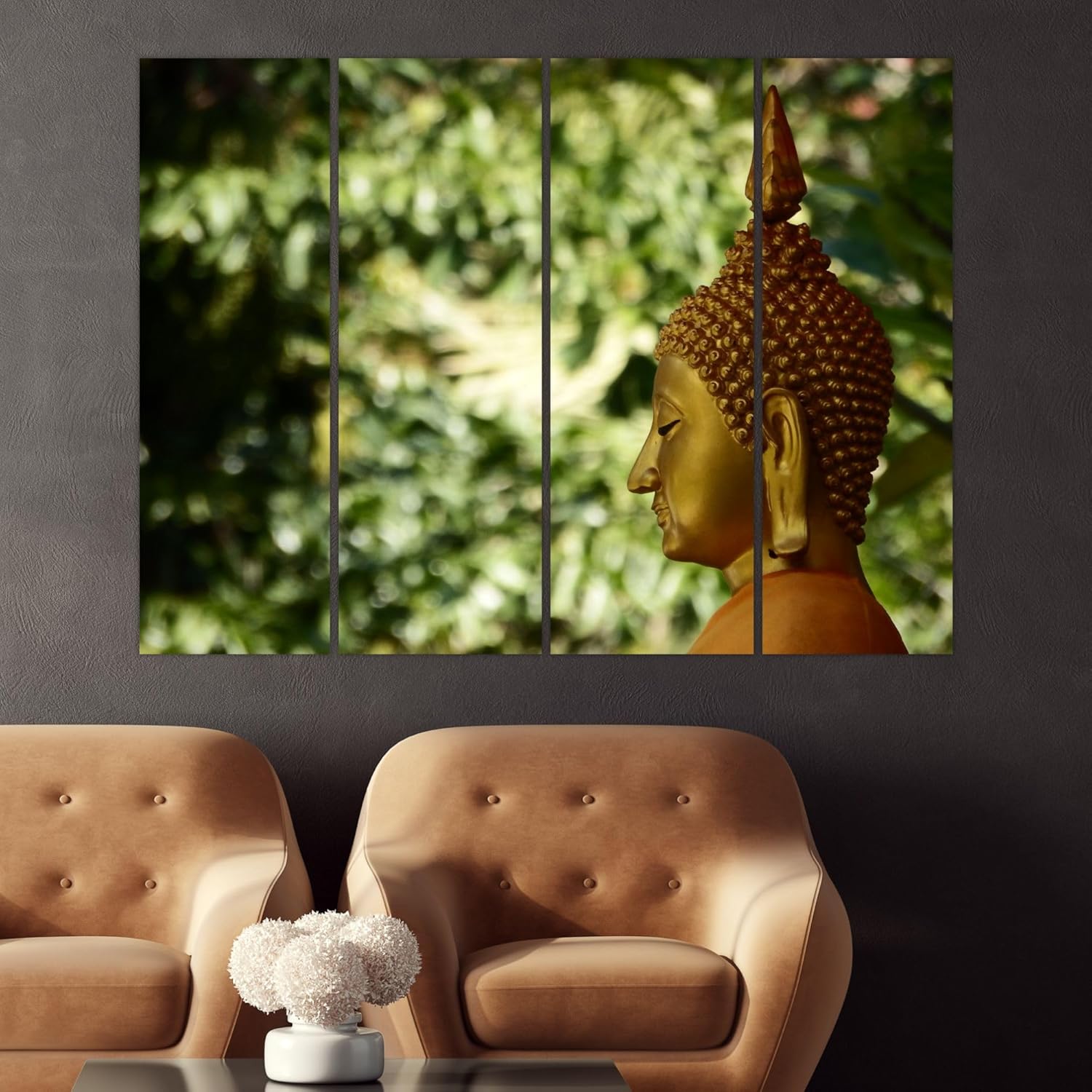
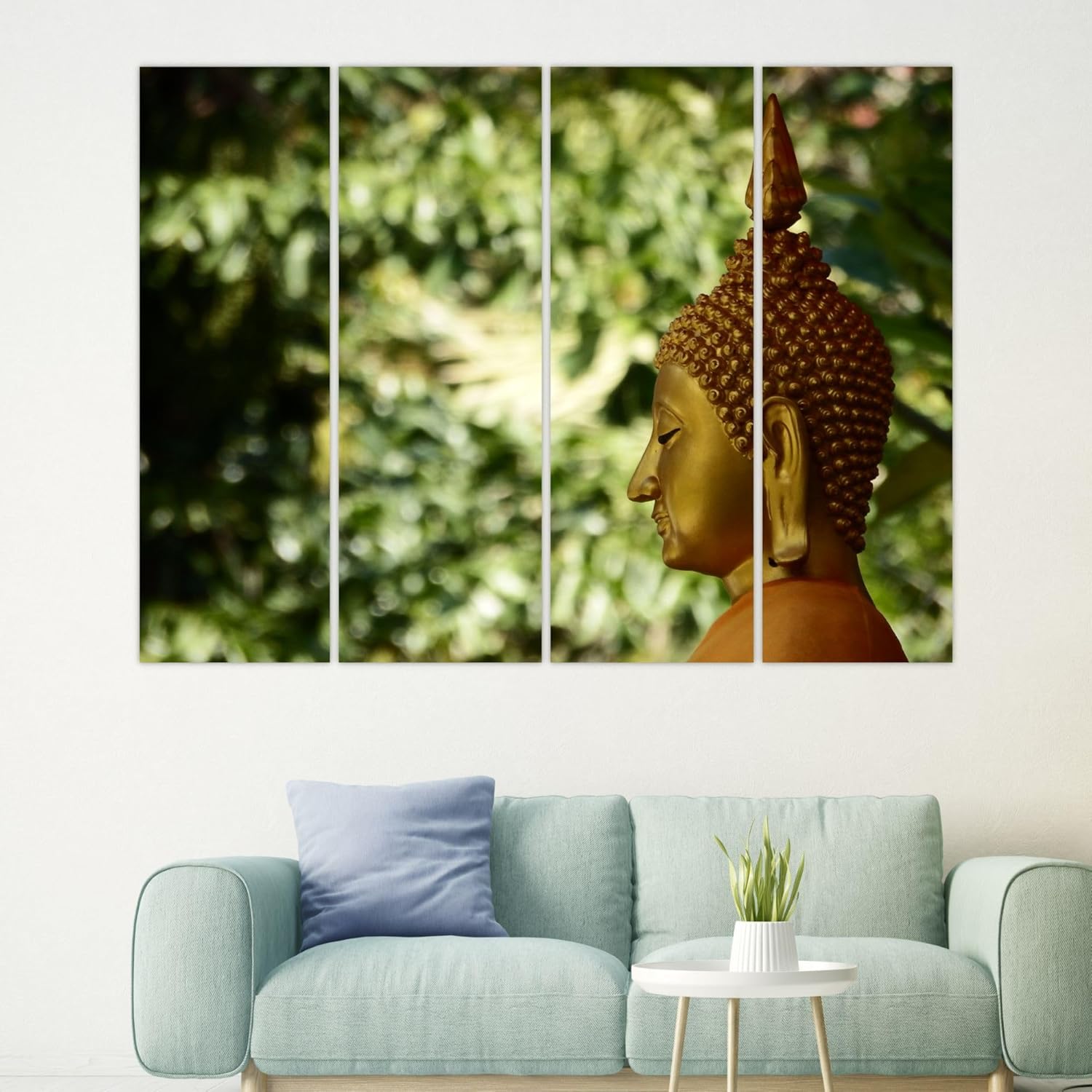
Here's what you're actually looking at: a golden Buddha in side profile, positioned on the right third of the composition. The left three panels carry soft-focus garden foliage in layered greens—jade, sage, olive—with natural light filtering through. The Buddha's ushnisha and serene expression emerge from this backdrop rather than dominating it. At 85cm wide, this isn't trying to be a statement piece that overwhelms your 10-foot wall. It's designed to anchor a section of wall space—above a 6-foot sofa, beside a meditation corner, or centered on a hallway wall where it catches attention without shouting.
Why 85cm Works on 10-Foot Walls (And What Changes If You Go Larger)
Your living room wall is probably 10-12 feet wide. At 85cm (roughly 2.8 feet), this panel set covers about 23-28% of that wall width. That's deliberate. A 10-foot wall (300cm) with 85cm art leaves 107cm of breathing room on each side if centered. The composition doesn't crowd the space—it occupies it comfortably.
If you're hanging above a 6-foot (180cm) sofa, 85cm is 47% of the sofa width. That's slightly below the 60-75% ratio that typically feels anchored, which means this works best when the sofa has side tables or floor lamps flanking it—the additional visual elements make up the difference.
The 55cm height sits well in rooms with 8-9 foot ceilings. Standard installation—20-25cm above sofa back—places the bottom edge around 105-110cm from floor level. From across the room (3-4 meters away), the four panels read as a unified image with visible separation lines that add depth rather than fragmentation.
If you're considering 120cm alternatives: that's 40% wall coverage on a 10-foot wall. Works if your wall has nothing else competing—no side shelving, no adjacent doorway. But 85cm is more forgiving for walls with existing elements.
What These Greens and Golds Look Like on Cream Walls (Morning vs Evening)
The color story here is unusual for Buddha art. Most Buddha pieces lean into dramatic contrasts—deep reds, pure golds, stark blacks. This one pairs warm gold (the Buddha figure) against cool greens (the bokeh foliage). That tension creates visual interest without the heaviness of traditional Buddhist iconography.
Against cream or off-white walls—standard in most Indian apartments—the greens read as calming rather than cold. They're not saturated; they're filtered through natural light in the original image. In morning daylight (east-facing rooms), the greens brighten and the gold appears more yellow-toned. By evening under warm LEDs (3000K, which most Indian homes use), the gold deepens to amber and the greens shift olive.
If your walls are builder's peach or light yellow, the warm gold complements without clashing. The greens provide enough contrast that the piece doesn't disappear into the wall.
Brown furniture—the leather or fabric sofas common in Indian living rooms—works because both share warm undertones. The gold Buddha connects to the brown; the greens provide relief.
Installation in Indian Walls (Concrete vs Drywall)
Four panels means four mounting points—one per panel. The panels align horizontally with 2-3cm gaps between them (consistent spacing matters more than the exact measurement). Here's the reality: if one panel sits 0.5cm higher than its neighbor, you'll notice every time you look at the wall. Use a laser level or a long ruler across all four mounting points before drilling.
For concrete walls (older Indian buildings, load-bearing walls): use 6mm masonry anchors. Drill 35mm deep, tap in anchors, screw hooks. Total install time: 25-30 minutes if you're careful about leveling.
For drywall (newer apartments, partition walls): use 6mm plastic anchors rated for 5-7kg. Each panel needs to support its share of the 3kg total weight.
Rental reality: four small anchor holes per panel (16 total) are patchable with wall putty when you move out. These are 6mm diameter holes—smaller than what your curtain rods leave. Cost to repair: under ₹300 in putty and paint touch-up.
How This Compares to Macrame Wall Hangings
You might have considered macrame as an alternative for spiritual or nature-inspired wall décor. The aesthetic appeal is real—handcrafted texture, bohemian warmth. But there are practical trade-offs.
Macrame accumulates dust in every fiber. In Delhi's air quality or Chennai's humidity, you're looking at monthly cleaning or permanent discoloration. The fibers absorb moisture; in monsoon conditions, they can develop that slightly musty smell. And unless you pay significantly more, the "handcrafted" options from marketplaces often aren't—they're machine-produced with inconsistent tension.
Vinyl print on MDF doesn't absorb moisture. Dust wipes off with a dry cloth. The colors stay consistent through monsoon cycles because the surface is sealed. And while macrame fades or yellows with sun exposure, the vinyl surface here is UV-resistant.
The visual difference: macrame reads as soft, textural, craft-oriented. Vinyl panel art reads as intentional, contemporary, gallery-adjacent. Both are valid choices; the question is which matches your space.
What This Will Actually Feel Like in Your Room
From the doorway—3-4 meters away—the panels read as a single image with subtle vertical breaks. The Buddha's profile is immediately recognizable; the garden background provides context rather than distraction. The overall effect is calm rather than dramatic. This isn't a piece that demands attention from across the room; it rewards closer viewing.
From the sofa—1-2 meters away—the bokeh effect becomes apparent. The out-of-focus foliage creates depth; the Buddha figure has sharp detail against this softness. The gold tones are visible as warm metallic rather than generic yellow.
For rooms that already have a lot happening—patterned cushions, multiple décor pieces, busy curtains—this piece works because the color palette is restrained. It doesn't compete. For minimal rooms, it provides a focal point without overwhelming.
One honest note: this is a right-weighted composition. The Buddha occupies panels three and four. If you have a floor lamp or side table on the right side of your sofa, the visual weight might feel unbalanced. Consider your existing furniture layout before finalizing placement.
Moolwan Design Note
The side-profile perspective draws from Thai Buddhist sculpture traditions—the elongated ushnisha, the serene half-smile. By positioning this against blurred garden foliage rather than traditional mandala or temple backgrounds, the composition reads as contemplative rather than overtly religious. The four-panel split creates natural pause points that slow down the eye.
Moolwan Quality Standard
Splash-proof vinyl print on MDF panels. Designed for Indian apartments and lighting conditions. Packed for long-distance Indian transit with individual panel protection. Quality checked before dispatch. Printed to resist humidity-related color fading. Ships from West Bengal.
Moolwan Fit Guidance for Indian Homes
85cm width suits 10-foot walls with 23-28% coverage. Best above 6-foot sofas with side elements (tables or lamps), or centered on hallway walls. 55cm height appropriate for 8-9 foot ceilings with standard 20-25cm above-furniture installation.
Quick Specifications
- Product: Moolwan 4-Panel Golden Buddha Vinyl Wall Art on MDF (85x55cm)
- Brand: Moolwan
- Category: Vinyl Wall Art on MDF
- Collection: Buddha Wall Art Collection
- Dimensions: 85cm W x 55cm H x 2cm D
- Weight: 3 kg
- Material & Construction: Splash-proof vinyl print on MDF
- Colors: Golden Buddha, jade green, sage, olive (bokeh foliage)
- Best For: 10ft living room walls, meditation corners, hallway walls
- Ships From: West Bengal
Frequently Asked Questions
Will 85cm look proportional above my 6-foot sofa?
At 47% of sofa width, it's slightly below the standard 60-75% range. If your sofa stands alone against the wall, consider flanking with side tables or a floor lamp to create balanced visual weight. If you already have side elements, the proportions work.
How do the greens look under warm LED lighting?
The sage and jade tones shift toward olive under 3000K warm LEDs. The effect is richer and more grounded than in daylight. The gold Buddha deepens to amber tones.
How do I keep all four panels level during installation?
Use a laser level or long straight edge across all mounting points before drilling. Mark all four positions, verify alignment, then drill. Rushing this step shows in the final result—uneven panels create uneven shadows.
Will this warp during monsoons?
MDF with sealed vinyl surface doesn't absorb atmospheric moisture like raw wood or fabric. The panels maintain dimensional stability through humidity cycles. The surface wipes clean; moisture beads rather than soaking in.
Can I use this in a bathroom or high-humidity area?
The splash-proof vinyl surface handles occasional humidity exposure, but constant high humidity (bathroom steam daily) may affect the MDF substrate over time. Better suited for living areas, bedrooms, or hallways.
Product Snapshot
- Brand: Moolwan
- Product: Moolwan 4-Panel Golden Buddha Vinyl Wall Art on MDF (85x55cm)
- Category: Vinyl Wall Art on MDF
- Collection: Buddha Wall Art Collection
- Theme/Type: Buddha, spiritual, nature-blend
- Best For: 10ft walls, above 6ft sofas with side elements, meditation corners
- Primary Differentiator: Side-profile Buddha composition against garden bokeh backdrop
- Secondary Differentiators: Warm gold against cool greens color tension; split-panel visual sequence effect
- Material & Construction: Splash-proof vinyl print on MDF
- Care Instructions: Dry dusting with microfiber cloth; avoid water and cleaning chemicals
- Ships From: West Bengal
- Packing: Long-distance transit ready with individual panel protection
- Quality Check: Before dispatch