
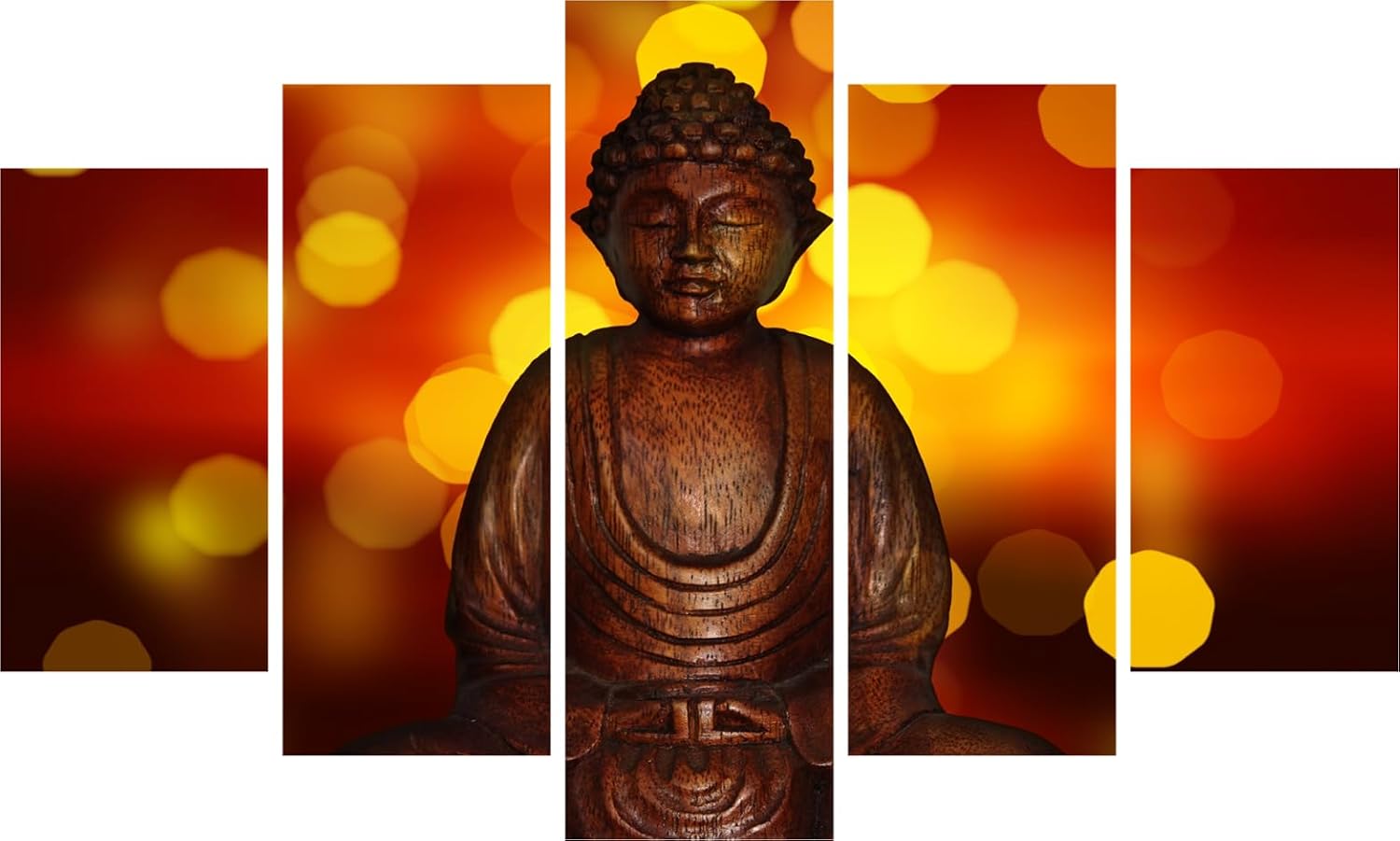
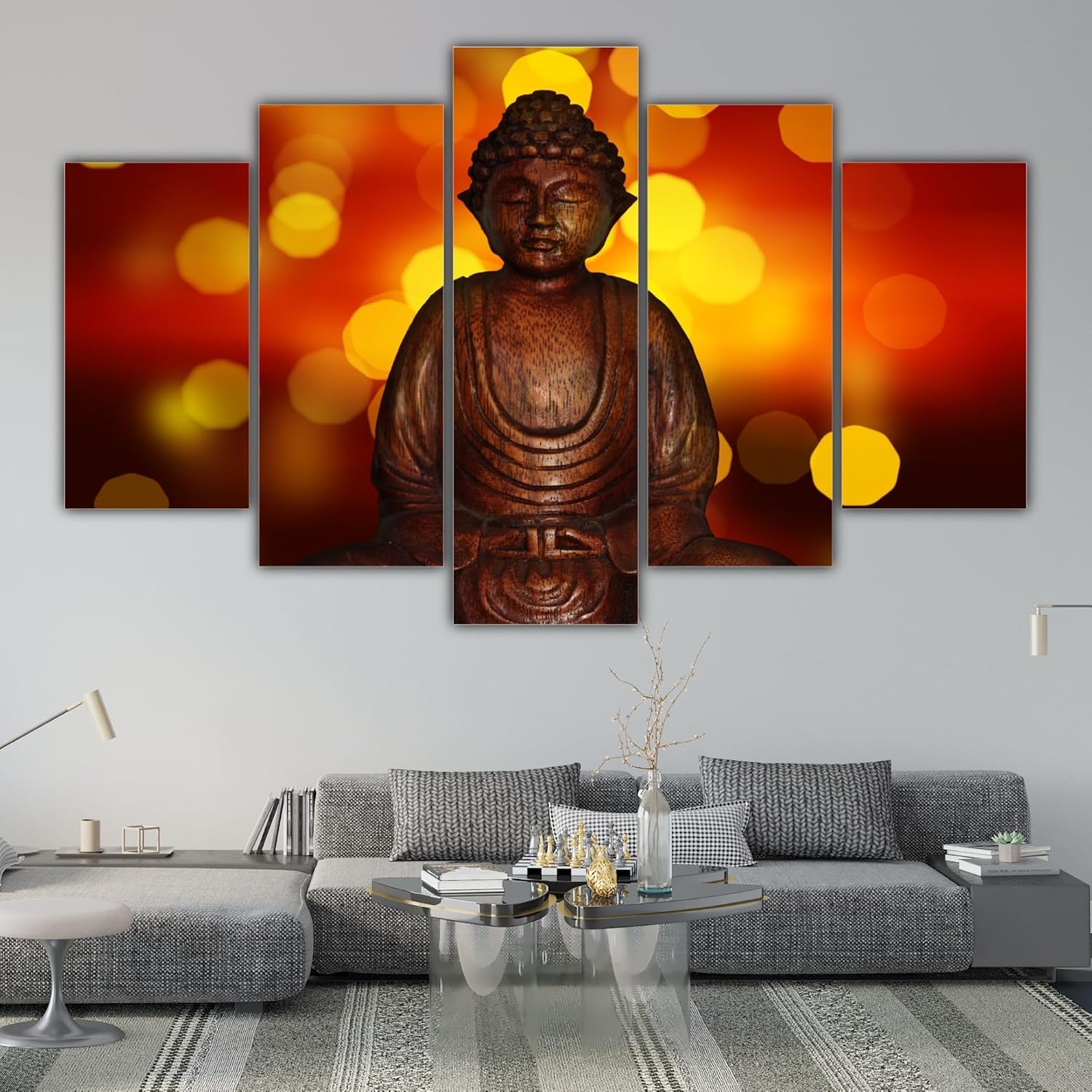
Buddha-tiful 5-Panel Framed Wall Art That Kicks Stress Out (150x76cm)
You may also like

Moolwan 5-Panel Buddha Vinyl Wall Art on MDF (150x76cm) – Dark Wood-Grain Buddha Reads as Carved Sculptural Presence, Not Flat Print
The Specific Fit Recognition
When you're choosing wall art as a gift, you're not just selecting décor — you're putting your taste and your knowledge of that person's home on the line for years. Every time they walk into the room, you'll either be silently credited or quietly associated with the piece that never quite fit. That pressure is exactly why you've been second-guessing the shortlist.
This 150x76cm 5-panel format resolves the risk from both directions. At 150cm wide, it creates genuine focal presence on 12-14 foot bedroom walls — not the kind of statement piece that overwhelms a room, but the kind that makes the room feel deliberately composed. And the specific visual here does something most spiritual wall art doesn't: the Buddha figure carries visible wood-grain texture that reads as carved sculpture from across the room. It isn't a flat photographic print. From 8 feet away in a bedroom doorway, it looks like a wood carving mounted against a glowing sunset background. That's the quality detail that makes guests ask where it came from — and makes the recipient associate you with the choice.
Why 150cm Works on 12–14 Foot Bedroom Walls (and What Changes If You Size Down)
Standard 2BHK and 3BHK bedroom walls run 12-14 feet (360-420cm). At 150cm wide, this canvas covers 42% of a 12-foot wall — enough to anchor the space without consuming it. The remaining 210cm distributes as 105cm on each side, which means windows, AC vents, and adjacent furniture don't feel crowded. The composition breathes.
The 76cm height matters under standard 8-10 foot Indian ceilings. It's proportioned to read as intentional wall art — not so tall that it crowds ceiling space, not so short that it looks like a horizontal accent strip floating without purpose. At 140-160cm from floor (the natural hang height for this format), the Buddha's face sits slightly above eye level — visible at a glance from the doorway, close enough for compositional detail during seated meditation.
The five-panel layout changes how visual weight distributes across this width. Instead of 150cm reading as one solid block, the composition has rhythm. The center panel carries the Buddha figure prominently. The two flanking panels show the figure's robed body with warm bokeh gathering around it. The outer two panels are pure amber-to-burgundy background with scattered golden bokeh circles. Your eye moves inward naturally, settling on the center — and that inward pull is compositionally intentional. It prevents the canvas from reading as decorative wallpaper rather than meditation art.
If you went with 120cm instead: wall coverage drops to 33% on a 12-foot wall. The five-panel rhythm compresses — each panel becomes narrower, and the outer background panels shrink to the point where the composition loses its spatial breathing. The canvas reads as smaller than it should be for the wall, which creates the vague dissatisfaction of having chosen the cautious option.
If you went with 180cm instead: on a standard 12-foot bedroom wall with a headboard, nightstands, and possibly a window, 180cm starts imposing rather than anchoring. The room reorganizes itself around the canvas instead of the canvas complementing the room. This is a bedroom, not a dedicated meditation space — 150cm respects that.
Why This Palette Works in Indian Apartments (Not Just Mockups)
The specific colors here — dark walnut brown for the Buddha figure, deep burgundy transitioning to amber-orange in the background, large golden yellow bokeh circles — work with the visual conditions of Indian apartments in ways that cool-toned spiritual art consistently doesn't.
Against cream and off-white walls (found in the majority of Indian apartments): the warm reds and ambers create gentle contrast without tension. There's no visual fight between wall color and canvas — both pull from the same warm neutral family. The dark Buddha figure provides the contrast needed to read as a distinct focal point. In morning light, the golden bokeh catches natural daylight and glows warmly. In evening under 3000K warm LED (standard in Indian homes), the reds deepen slightly and the composition radiates calm and luminosity.
Against sheesham, teak, and rosewood furniture (dominant in Indian bedrooms): the Buddha figure's walnut-brown wood-grain texture creates material harmony without literal matching. Your bed frame is a different piece of wood in a different shade — but the Buddha figure echoes the material language of wood. The eye registers this as cohesion. The warm background tones prevent the heavy "too much dark wood" effect that sometimes appears when wooden furniture dominates a room.
Against light yellow or peach walls (common in older apartments and builder-grade finishes): the orange and red tones in the background blend rather than clash. The composition reads as part of the warm palette, not imported from a different aesthetic.
One detail that matters for gifting specifically: this palette reads as spiritually respectful across multiple generations in Indian households. The warm tones and traditional seated posture — rendered in wood-grain texture rather than photographic flatness — feel culturally grounded. The contemporary five-panel format and bokeh background update the aesthetic enough to feel considered rather than generic. The combination is why older family members typically approve without hesitation.
Installation in Indian Walls (Concrete vs Drywall)
Five vinyl panels on MDF require 2-3 anchor holes per panel — 6mm diameter, 35-40mm deep. These are smaller than curtain rod bracket holes. When moving out of a rental, wall putty (₹50 at any hardware store), fine sandpaper, and a dab of matching wall paint makes them invisible. Total repair cost: ₹200 and 30 minutes. Standard rental leases classify 6mm anchor holes as normal wear and tear.
For concrete walls (standard in Indian construction): use a 6mm masonry drill bit, concrete anchors, and drill 35-40mm deep. Tap in anchors, screw in hooks. The five-panel total weight of approximately 3kg distributes across anchor points rated for 5-8kg each — significant safety margin built in.
For drywall or partition walls (newer apartments): plastic drywall anchors and a 6mm bit at 30mm depth. Vinyl on MDF is lighter than equivalent stretched canvas at this size — drywall anchors handle this comfortably.
The installation sequence that prevents alignment errors: mount the center panel first at your target height. Use removable tape to mark position before drilling anything. Once the center panel is level and secured, work outward — mount the two inner flanking panels with 2-3cm spacing, confirming horizontal alignment with a level before drilling side holes. Then the outer panels the same way. Center-outward prevents the cumulative spacing errors that make outer panels sit unevenly. Total time with appropriate care: 25-30 minutes.
5-Panel Buddha Vinyl vs Macrame Wall Hangings for the Same Wall
If you've been comparing this to large macrame wall hangings — the woven fiber pieces with fringe, knotted texture, and bohemian visual weight — you're evaluating two materials that behave very differently over time in Indian conditions.
Macrame is woven cotton or jute fiber. In humidity above 60% (which is most of India during monsoons), natural fiber absorbs moisture. Over multiple monsoon seasons, the hanging loses its original shape — knotted sections loosen gradually, fringe at the bottom stretches unevenly, the piece begins to look tired and misshapen. White macrame discolors in humid coastal environments; natural jute can darken and hold residual moisture odor if the wall behind it doesn't breathe well.
Vinyl on MDF doesn't absorb moisture. The vinyl surface is splash-proof — water beads up rather than soaking in. The panels maintain dimensional stability through 70-85% humidity and temperature swings from 5°C to 45°C. Three monsoon seasons later, the surface is still flat, the colors still accurate, the Buddha figure still reads clearly.
There's also a stylistic fit difference. Macrame creates soft, textured presence that works well in bohemian or natural-material interiors, but can feel inconsistent against traditional Indian wooden furniture, cream walls, and the standard warm neutrals of 2BHK and 3BHK apartments. The warm Buddha panel creates visual weight — centered, calm, warm — that sits naturally in Indian home aesthetics without requiring the room to commit to a specific style.
For gifting, macrame is highly subjective. Some recipients find it beautiful; others find it "too modern" or "doesn't suit the house." The warm spiritual Buddha format here tends to land consistently across a wider range of Indian household aesthetics.
What This Will Actually Feel Like in Your Room
From the doorway (8-10 feet away): the center panel's Buddha figure is the first thing your eye goes to — not because it's monumental, but because the warm background panels frame it naturally and direct focus inward. The room reads as anchored and intentional at first glance.
Up close (2-3 feet during seated meditation): the wood-grain texture on the Buddha figure becomes clearly visible — individual grain lines, carved robe detail, slightly darker tones at the figure's edges. The bokeh circles in the background resolve from soft blurs to clearly defined golden light forms. Visual depth at close viewing distance supports sustained focus better than flat color fields.
With lighting changes through the day: morning daylight makes the golden bokeh glow energizingly. Direct afternoon sun — the condition where cheap prints begin fading within months — doesn't affect UV-resistant vinyl inks. Evening under warm LED deepens the reds and softens the golds into ambient warmth. All three conditions work because the palette was built for warm neutral spaces under variable Indian lighting.
Alone on the wall versus with adjacent elements: the 150cm width creates enough visual weight to work as a standalone focal point. If you add a floor plant in the corner, incense holder on a nearby surface, or a small Ganesha figurine on a shelf, the canvas anchors those elements without competing — it becomes the visual center point that everything else relates to, not one of several items fighting for attention.
Moolwan Design Note
The walnut-toned Buddha figure uses high-resolution wood-grain detail that creates the optical effect of carved sculpture at standard viewing distances. Combined with the staggered bokeh density across panels — densest golden circles surrounding the center figure, progressively sparser toward outer panels — the composition produces natural focal convergence that works with, rather than against, meditation practice.
Moolwan Quality Standard
Designed for Indian apartments and lighting conditions. Packed for long-distance Indian transit. Quality checked before dispatch. Printed to resist humidity-related color fading. Ships from West Bengal.
Moolwan Fit Guidance for Indian Homes
150x76cm works for 12-14 foot bedroom walls — 42% coverage that anchors without dominating. The warm sunset palette (burgundy, amber, gold) integrates naturally with cream walls and wooden furniture common in Indian 2BHK and 3BHK bedrooms. Mount 15-20cm above headboard for bed placement, or 140-150cm from floor for standalone wall installation.
Quick Specifications
Product: Moolwan 5-Panel Buddha Vinyl Wall Art on MDF (150x76cm)
Brand: Moolwan
Category: Vinyl Wall Art on MDF
Collection: Buddha Wall Art Collection
Dimensions: 150cm W x 76cm H x 0.6cm D
Panel Configuration: 5-panel horizontal layout
Material & Construction: Splash-proof vinyl print on MDF
Colors: Dark walnut brown (Buddha figure), deep burgundy, amber-orange, golden yellow bokeh
Best For: 12-14 ft bedroom walls, meditation corners, master bedrooms, yoga spaces, housewarming gifts
Rental Safe: Yes (6mm anchor holes easily patchable with wall putty)
Ships From: West Bengal
Price: ₹2,496
Frequently Asked Questions
Will this work as a housewarming gift for an Indian household?
Yes. The warm sunset tones and traditional meditation posture rendered in wood-grain texture read as culturally grounded across most Indian household aesthetics — contemporary enough in format to feel considered, traditional enough in subject and palette to receive multi-generational approval. It's one of the fewer gift categories where older family members typically approve rather than withhold judgment.
How do the five panels look on a 12-foot bedroom wall?
At 150cm wide, you get 42% coverage on a 360cm wall, with 105cm of breathing room on each side. The center panel visually dominates — the Buddha sits there, framed by progressively more bokeh-heavy flanking panels on each side. From the doorway, it reads as one cohesive composition, not five separate frames.
Does this need professional installation?
No. Mount the center panel first using removable tape to mark position before drilling. Work outward one panel at a time with a bubble level to maintain horizontal alignment. Each panel requires 2-3 anchor holes (6mm diameter, 35-40mm deep). Total installation time: 25-30 minutes. Rental-safe — holes fill cleanly with wall putty when moving out.
Will monsoon humidity affect the vinyl surface or MDF base?
Vinyl is splash-proof — moisture beads up rather than soaking in. The MDF base maintains dimensional stability through 70-85% humidity, unlike canvas which expands and contracts with humidity cycles, developing surface rippling after 2-3 monsoons. UV-resistant inks prevent sun-fade in rooms with direct afternoon light exposure.
How realistic does the wood-grain texture on the Buddha look up close?
At 8-10 feet (standard doorway viewing distance), the figure reads clearly as a carved wooden Buddha. At 2-3 feet during seated meditation, individual grain lines and carved robe details are visible. The texture depth comes from high-resolution vinyl printing — the visual effect at normal viewing distances is convincingly material rather than flat, which is what distinguishes this from standard photographic spiritual prints.
Product Snapshot
Brand: Moolwan
Product: Moolwan 5-Panel Buddha Vinyl Wall Art on MDF (150x76cm)
Category: Vinyl Wall Art on MDF
Collection: Buddha Wall Art Collection
Theme/Type: Seated meditation Buddha figure with warm sunset bokeh background
Best For: 12-14 ft bedroom walls, meditation corners, master bedrooms, yoga spaces, housewarming gifting
Primary Differentiator: Dark walnut wood-grain Buddha figure reads as carved sculptural presence from standard viewing distance — not flat photographic print
Secondary Differentiators: Bokeh density gradient across five panels creates natural inward focal convergence; warm burgundy-to-amber palette integrates with cream walls and wooden furniture without requiring color coordination
Material & Construction: Splash-proof vinyl print on MDF; UV-resistant inks prevent sun-fade; moisture-resistant surface prevents humidity warping
Care Instructions: Dust with dry microfiber cloth every 2-3 weeks; do not use water or cleaning chemicals
Ships From: West Bengal
Packing: Long-distance transit ready
Quality Check: Before dispatch