
Buddha-tiful Frame Fiesta: 5-Panel Zen Wall Art
You may also like

Moolwan 5-Panel Buddha Canvas Wall Art Painting (127x76cm) - Meditative Zen Face Multi-Frame Art
You keep opening the product page, trying to mentally place this on your living room wall. But it's impossible to know for sure, isn't it? 127cm looks perfect in mockups, but your wall has that window on one side and the TV unit below. You need to know this works in your specific space, not just styled photos.
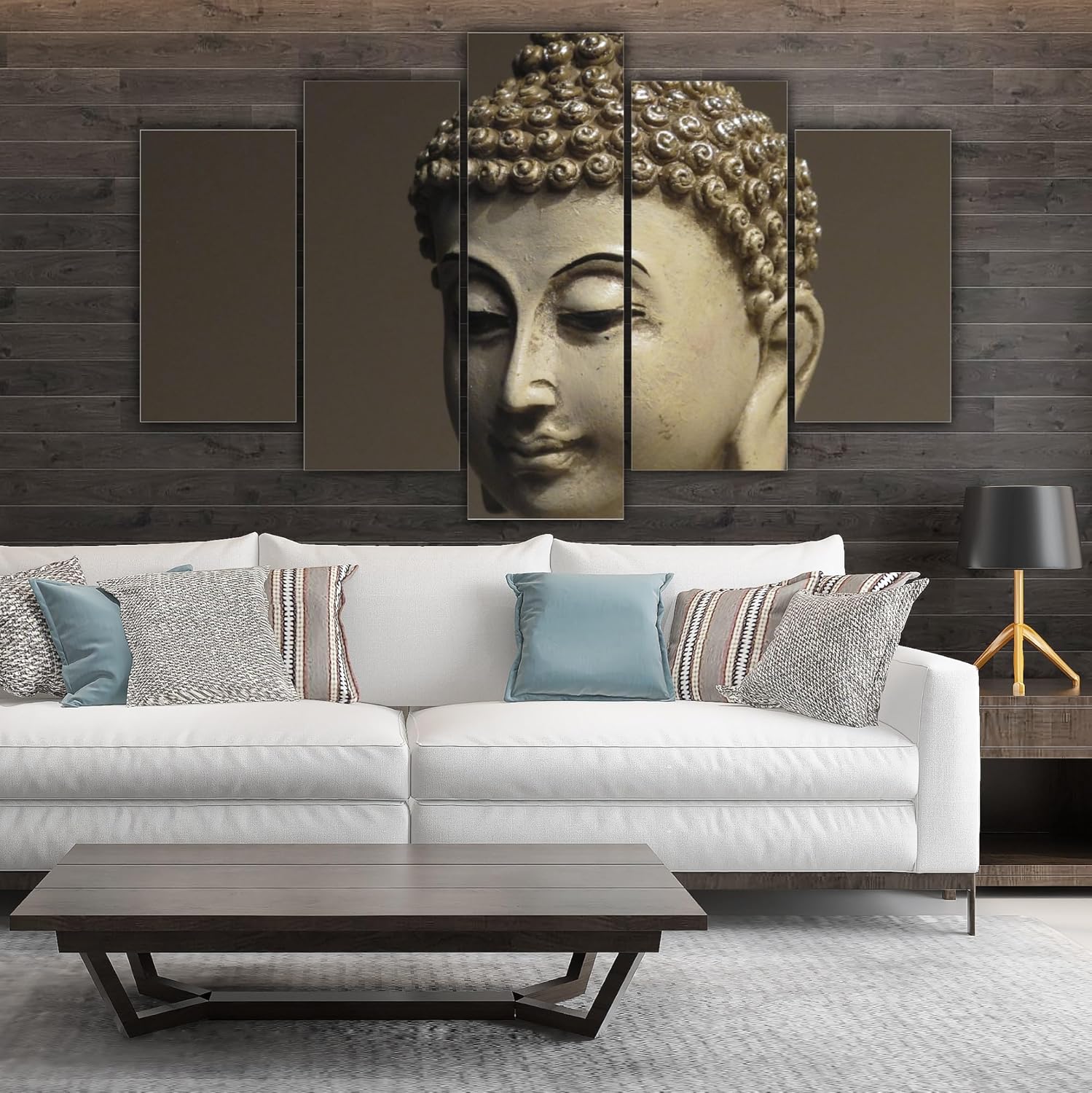
Here's what actually happens with this Buddha canvas. At 127cm wide, it covers roughly 35% of a standard 12-foot Indian living room wall—enough presence to anchor the space, but not so much that it crowds everything else. The remaining 116cm on each side gives your wall breathing room, which is exactly what a meditative piece needs. Too tight, and the zen becomes claustrophobic.
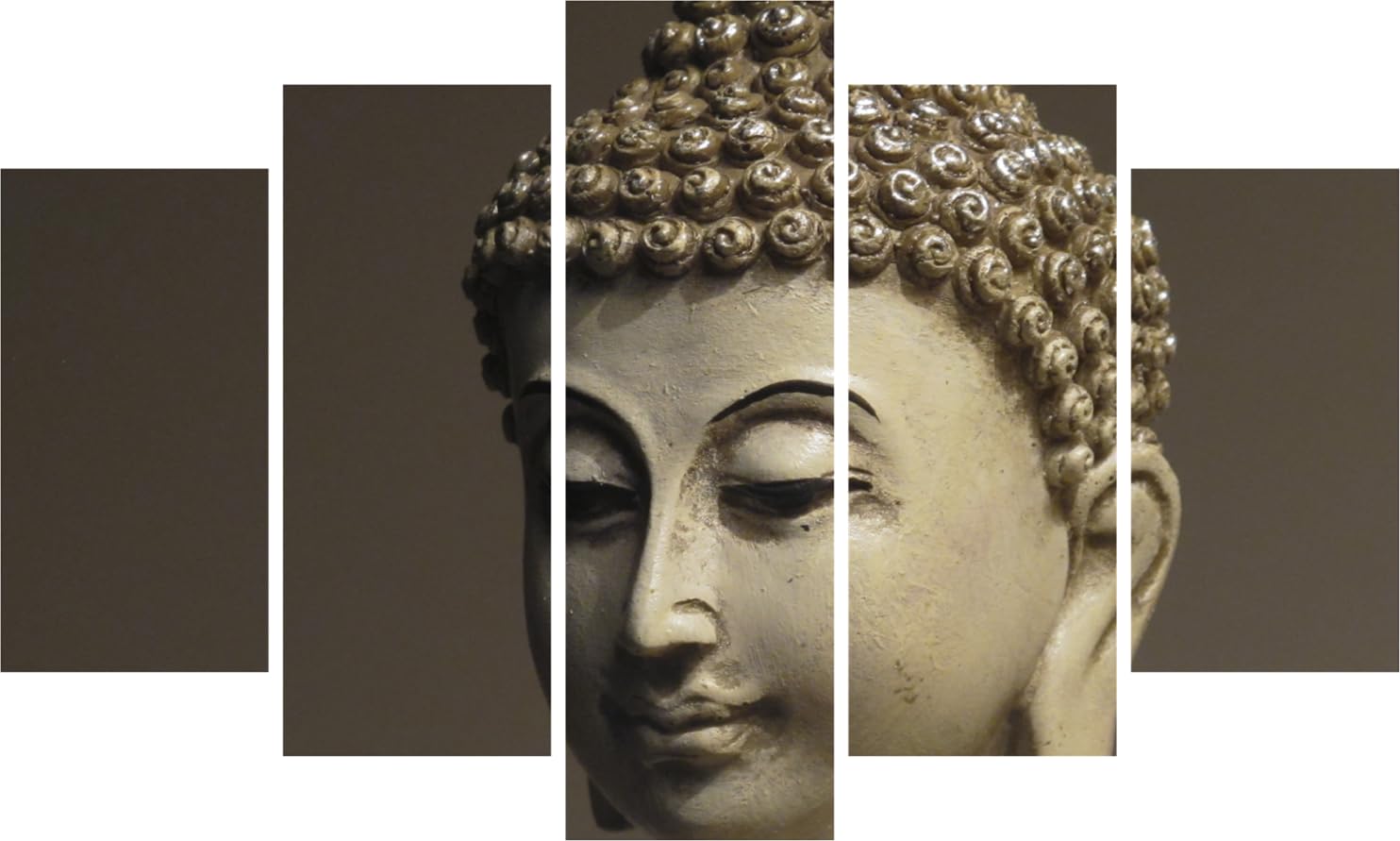
The five-panel format creates something interesting. Each panel carries a section of the Buddha's face—the characteristic curled hair, the serene closed eyes, the peaceful expression. When mounted with standard 2-3cm gaps between panels, the image flows across while adding architectural dimension that single-frame art simply cannot achieve. Your eye moves across it rather than stopping at it.
The Visual Math: How 127cm Fits 12ft Walls in Indian Homes
Your living room wall is probably around 12 feet (360cm). Maybe 10 feet if it's a 2BHK, or 14 feet if you're in a larger flat. Here's the calculation that matters:
On a 12ft (360cm) wall: 127cm coverage = 35% of wall space. This leaves 233cm total empty space—roughly 116cm on each side if centered. That's comfortable negative space, not cramped, not lost.
On a 10ft (300cm) wall: 127cm coverage = 42% of wall space. Still balanced, perhaps even better proportioned for compact rooms. The Buddha becomes more of a statement without overwhelming.
On a 14ft (420cm) wall: 127cm coverage = 30% of wall space. You might consider positioning it off-center above a reading nook, or pairing with complementary elements below.
The 76cm height works with standard 8-10 foot Indian ceilings. Mounted 150cm from floor (eye level), the top of the artwork sits at 226cm—well below a 9-foot (274cm) ceiling, leaving 48cm of breathing room above.
Compare this to a 90cm canvas: only 25% wall coverage on a 12ft wall. That often looks like an afterthought—something to fill space rather than define it. The 127cm width gives the Buddha the presence the subject deserves.
Why These Stone Tones Work in Indian Living Rooms (Not Just Online Photos)
The Buddha is rendered in cream and beige stone tones—the color of aged marble temples, sandstone sculpture, weathered limestone. The background shifts between warm taupe and muted olive-grey. This isn't the saturated, aggressive palette you'll find in marketplace prints.
Against your cream or off-white walls (the standard builder finish in most Indian flats), these tones create subtle contrast. The artwork is visible and present, but doesn't fight for attention. Against light yellow or builder's peach walls, the warm undertones actually harmonize rather than clash.
The earthy palette complements brown sofas—whether fabric or faux leather—and wooden furniture like the coffee tables and TV units common in Indian homes. If you have a pooja shelf nearby, the spiritual theme maintains cohesion rather than visual conflict.
Morning natural light brings out the cream highlights on the Buddha's face. Evening LED light warms the taupe background. Neither lighting condition makes this look washed out or artificially saturated. What you see here is close to what you'll see at home—no photo-editing surprises.
Rental-Friendly Mounting: How to Hang Without Losing Your Deposit
Five panels mean five mounting points. That sounds complicated until you realize each panel weighs around 600 grams—light enough for basic hardware and standard wall plugs. The full 3kg is distributed, not concentrated.
For rental apartments where you're protecting a ₹50,000 deposit: use 6mm wall plugs with appropriate screws for brick (most Indian walls) or butterfly anchors for drywall partitions. The holes are small, easily filled when you move out with white putty that costs ₹50 and five minutes of effort.
Mounting template: space panels 2-3cm apart. Start with the center panel at your eye level (approximately 150-160cm from floor to center of artwork). Work outward, keeping tops level. Total wall time: 15-20 minutes if you've pre-measured.
The 0.6cm depth means panels sit nearly flush against the wall—no awkward protrusion that catches light wrong or creates dust ledges.
How This Compares to Smaller Sizes You've Been Considering
You've probably looked at 90cm options. They're cheaper. But here's the honest trade-off:
90cm on a 12ft wall: 25% coverage. The Buddha floats in empty space. The multi-panel effect feels fragmented rather than expansive. The face detail—the half-closed eyes, the gentle expression—becomes harder to appreciate from across the room.
127cm on a 12ft wall: 35% coverage. The artwork anchors the wall. Panels feel intentionally spaced. Buddha's serene expression remains visible from your sofa, 3-4 meters away.
150cm+ options: More impactful in larger rooms, but on a standard 12ft wall, you're pushing 40%+ coverage. The artwork starts dominating rather than complementing. Zen becomes insistence.
The 127cm hits the balance point—large enough to matter, contained enough to breathe.
Compared to marketplace canvas at ₹800-1000: those use 200-240 GSM canvas with water-based inks that fade within 18-24 months. The frame is often cheap MDF or flimsy softwood that warps in monsoon humidity. At ₹2,796, you're paying for 340 GSM cotton canvas, eco-solvent UV-resistant inks, and kiln-dried pinewood framing that handles 70-85% humidity without warping.
Setting Realistic Expectations: Colors, Lighting, and Your Space
What this canvas is: A meditative focal point. A conversation piece with cultural depth. An artwork that improves with attention—the texture of Buddha's curled hair, the gentle asymmetry of the stone surface, the interplay between panels.
What this canvas isn't: A transformative room makeover. If your wall has cracks, they'll still be visible around it. If your furniture clashes, it won't resolve that. Good art complements a space; it doesn't fix one.
From 3-4 meters (your sofa position), you'll see the overall composition—peaceful Buddha face, warm stone tones, satisfying panel arrangement. From 1-2 meters, you'll notice the print detail and canvas texture. Neither distance disappoints.
Colour accuracy: The cream-beige is true to print. You won't receive something unexpectedly yellow or washed out grey. The monitor you're viewing this on may shift things slightly, but the stone-temple palette is consistent.
Quick Specifications
- Dimensions: 127cm (W) × 76cm (H) × 0.6cm (D) total
- Panels: 5-panel multi-frame design
- Weight: 3 kg total (~600g per panel)
- Canvas: 340 GSM cotton with moisture-resistant coating
- Frame: 1.5" kiln-dried pinewood (12% moisture content)
- Inks: Eco-solvent UV-resistant printing
- Colours: Cream, beige, taupe, olive-grey stone tones
- Subject: Serene Buddha face close-up
- Price: ₹2,796
- Delivery: 5-6 days metro cities, 6-8 days tier-2/3 cities
- Mounting: Rental-friendly, standard wall plugs suitable