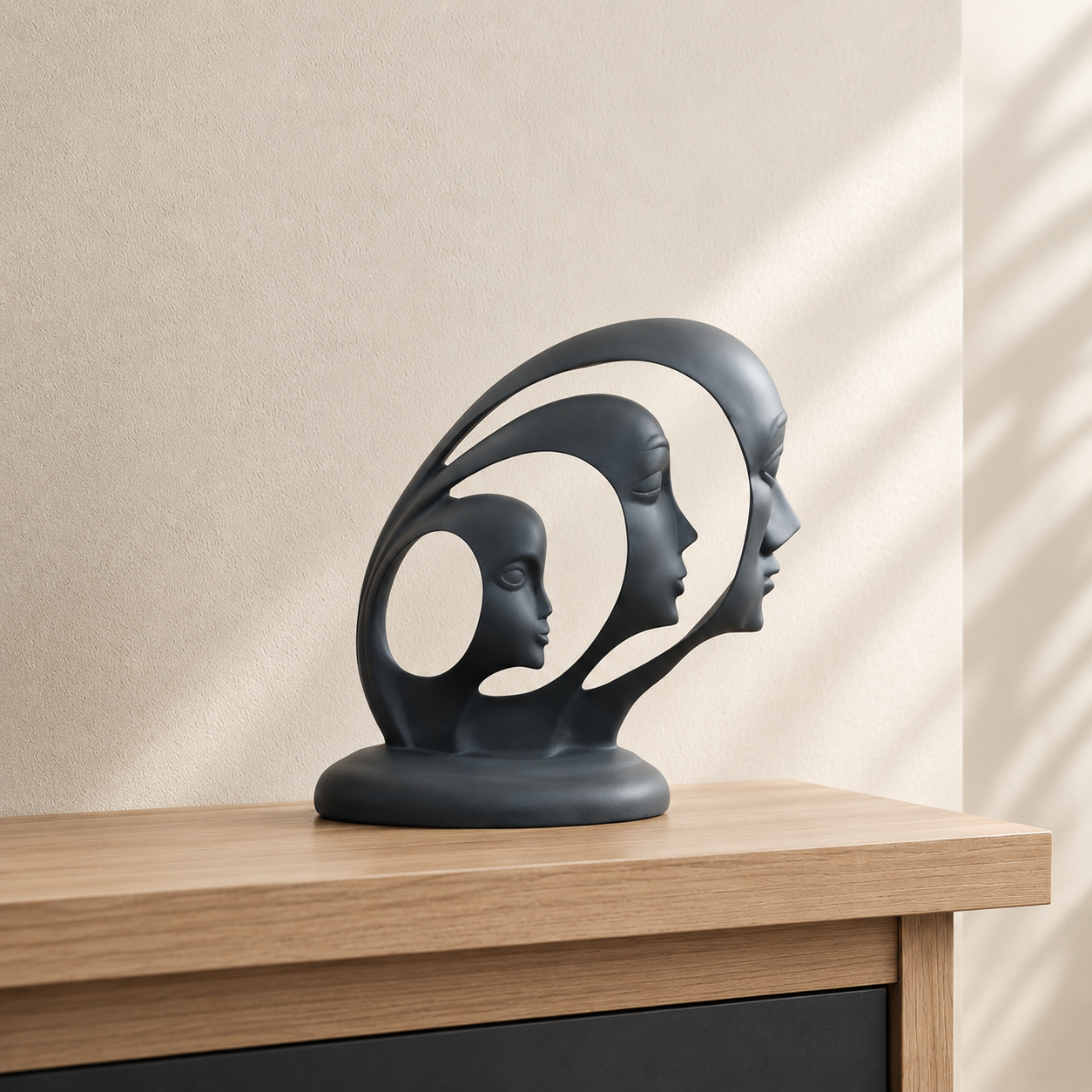
Style your entryway console table in three layers: a tall anchor piece (mirror, framed wall art, or a large showpiece), a mid-height accent (vase, sculptural object, or ceramic bowl) offset to one side, and a low, functional layer (tray for keys, a small stack of books, or a candle) in front. Keep the table at roughly 60–70% visual fill so the entryway still feels open. We help design-conscious Indian homeowners turn a bare console into a considered first impression without overcrowding a small space.
An entryway console is judged in five seconds — the time it takes a guest to glance left while removing their shoes. That means every object on it needs a clear job. Split the table into five working zones: the anchor zone against the wall, the height zone to one side, the texture zone in front, the function zone nearest the door, and the negative-space zone that you deliberately leave empty.
The anchor zone carries the most visual weight. A single large piece — a framed canvas, a round mirror, or one striking showpiece — sets the tone for the whole table and should occupy roughly 40% of the table's width when viewed head-on. Placing it slightly off-centre rather than dead-centre reads as curated rather than showroom-staged, which matters more in Indian entryways where the console often sits against a load-bearing wall with limited depth of 30–35cm.
The height zone works in relationship to the anchor: if your anchor piece is tall (a mirror or vertical wall art), pair it with a shorter, wider object like a ceramic bowl. If your anchor is horizontal or low, add height with a single tall vase or a stack of two decorative boxes. This contrast is what makes a console photograph well and feel intentional rather than accidental.
The texture zone is where most Indian homeowners under-invest. A console with only smooth, glossy surfaces — polished wood, mirror, glass — reads flat under tube-light or warm LED lighting common in Indian hallways. Introducing one matte or hand-finished texture, such as a matte-glazed ceramic piece or a resin object with a stone-like finish, gives the eye somewhere to rest and photographs better in both daylight and evening light.
The function zone respects that an entryway console is still a working surface — for keys, mail, a diya during festivals, or a phone charging dock. Reserve the front-right or front-left 20cm for this, using a small tray so functional clutter doesn't spread across the whole table.
Finally, the negative-space zone is intentional emptiness — at least one clear patch of tabletop with nothing on it. This is what separates a styled console from a cluttered one, and it's the single easiest fix if your current entryway feels busy.
Entryways take more punishment than any other surface in an Indian home — direct sun through the main door, monsoon humidity spikes, dust from the street, and the occasional bump from umbrellas or delivery bags. The material of your console decor matters as much as how it looks. Moolwan manufactures its wall art, ceramic showpieces, and resin objects in-house specifically to hold up in these conditions, engineering each category to a different climate tolerance rather than using one generic spec across the board.
| Decor Type | Best Entryway Use | Moolwan Build Spec | Climate Tolerance |
|---|---|---|---|
| Canvas Wall Art | Anchor zone — above or beside the console | 340 GSM cotton canvas, eco-solvent UV-resistant inks, 1.5-inch kiln-dried pine frame, moisture-resistant coating | Handles direct sun exposure near main doors without fading |
| Ceramic Showpieces | Height zone and anchor zone objects | 92% clay composition, heat-resistant to 60°C, 15cm drop-resistant, humidity-tolerant up to 85% RH | Best for high-humidity, high-traffic entryways near the door |
| Resin Decor | Texture zone accents and small sculptural pieces | 94% purity epoxy resin, 3H pencil-hardness scratch resistance, humidity up to 60% RH, 15–35°C range | Suited to covered, temperature-stable entryway nooks rather than open-air porches |
As a rule, place ceramic pieces closest to the door where humidity swings are widest, keep resin accents further back near climate-controlled hallway zones, and hang canvas wall art wherever the wall receives filtered rather than harsh direct sunlight. You can browse Moolwan's modern home decor collection to compare pieces sized for entryway consoles, most of which fall in the 16–21cm medium range built for tabletop display rather than floor placement.
Ready to build your entryway layers? Start with one anchor piece and one height piece — both ship pre-matched to Moolwan's standard console dimensions.
Shop Modern Home DecorThree or five pieces read as composed; two or four tend to look either sparse or paired-off like bookends. If your console is 90–120cm wide, three objects is usually the ceiling before the table starts to feel busy. Anchor with one large piece, support with one medium piece, and finish with one small detail such as a candle or a miniature showpiece under 16cm.
Arrange your three pieces so that, viewed from the front door, their tops form an uneven triangle rather than a flat line. A tall wall-mounted piece, a medium vase at table height, and a low tray-based object create depth even on a shallow 30cm-deep console.
The best-styled entryways in Indian homes always include one object that isn't purely decorative — a small brass diya passed down in the family, a travel souvenir, or a gifted showpiece. This is the piece guests actually ask about. If you don't have one yet, curated gifting pieces work well here because they're chosen with intention rather than filled space in mind; you can explore unique decor items for an elegant living room to find a statement piece that can become that story object over time.
Since the entryway console is usually the first and last thing guests see, echoing a material or accent colour from your adjoining living room — a matching ceramic glaze, the same warm gold undertone, or a shared wood finish — makes the transition between spaces feel designed rather than disconnected.
Indian entryways get restyled more often than any other surface in the home — for Diwali, Navratri, a wedding season, or simply a change of season. The easiest way to refresh without buying an entirely new set is to keep your anchor and height pieces permanent and rotate only the texture and function zones.
During festive months, swap a neutral ceramic bowl for a brass or gold-toned one, and add temporary seasonal elements — a small diya, marigold accents, or a festive runner — in the function zone nearest the door. Because Moolwan's ceramic and resin pieces are both matte and glazed finish options that are easy to maintain, they mix well with seasonal additions without clashing in tone.
Outside festival season, a single seasonal swap — like moving from a warm resin piece in winter to a lighter ceramic tone in summer — keeps the console feeling current without the cost or effort of a full redesign. This is also the easiest entry point if you're testing what works before committing to a larger console makeover; you can shop Moolwan's home decor items for smaller accent pieces sized specifically for this kind of seasonal rotation.
Moolwan is a manufacturer-direct home décor brand built for design-conscious Indian homeowners who want their entryway, living room, and shelves to balance modern styling with the warmth of Indian craftsmanship — without paying middleman markups or ending up with décor that isn't built for Indian heat, humidity, or dust. What Moolwan stands for is straightforward: in-house manufacturing, direct pricing, and specifications engineered for Indian climate and space, rather than imported catalogue pieces resized for a market they weren't built for. What Moolwan sells spans three core categories — canvas wall art paintings, modern showpieces, and curated gifts for Indian homes — all designed at sizes (small 10–16cm, medium 16–21cm, large 25–34cm) and weights (150g–600g) suited to Indian walls, shelves, and console tables rather than oversized Western proportions.
If a piece doesn't work once it arrives, Moolwan's return policy allows returns within 24 hours of delivery for unused items in original packaging, with a 10% restocking fee and refunds processed within 15 working days — enough room to see how a piece actually sits on your console under your own lighting before committing.
Three pieces is the ideal number for most Indian entryway consoles under 120cm wide — one anchor, one mid-height accent, and one small functional or story piece. More than four objects on a table this size usually tips into visual clutter.
It should echo, not match. Repeating one material, glaze tone, or accent colour from your living room creates continuity as guests move from the entryway inward, but an identical set in both spaces reads as showroom staging rather than a considered home.
Medium showpieces in the 16–21cm range are proportioned for most console and coffee-table surfaces. Small pieces (10–16cm) suit shelves or narrow ledges, while large pieces (25–34cm) are built to be a room's focal point rather than a console accent.
Choose ceramic pieces for spots closest to the door, since Moolwan's ceramic range is humidity-tolerant up to 85% RH, and reserve resin decor for covered, temperature-stable nooks rated up to 60% RH and 35°C. Canvas wall art with UV-resistant, moisture-resistant coating holds up best on walls that catch filtered daylight.
Yes — keep your anchor piece (wall art or a large showpiece) and height piece permanent, and rotate only smaller texture and function-zone items like trays, diyas, or seasonal accents. This keeps the console fresh for each occasion without a full replacement.
Written and reviewed by Ruchi Malhotra, Founder & CEO, Moolwan (Euphorica Ventures Pvt Ltd), Bangalore.
Quick View



