
How do I choose my decorating style?
At Moolwan, we help design-conscious Indian homeowners build spaces that feel intentional, personal, and climate-ready — without over-designing or overspending. The most common mistake Indian buyers make is mixing too many styles without a visual anchor. This guide cuts through that confusion.
---
Step 1: Identify How You Want Your Home to Feel — Not Just Look
Decorating style is rooted in mood, not trend. Before you search for "what's popular," ask yourself three questions: Do I want my home to feel calm and uncluttered? Do I want it to feel warm and lived-in? Do I want it to feel expressive and layered? Your honest answers will immediately eliminate at least two-thirds of the style categories out there.
Indian homes have an additional design tension that most global décor advice ignores: you are balancing a modern aesthetic with a deeply rooted cultural identity. The best decorating styles for Indian apartments aren't simply imported Western trends — they are adapted, blended, and climate-calibrated. A scandinavian-minimalist setup that works beautifully in a dry Stockholm apartment will look stark and feel sterile in a humid Mumbai flat. The materials, finishes, and colour temperatures must account for your actual climate, not Pinterest's.
Use this as your starting filter: identify your mood, then identify your climate zone, and only then choose a style family.
---The 5 Most Practical Decorating Styles for Indian Homes
Not every global design movement translates to Indian apartments, duplex units, or independent houses. Below are the five styles that work reliably across Indian spaces — and what each demands from your showpieces, wall art, and room layouts.
1. Modern Minimalist
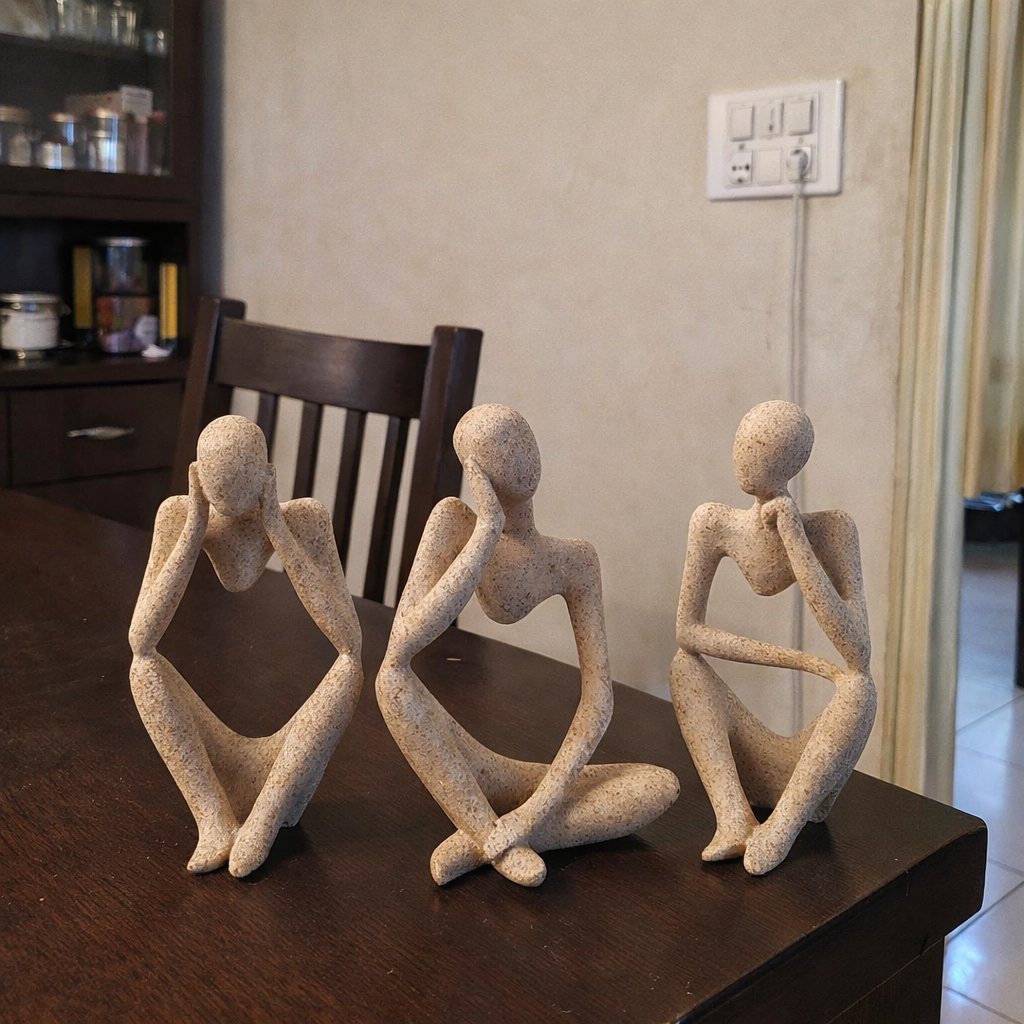
Clean lines, neutral palettes, deliberate negative space. This style works best in compact urban apartments where clutter is the enemy of calm. It demands restraint: one or two statement modern home décor pieces placed with intention, not a shelf crowded with figurines. Moolwan's medium-sized resin showpieces (16–21 cm) — crafted from 94% purity epoxy resin with a 3H scratch-resistance rating — are engineered specifically for this placement: precise, light-catching, and low-maintenance.
2. Warm Contemporary
This is the most popular emerging style in urban Indian homes — it layers warm tones (terracotta, rust, ochre, ivory) over clean furniture silhouettes. It bridges the gap between modern and traditional without committing fully to either. It pairs naturally with ceramic showpieces and canvas art. Moolwan's ceramic collection, made from 92% clay composition and rated humidity-tolerant up to 85% RH, is built for Indian weather and looks right at home in this palette.
3. Indo-Eclectic (Traditional Fusion)
This style intentionally mixes Indian craft elements — handwoven textures, regional motifs, brass and stone accents — with modern furniture. It is the most personal style and requires the most editing. The rule: every traditional element needs a modern counterpart, and every modern piece needs one warm, handcrafted anchor. This style thrives in living rooms where curated home décor items can tell a story across the room rather than on a single shelf.
4. Bohemian Layered
Maximalist in spirit, but not random. Boho works in Indian homes when you lead with a consistent colour story — jewel tones or earthy naturals — and layer textures within that palette. It is forgiving of mixed materials but requires a visual hierarchy: one large anchor piece (artwork or a tall showpiece, 25–34 cm) that everything else serves. Without that anchor, boho becomes clutter.
5. Bedroom-Focused Sanctuary Style
A growing number of Indian homeowners are decorating their bedrooms as a dedicated retreat — separate in style from the common areas. This calls for softer, more personal décor: muted tones, tactile finishes, and smaller accent pieces (10–16 cm) on bedside shelves or dressers. If your bedroom is the space you most want to transform, explore Moolwan's bedroom décor collection, designed specifically for the proportions and mood of Indian sleeping spaces.
---Style Comparison: Which Decorating Style Fits Your Home?
| Style | Best For | Key Décor Move | Avoid | Moolwan Material Fit |
|---|---|---|---|---|
| Modern Minimalist | Compact flats, studio apartments | 1–2 statement pieces, max | Overcrowded shelves | Resin (94% epoxy, matte finish) |
| Warm Contemporary | 2–3 BHK apartments, living rooms | Warm tones + canvas art | Cold greys, chrome accents | Ceramic (85% RH tolerant, glazed) |
| Indo-Eclectic | Homes with heirloom furniture | Modern + traditional pairing | Same-era everything | Ceramic + canvas combo |
| Bohemian Layered | Larger rooms, expressive buyers | Large focal anchor piece (25–34 cm) | Colour chaos without a story | Mixed resin + ceramic textures |
| Bedroom Sanctuary | Master bedrooms, personal retreats | Small accents (10–16 cm), soft tones | Loud colour or heavy pieces | Ceramic (lightweight, 150–300g) |
The 3-Piece Rule: The Fastest Way to Lock In Your Style
Once you know your style family, you don't need to redecorate every corner at once. Start with three anchor pieces and build outward. This is the method Moolwan recommends for buyers who are decorating a new space or refreshing an existing one without full renovation:
- One large wall element — a canvas painting or oversized showpiece (25–34 cm) that sets the tone for the room. This defines the colour story and the mood.
- One medium tabletop piece — a showpiece (16–21 cm) on your coffee table, console, or showcase that extends the theme without repeating it literally.
- One small accent — a shelf object or bathroom piece (10–16 cm) that completes the visual triangle across the room.
This triangle of scale — large, medium, small — creates the visual depth that makes a room feel professionally styled rather than randomly decorated. You don't need 20 items. You need three well-chosen ones.
Ready to start? Browse Moolwan's modern home décor collection to find anchor pieces in all three size tiers, engineered for Indian apartment proportions and climate.
---What Indian Homes Get Wrong About Decorating Style
The three most common decorating mistakes in Indian homes — and how to avoid them:
- Buying décor in isolation. A showpiece bought without knowing its destination almost always ends up in a drawer. Decide where it will live before you buy it.
- Choosing material without checking climate. Resin items rated below 60% RH will degrade in coastal or monsoon-heavy zones. Moolwan's ceramic showpieces are rated to 85% RH — specifically because Indian humidity routinely exceeds what most imported décor can handle.
- Confusing "more décor" with "more style." Adding pieces to a room that already has a visual conflict doesn't solve the conflict — it amplifies it. When in doubt, edit down before you add.
Moolwan sells direct from manufacturer to buyer — no retailer markup, no middleman pricing. Every piece is weighed between 150g–600g for safe placement on standard Indian shelving and walls, and finished in matte or glazed surfaces that are easy to maintain year-round.
---Know your style. Now find your pieces.
Moolwan ships across India. Free delivery. COD available.
Shop Home Décor Items →Frequently Asked Questions
Can I mix two decorating styles in the same room?
Yes — but only if one style is dominant and the other is an accent. A warm contemporary room can carry one or two bohemian textile pieces without losing its identity. The ratio should be roughly 70% dominant style, 30% accent. Where buyers go wrong is splitting 50/50, which makes a room feel unresolved rather than eclectic.
How do I choose a decorating style if my furniture is already in place?
Start from what you have. Identify your existing furniture's dominant finish — warm wood, cool metal, white/neutral — and use that as your style anchor. Warm wood tones respond best to warm contemporary or Indo-eclectic styling. Neutral or white furniture gives you the flexibility to go minimalist or boho. Your showpieces and wall art should complement the furniture's undertone, not fight it.
What decorating style works best for small Indian apartments?
Modern minimalist is the most effective style for compact Indian apartments because it uses negative space as a design tool. The key is choosing décor pieces with visual weight — a single resin showpiece with a sculptural silhouette reads louder than five small figurines. Moolwan's small-tier pieces (10–16 cm) are designed for exactly this purpose: maximum visual impact, minimum surface footprint.
How many showpieces are too many for a living room shelf?
As a rule: no more than 3–5 pieces per shelf, with deliberate spacing between them. A shelf filled edge-to-edge looks like storage, not styling. Odd numbers (3 or 5) create more visual interest than even numbers. Vary the heights — tall, medium, and small — rather than lining up pieces of the same height.
Is my decorating style supposed to be the same in every room?
Not identical, but connected. Think of your home as a visual journey: the style in each room should feel like it belongs to the same family, even if the mood shifts slightly. Your living room might lean contemporary; your bedroom can go softer and more personal. What ties them together is a consistent colour palette and a shared material vocabulary — not identical furniture or identical décor pieces.


