By Ruchi Malhotra, Founder & CEO, Moolwan (Euphorica Ventures Pvt Ltd), Bangalore
Decorate on a tight budget by spending 70% of your budget on one durable anchor piece per room, 20% on two or three accent pieces, and 10% on styling extras like frames or trays. This spreads visible impact across the room instead of buying many cheap items that wear out fast. At Moolwan, we help design-conscious Indian homeowners build rooms that look complete without overspending on décor that won't survive Indian heat and humidity.
Most budget decorating advice tells you to "buy less, choose well," which sounds nice but gives no method. The real problem with a tight décor budget in India isn't spending too much — it's spending on the wrong things in the wrong order, then replacing them within a year because they weren't built for Indian humidity, heat, or handling. Moolwan manufactures décor in-house and sells direct to Indian homes, which is why this framework is built around durability data, not guesswork.
Split every room's décor budget into three tiers instead of buying items one at a time as you spot them. 70% goes to one anchor piece — a large wall art or a statement showpiece that sets the room's visual tone. 20% goes to two or three accent pieces — medium showpieces or a curated gift-style object that add texture without competing for attention. 10% goes to styling extras — trays, small vases, or frame swaps that make the room feel finished. This tier order matters because rooms decorated item-by-item without a hierarchy tend to look cluttered even when the total spend is identical.
Budget decorating fails most often at the "save" end — buying the cheapest version of an anchor piece instead of the cheapest version of an accent piece. An anchor piece gets touched, dusted, and looked at daily; a low-cost anchor shows wear within months. Accent pieces and styling extras are lower-stakes and forgive a lower price point far better.
| Décor Tier | Spend Here | Save Here | Why |
|---|---|---|---|
| Anchor piece | Wall art or large showpiece with tested durability specs | Never — this piece anchors the whole room's look | Faces daily wear, sunlight, and dusting; low-cost anchors fade or chip fast |
| Accent pieces | 1–2 well-made medium pieces | Skip a 3rd or 4th accent piece entirely | Fewer, better accents read as curated; too many reads as cluttered |
| Styling extras | Almost never | Trays, small vases, frame swaps | Low visibility, low handling, easiest place to economise |
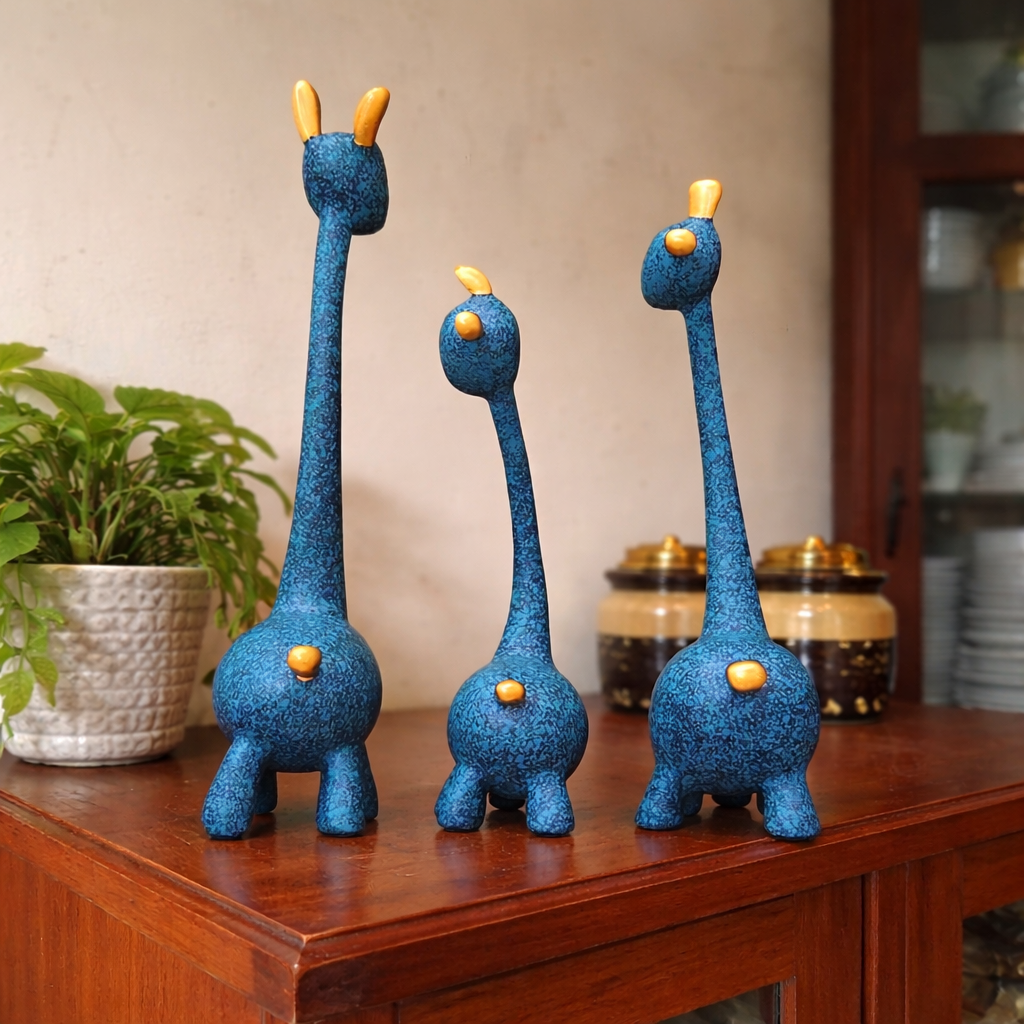
This is also where material specs matter more than price tags. A ceramic showpiece with lower clay purity or a resin piece with lower epoxy purity looks identical in a product photo but degrades faster once it's actually living in an Indian home. You can browse Moolwan's unique decor items for elegant living rooms to see anchor-tier showpieces built for exactly this kind of daily wear.
Ready to build your room around one anchor piece instead of ten small ones?
Shop Modern Home Decor ItemsNot every room needs the same tier split. Living rooms and entryways are seen by guests daily and justify the full 70-20-10 spend; bedrooms and study corners can shift more budget toward the 20% accent tier since they're viewed up close rather than as a whole composition.
This is where the 70% anchor spend earns the most visibility. One large canvas wall art above the sofa or a large ceramic showpiece on a console table does more visual work than five small items scattered across shelves. Explore Moolwan's home decor items for statement pieces sized for Indian living room walls.
Bedrooms tolerate a smaller anchor piece since the room is viewed at closer range, so shift 10–15% of the anchor budget into a second accent piece — a bedside showpiece or a small resin sculpture — instead of one oversized item.
Spaces tied to gifting occasions — housewarming corners, entryway consoles — benefit from curated gift-style pieces that double as décor. These are ideal accent-tier buys since they carry meaning beyond their price point.
The cheapest way to blow a décor budget is buying a piece twice because the first one couldn't handle Indian conditions. Moolwan builds every category to a published spec so you know exactly what you're paying for before you spend the 70% tier: ceramic showpieces use a 92% clay composition, are heat-resistant to 60°C, and tolerate humidity up to 85% RH with a 5+ year lifespan. Resin items use 94% purity epoxy, hold 3H pencil hardness scratch resistance, and are rated for humidity up to 60% RH. Canvas wall art uses 340 GSM cotton canvas with eco-solvent UV-resistant inks and 1.5-inch kiln-dried pine frames, so colour doesn't fade under direct sun exposure — a common failure point for cheaper prints.
Size also affects how far your anchor-tier budget stretches. Small pieces (10–16cm) suit shelves and desks, medium pieces (16–21cm) suit coffee tables and showcases, and large pieces (25–34cm) work as standalone focal points — choosing the right size band for the right surface avoids buying a second piece later to "fill the gap."
Set a total room budget first, then split it 70% on one anchor piece, 20% on two or three accent pieces, and 10% on styling extras like trays or frames. This hierarchy matters more than the total amount spent.
Choose one large, well-made anchor piece — a canvas wall art or large showpiece — rather than several small ones. A single focal point reads as intentional even on a modest budget.
Yes, on anchor pieces specifically. Ceramic at 92% clay purity and canvas printed with eco-solvent UV-resistant inks resist Indian heat, humidity, and sun fading, which avoids replacement costs within the first year.
Buying direct from a manufacturer like Moolwan removes middleman markup, which typically brings anchor-tier pieces closer to accent-tier pricing without lowering material quality.
Medium showpieces (16–21cm) suit coffee tables and showcases and offer the best visual impact per rupee for most Indian living rooms, without overwhelming a smaller space.
Build your room the right way — one durable anchor piece at a time.
Shop Unique Decor for Elegant Living RoomsQuick View



