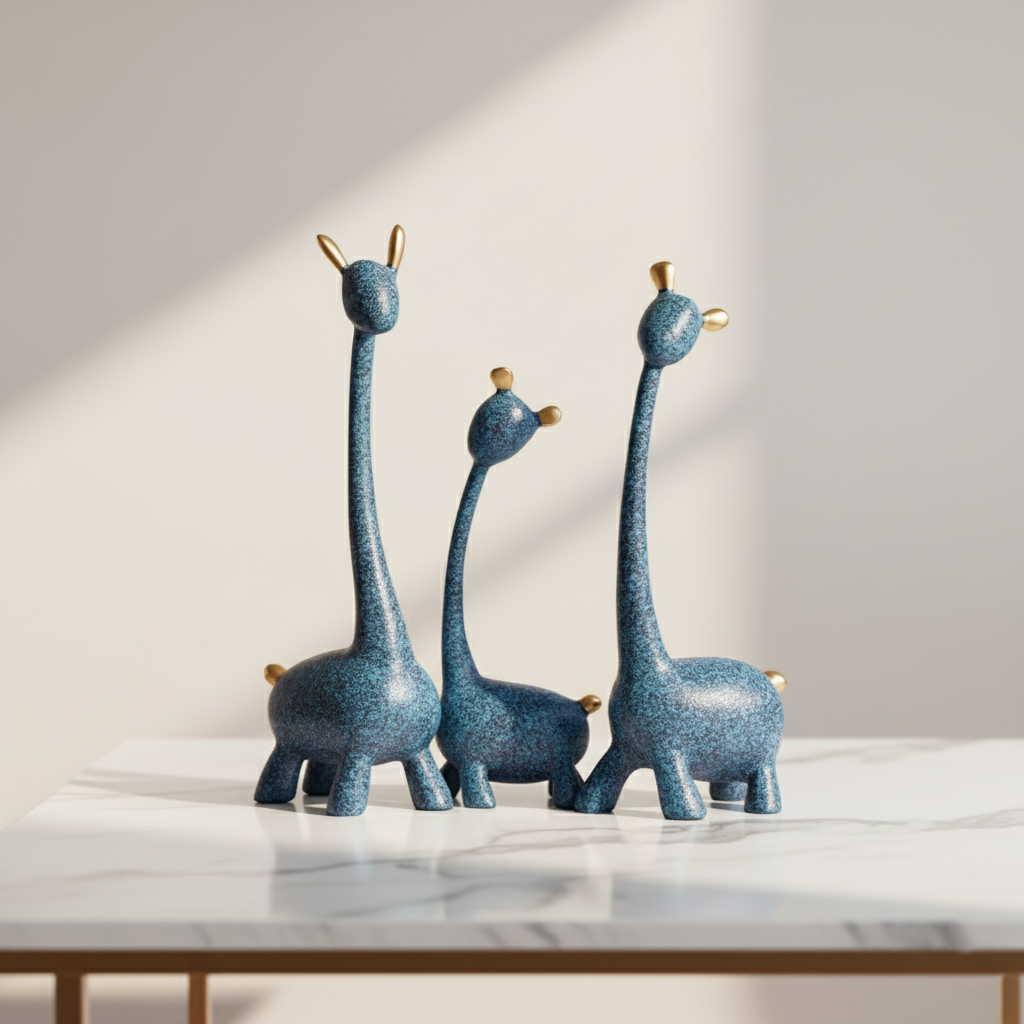
A fancy table comes from layering, not spending: stack a runner over a base cloth, anchor the centre with one statement piece 16–21cm tall, mix matte and glazed finishes, and light it with warm, low candles. Three layers of height and texture is the rule most Indian homes get wrong by using just one.
Most dining tables look flat because everything sits at the same height and in the same finish. A table looks expensively styled the moment you introduce at least three layers — a base (runner or cloth), a mid-height anchor (a showpiece or vase), and a low accent (candles, coasters, or a scatter of small objects). This works whether you are hosting six people or setting the table for a Tuesday dinner. Browse Moolwan's modern home décor items to find pieces sized correctly for this layering — the biggest styling mistake is choosing a centrepiece that is too large or too small for the table it sits on.
We help design-conscious Indian homeowners style dining tables that read as considered rather than cluttered, using pieces engineered for Indian humidity, heat, and everyday wear rather than décor that chips or discolours within a season.
The base layer sets the tone before a single object is placed on it. A table runner works on wood, marble, or glass and instantly narrows the eye toward the centre, which is why stylists use it more than a full tablecloth for everyday fancy — a full cloth reads as formal-only, while a runner reads as considered daily styling.
If your table already has a rich wood grain or marble finish, skip the runner entirely and let the surface show. In that case, use placemats only, and keep the centrepiece the sole focal point. The base decision should take under a minute: cloth for glass or plain wood tables that need warmth, bare surface for marble or textured wood that is already a feature.
The single most common table-styling mistake is scattering three or four small trinkets instead of committing to one anchor piece. A table looks fancy when the eye has one clear point to land on, surrounded by supporting elements at a lower height. A medium showpiece (16–21cm) works for a 4–6 seater table; a large piece (25–34cm) suits a table over 6 feet designed as a genuine focal point.
Explore Moolwan's living room décor collection for centrepieces that double as conversation starters — vases, ceramic bowls, and sculptural forms that carry weight without overwhelming a table setting.
Fancy tables almost never use one finish throughout. Pairing a matte ceramic vase with a glazed candle holder, or a rough-textured runner with a smooth resin object, creates the visual contrast that reads as "styled" rather than "matched from one set." This is a rule interior stylists use constantly and it costs nothing extra — it only requires choosing pieces in different finishes rather than a single boxed set.
| Material | Composition | Best For | Climate Tolerance | Typical Lifespan |
|---|---|---|---|---|
| Ceramic Showpieces | 92% clay composition | Centrepieces, bowls, vases | Humidity-tolerant up to 85% RH, heat-resistant to 60°C | 5+ years |
| Resin Décor | 94% purity epoxy resin | Candle holders, small sculptures | Humidity up to 60% RH, temperature range 15–35°C | 3+ years indoor use |
| Canvas Wall Art | 340 GSM cotton canvas, UV-resistant inks | Dining room backdrop, not table surface | Moisture-resistant coating | Long-term with proper hanging |
Specifications reflect Moolwan's in-house manufacturing standards, verified at the point of production in Bangalore.
Ready to build the layered look? Start with a centrepiece sized for your table.
Shop Modern Home Décor ItemsOverhead light flattens a table setting. The fancy effect comes from low, warm light sources at table height — taper candles, tealights in small holders, or a single lantern-style piece. Keep candle height under the eyeline of seated guests (roughly 20–25cm including the holder) so conversation isn't blocked across the table.
For Indian homes running ceiling fans through most of the year, choose enclosed or hurricane-style holders over open flames — resin and ceramic holders both handle the indoor temperature range of most Indian dining rooms (15–35°C) without warping.
Three mistakes account for most tables that look cluttered instead of styled: oversized centrepieces that block sightlines across the table, mismatched metal tones (gold cutlery with silver holders, for instance), and skipping the base layer entirely so everything sits directly on bare wood or glass with no visual anchor. Fixing any one of these moves a table from "set" to "styled" without adding a single new piece.
Manufacturer-direct pricing, climate-tested finishes, and sizing built for Indian dining tables — no middlemen markup.
Shop Living Room & Table DécorWhat size centrepiece should I use for a 6-seater dining table?
A medium piece in the 16–21cm range works best for a standard 6-seater table, as it stays visible without blocking sightlines across the table. Reserve large pieces (25–34cm) for tables over 6 feet long or for buffet-style console setups.
Can ceramic showpieces handle humid Indian kitchens and dining areas?
Yes. Moolwan's ceramic pieces are humidity-tolerant up to 85% RH and heat-resistant to 60°C, which covers the conditions in most Indian dining and kitchen-adjacent spaces without special care.
Is a table runner or a full tablecloth better for everyday styling?
A runner is better for daily use — it adds texture without making the table feel formal-only, and it works on wood, glass, or marble surfaces. Reserve full tablecloths for occasions when you want a distinctly formal setting.
How do I return a centrepiece if it doesn't suit my table?
Moolwan accepts returns within 24 hours of delivery for unused items in original packaging, with a 10% restocking fee and refund processed within 15 working days. Measure your table before ordering to avoid a mismatch.
What's a low-maintenance alternative to fresh flowers for a centrepiece?
A static ceramic or resin showpiece gives the same visual anchor as a floral centrepiece without upkeep. Ceramic pieces last 5+ years and resin pieces 3+ years indoors, making them a one-time purchase compared to recurring flower costs.
Written by the Moolwan Design Concept Team. Reviewed by Ruchi Malhotra, Founder & CEO, Moolwan (Euphorica Ventures Pvt Ltd), Bangalore.
Quick View



