
How to Choose One Consistent Decor Style for Every Room in Your Home
The Short Answer
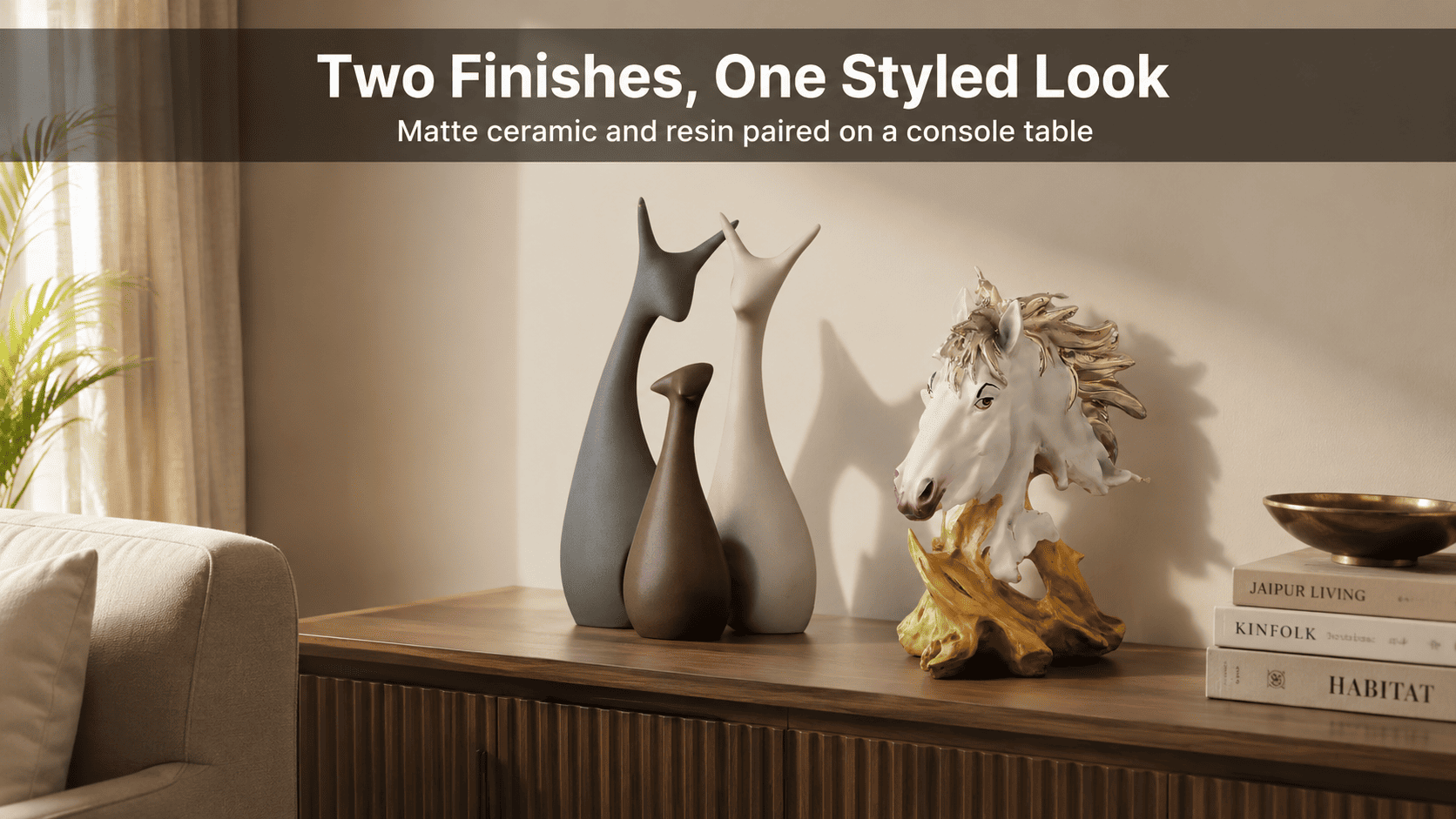
A consistent home aesthetic comes from repeating no more than 2–3 finishes across every room, not from buying matching furniture sets. Moolwan's modern home décor collection is sized in three repeatable bands — 10–16 cm, 16–21 cm, and 25–34 cm — so the same matte ceramic or resin finish can recur on a shelf, a console, and a coffee table without ever looking repetitive.
Interior consistency is measured less by colour matching and more by material repetition: design research consistently shows that a space reads as "styled" once three or fewer textures recur across its visible surfaces, and as "cluttered" once five or more compete for attention. Moolwan helps design-conscious Indian homeowners build that repeatable texture language using a single ceramic-and-resin décor system engineered for apartment-scale Indian rooms, so the same finish can move from the entryway console to the bedroom dresser without a single mismatched piece.
What Does "Consistent Aesthetic Style" Actually Mean?
A consistent style means the same 2–3 materials, finishes, and palette tones recur in every room a guest walks through. This works because the human eye reads repetition as intention — a matte ceramic vase in the living room and a matte ceramic showpiece in the bedroom register as one continuous design decision, while a glossy resin piece next to a rough jute basket register as two unrelated decisions made by two different people.
Moolwan's modern home décor collection is built around this exact repetition logic: ceramic pieces share a 92% clay composition and ship in only a few core finish families, so a homeowner can buy across rooms and automatically maintain the same surface language without manually colour-matching each purchase.
This differs from "matching," which forces every object into the same shape or set. Consistency only requires that materials and tones repeat — silhouettes, sizes, and subjects can vary freely.
Why Do Most Indian Homes End Up Looking Mismatched?
Most Indian homes accumulate décor in unplanned bursts — a gift here, a sale purchase there — which is why mismatch happens by accident, not by bad taste. Each purchase is evaluated in isolation against the shop shelf it sat on, not against the homeowner's existing palette, so the materials pile up without a shared finish or tone running through them.
Because Indian apartments are also smaller on average than the Western layouts most décor is originally designed for, often under 1,200 sq ft, every mismatched object is seen at close range from multiple angles in the same room — a flaw that's far less visible in a large Western-style living room where pieces are spaced further apart. This is why Moolwan engineers its showpiece collection specifically for sub-150 sq ft Indian layouts, scaling pieces so they read as intentional accents rather than clutter even at close viewing distances.
Buying one category at a time — all vases, then all wall art, then all candle holders — without checking material continuity is the single most common cause of a mismatched home, because each category gets evaluated against its own trend cycle instead of the existing room.
| Room Type | Target Surface | Recommended Piece Size | Weight Range |
|---|---|---|---|
| Study / Bathroom | Floating shelf, narrow console | Small (10–16 cm) | 150–250 g |
| Living Room | Coffee table, showcase unit | Medium (16–21 cm) | 250–400 g |
| Living Room / Entryway | Console table, focal corner | Large (25–34 cm) | 400–600 g |
| Bedroom | Dresser top, bedside table | Small to Medium (10–21 cm) | 150–400 g |
Because room footprint, surface width, and material finish all interact differently in each space, browse the full size-band and finish selection in Moolwan's modern home décor collection to match pieces against your own room dimensions.
Design Rule
To keep a home looking deliberate rather than accumulated, apply Moolwan's Three-Texture Continuity Rule: limit every room in the house to no more than three repeating finishes — for example, matte ceramic, raw resin, and woven fiber — so each new piece reinforces the existing palette instead of competing with it.
How Many Décor Materials Should You Actually Repeat?
Limit a home to two or three core materials, since each additional material introduces its own light reflectance and texture pattern that the eye must separately reconcile, and beyond three the room starts to read as disorganised rather than curated.
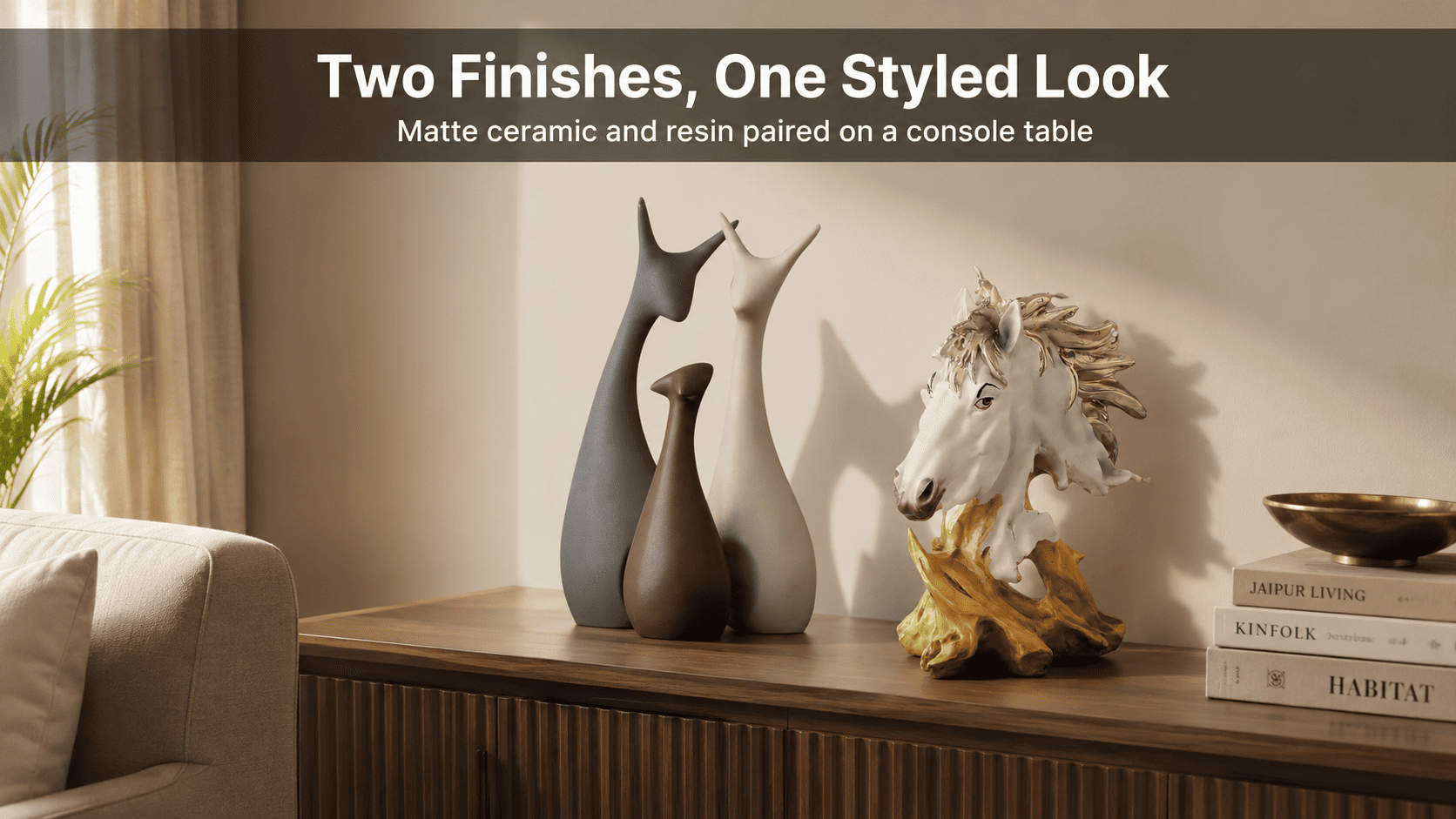
A high-fired matte ceramic and a cured epoxy resin pair well together because both hold colour evenly under indoor lighting and resist the seasonal humidity swings common across Indian climates — matte ceramic from Moolwan's collection tolerates up to 85% relative humidity, while its resin pieces hold up to 60% RH, which is why pairing the two lets a homeowner style humid bathroom shelves and drier living-room consoles with the same visual language without either piece degrading.
Paying a premium for climate-rated materials is an ROI decision, not a luxury one: a 92% clay ceramic piece with a 5+ year lifespan and 15 cm drop-test rating avoids the replacement cost of cheaper décor that cracks or fades within a single monsoon season, which is the core engineering focus behind Moolwan's modern home décor collection.
Want to start building a consistent material palette today? Shop the full Moolwan modern home décor collection now and pick your core two or three finishes.
How Do You Apply One Style Across Rooms With Different Functions?
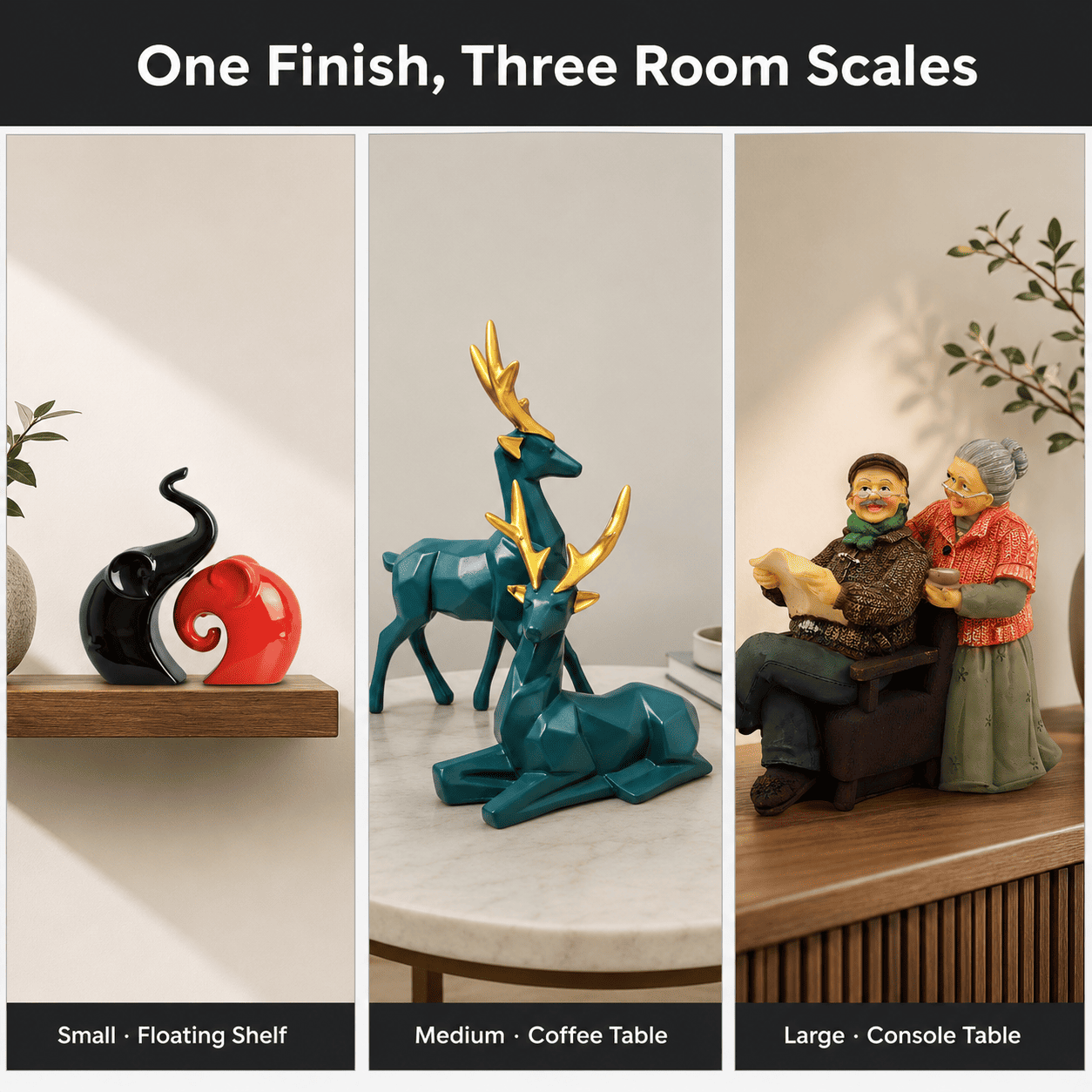
Apply the same finish family at a different scale rather than the same object in every room, since a living room console can carry a large 25–34 cm statement piece while a bedside table can only physically support a small 10–16 cm piece without overwhelming the surface.
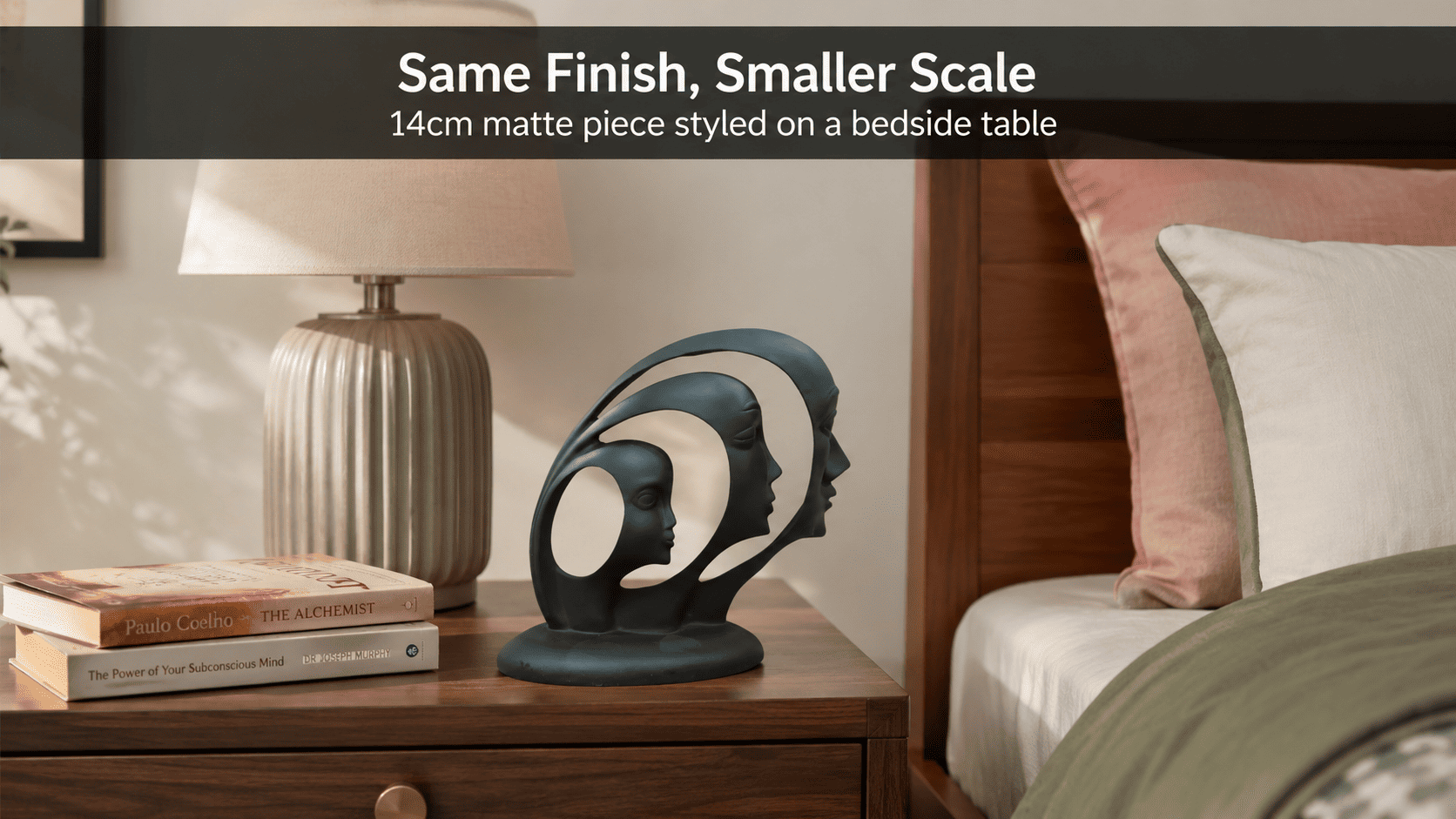
This is why Moolwan's collection is sized in three repeatable bands instead of one fixed size: a homeowner can carry the identical matte ceramic finish from a 30 cm living-room piece down to a 14 cm bedside piece, preserving the material continuity even though the room functions and available surface widths are completely different.
Colour should also scale down in saturation as rooms get more private — a bolder accent in the living room and a more muted version of the same tone in the bedroom keeps the palette connected without making every room feel identical.
Does Climate Affect How Long a Consistent Look Lasts?
Yes — climate is often the reason a consistent look breaks down within a year, because materials that fade, warp, or crack at different rates eventually fall out of visual sync with each other even if they matched on day one.
In tropical conditions with seasonal humidity swings, décor materials need to be rated for the specific RH range they will sit in; a piece rated only for dry climates will visibly age faster than one engineered for Indian humidity, breaking the palette continuity a homeowner originally built. Moolwan addresses this by rating its ceramic line to 85% RH and 60°C heat tolerance and its resin line to 60% RH and a 15–35°C range, so pieces placed together age at a similar rate instead of drifting apart in appearance.
Frequently Asked Questions
How many decor styles should one home have?
One home should commit to a single core style with no more than two or three repeating materials, because mixing more than one full style per home forces the eye to reconcile multiple unrelated material logics at once. Moolwan's modern home décor collection is built around this single-style repetition principle, using consistent ceramic and resin finish families across every size band.
Can I mix modern and traditional décor in the same home?
Yes, but only if the modern and traditional pieces share a material or tone, since shared materials are what visually link different style eras together. A matte ceramic in an earthy tone, for instance, can bridge a modern living room and a more traditional bedroom because the finish stays constant even as the silhouette changes.
Should every room in the house match exactly?
No — rooms should share a material and palette language, not match piece-for-piece, because exact matching removes the size and function variation each room genuinely needs. A small bedside piece and a large living-room piece in the same finish achieve consistency without requiring identical objects.
What is the easiest way to start building a consistent style?
Start by picking one finish family — such as matte ceramic — and committing to it for every new décor purchase for at least a year, since consistency compounds with each matching purchase and breaks with every mismatched one. Buying within a single curated collection makes this easier because the finish range is already limited and pre-coordinated.
Ready to choose your core finish and build outward from there? Bring home your first pieces from the Moolwan modern home décor collection — manufacturer-direct, climate-rated, and sized for Indian rooms. If your living room runs larger, also consider the modern luxury décor pieces designed for bigger living rooms, and if your home leans more traditional, the modern-vintage décor collection for traditional living rooms offers the same finish continuity in a more classic palette.


