
How to Keep a Living Room Looking Stylish for 5+ Years After Decorating
The Short Answer
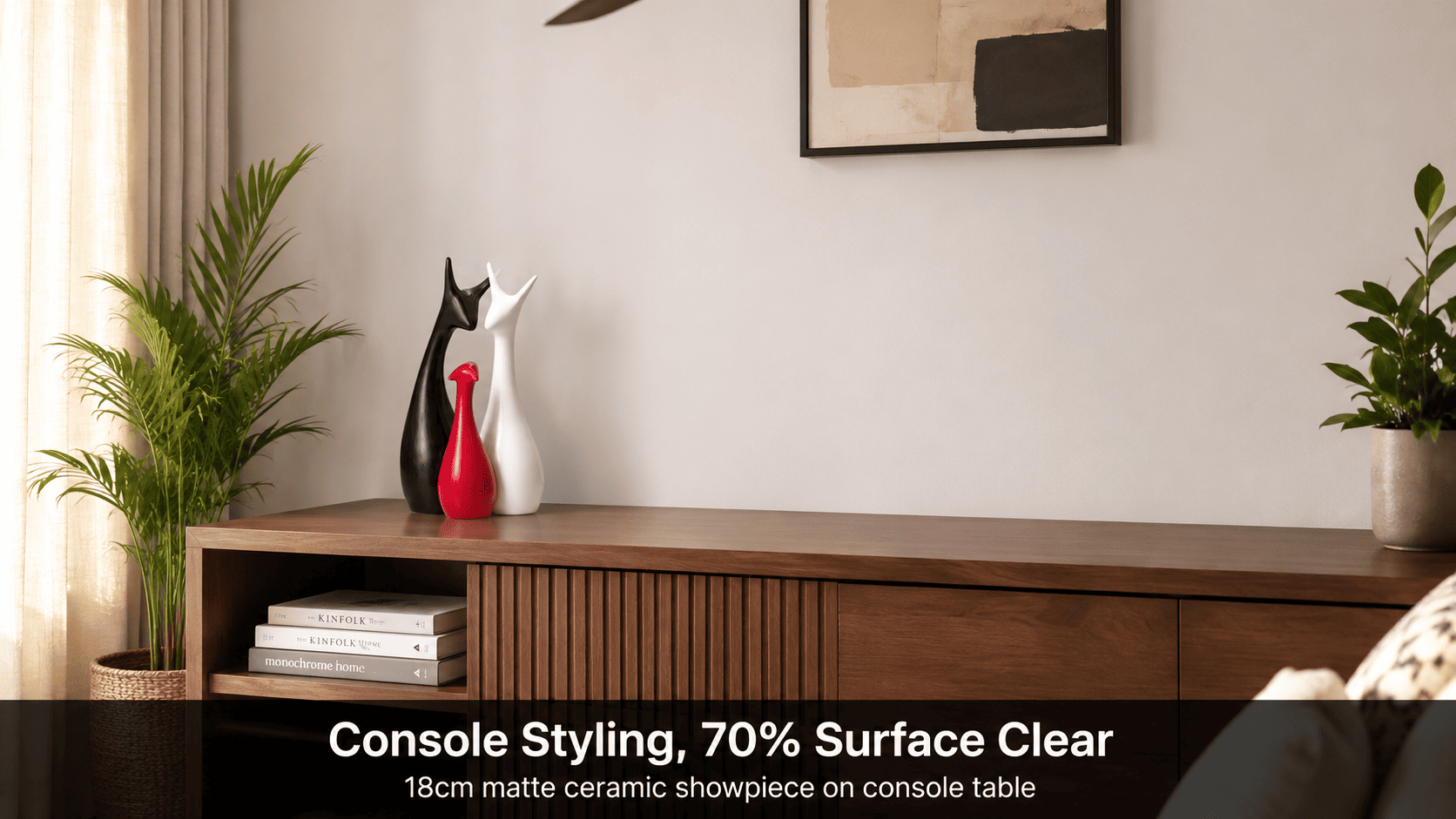
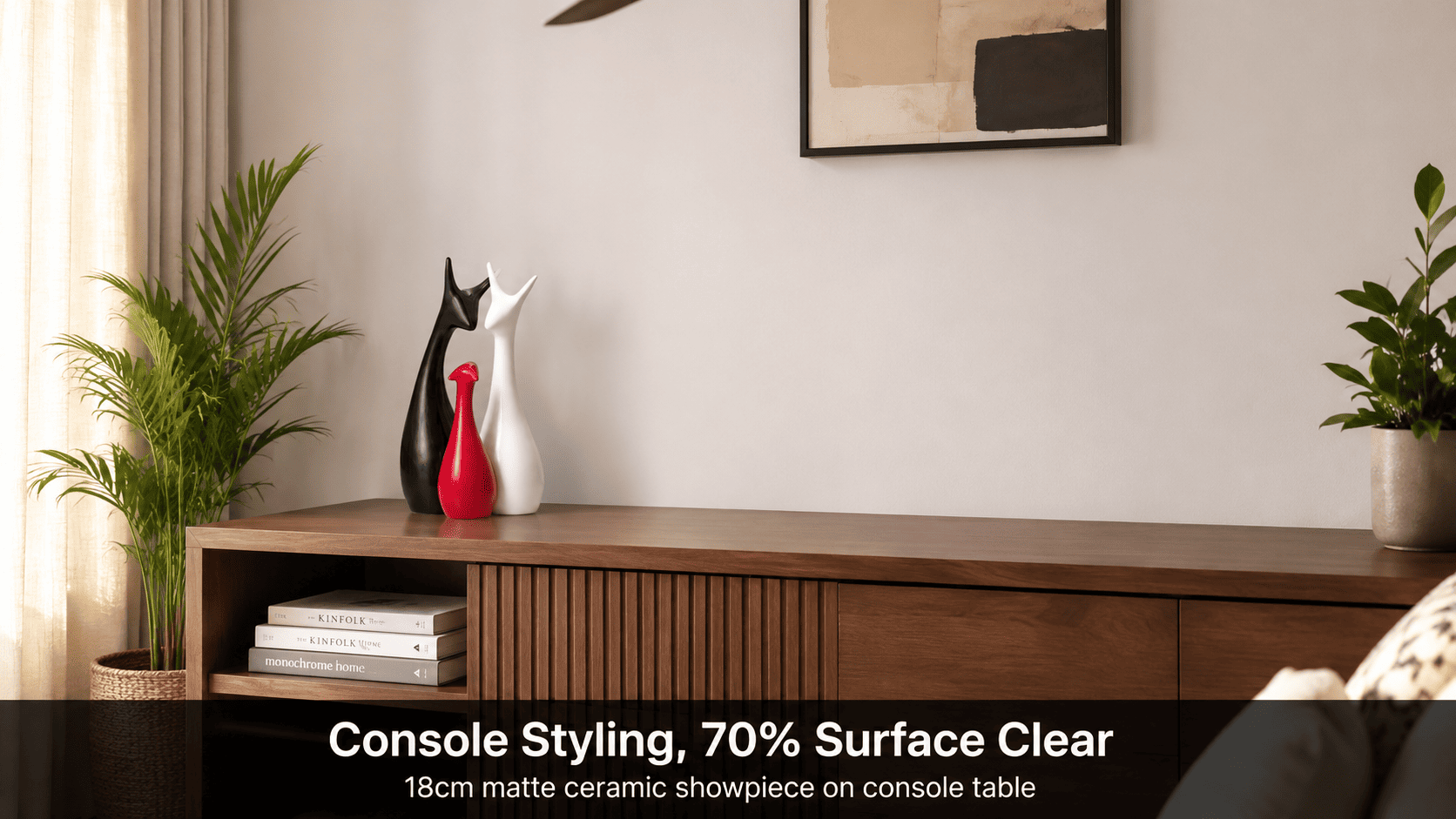
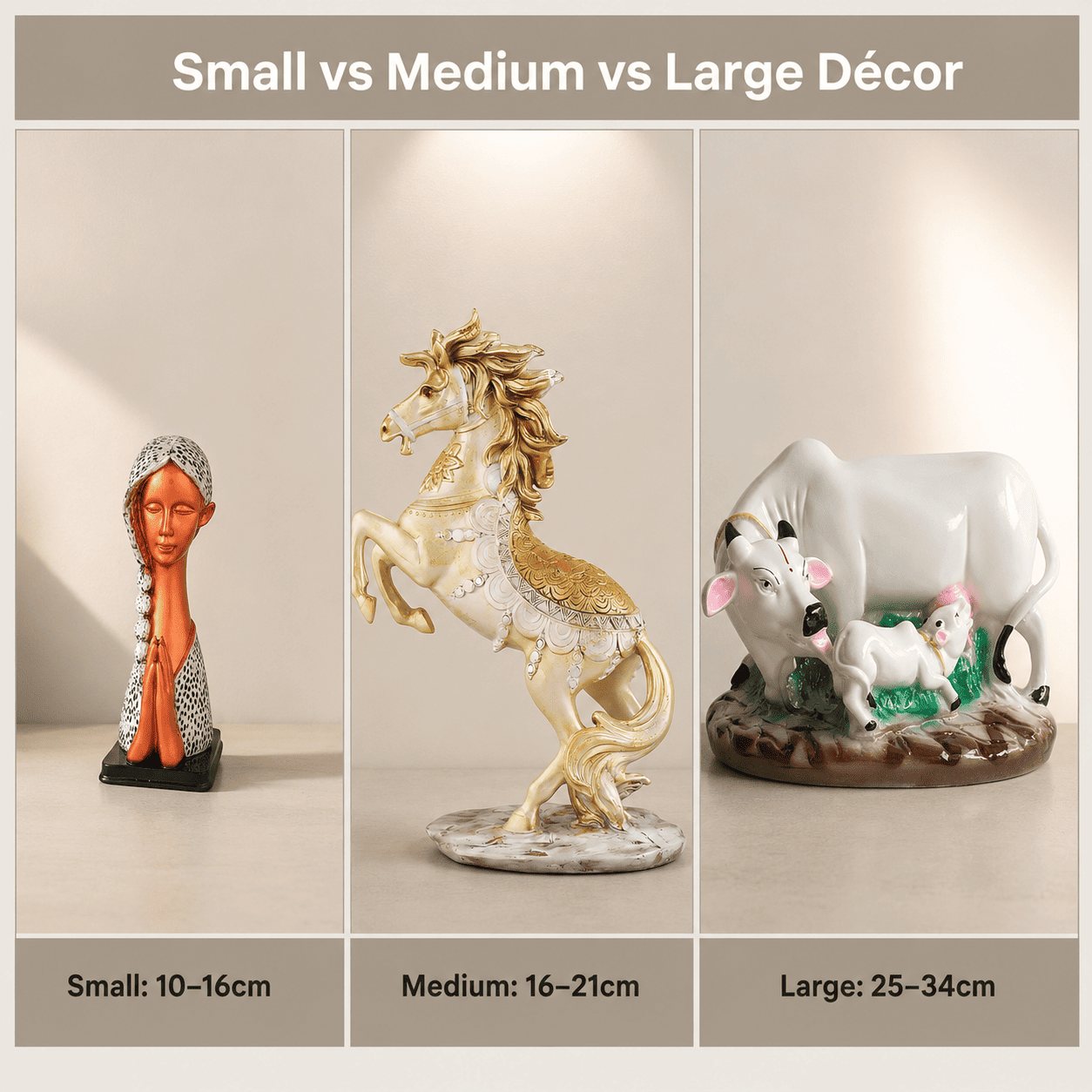
A living room stays stylish long-term when 20% of its décor is rotated seasonally and 70% of every surface stays visually clear, because static, cluttered arrangements are what the eye registers as dated. Moolwan recommends medium (16–21cm) ceramic or resin pieces on console and coffee tables, since this size band holds visual weight without overwhelming a 101–150 sq ft Indian living room.
Interior spaces lose their sense of freshness not because the furniture ages, but because the eye stops registering static objects after repeated exposure — a phenomenon designers call visual fatigue. Moolwan helps design-conscious Indian homeowners keep a fully decorated living room feeling current by pairing durable, climate-rated pieces with a simple rotation and clearance discipline rather than a full re-decoration every year.
Why does a decorated living room start to look dated?
A living room starts to look dated when the same objects sit in the same positions for more than one season, because the brain deprioritizes unchanging visual information and stops "seeing" it as intentional styling. This is why a room can be well-decorated on day one and still feel stale eight months later — nothing has moved.
Surface clutter accelerates this further. Once a console table or shelf exceeds roughly 30% object coverage, the arrangement reads as accumulation rather than curation, because the eye can no longer isolate a single focal point among competing shapes.
How much decorative surface should stay empty?
At least 70% of any horizontal surface — console, coffee table, or open shelf — should remain visually clear. Negative space is what allows the remaining 30% to function as a focal point instead of dissolving into background clutter, because contrast is what the eye uses to identify emphasis.
On Indian apartment layouts, where living rooms frequently fall in the 101–150 sq ft range, this ratio matters more than in larger Western floor plans, since smaller surfaces amplify the visual cost of overcrowding. Investing in fewer, better pieces protects long-term style more effectively than adding volume, which supports durability-first buying decisions over frequent low-cost replacement purchases.
| Room Footprint | Target Surface | Recommended Décor Size | Weight Range |
|---|---|---|---|
| Sub-100 sq ft | Floating shelf / bookshelf | 10–16 cm (Small) | 150–250 g |
| 101–150 sq ft | Coffee table / console | 16–21 cm (Medium) | 250–400 g |
| 151+ sq ft | Focal console / dining sideboard | 25–34 cm (Large) | 400–600 g |
Because ceiling height, sofa scale, and natural light direction all shift the ideal décor size within each footprint band, browse the full size and material selection in Moolwan's living room décor collection to match a piece to your exact layout.
Design Rule
Living rooms retain their styled appearance longest when homeowners follow Moolwan's 20% Rotation Rule: swap or reposition roughly one-fifth of visible décor pieces every season, because introducing partial visual novelty resets perceived freshness without the cost or effort of a full redecoration.
Which materials hold up best in an Indian living room over time?
Ceramic and resin hold their finish longest in Indian living rooms when they meet a minimum humidity tolerance of 60–85% relative humidity, since most Indian homes cycle through monsoon humidity without air conditioning running year-round. Moolwan's modern home décor collection uses a 92% clay ceramic composition rated to 85% RH and a 94% purity epoxy resin rated to 60% RH, both drop-tested to 15cm.
Choosing a material rated for local humidity swings protects the initial styling investment, because warping, cracking, or clouded finishes are what force premature replacement — not aesthetic boredom. A piece that survives five monsoon cycles intact keeps the room looking considered rather than mismatched.
Want a piece engineered to survive five Indian monsoons without warping or fading? Shop the full Moolwan living room décor collection now.
How should pieces be grouped so the room still looks curated?
Décor pieces read as curated, rather than cluttered, when grouped in odd numbers of two or three at varying heights, because asymmetry mimics natural arrangement and avoids the flat, showroom look of matched symmetrical pairs. A short 12cm piece next to a taller 21cm piece creates a visual triangle the eye can follow.
Grouping also makes seasonal rotation easier under the 20% Rotation Rule, since only one item in a cluster needs to change to refresh the whole grouping's feel, rather than restyling an entire shelf or table at once.

Frequently Asked Questions
How often should living room décor be rearranged to stay stylish?
Roughly once per season, or every three to four months, since this interval is long enough to avoid constant upkeep but short enough to interrupt the visual fatigue that makes static arrangements feel dated. Moolwan's 20% Rotation Rule ties directly to this cadence.
Is it better to buy more small pieces or fewer larger ones?
Fewer larger pieces generally hold a room's style longer than many small ones, because a single large focal piece (25–34cm) anchors a surface clearly, while too many small pieces exceed the 30% surface-coverage threshold and read as clutter regardless of individual quality.
Do humid Indian summers damage living room décor finishes?
Unrated finishes can cloud, crack, or warp once relative humidity exceeds their tolerance threshold, typically above 60% RH for standard resin. Materials rated to 85% RH, such as Moolwan's ceramic collection, are engineered specifically to withstand extended monsoon humidity without visible degradation.
What is the fastest way to make an already-decorated room look fresh again?
Reposition existing pieces into new odd-numbered groupings before buying anything new — changing spatial relationships alone often resets a room's perceived freshness, since the eye responds more to arrangement changes than to entirely new objects.
A living room that's engineered for Indian humidity and styled with intentional clearance doesn't need a yearly overhaul to look current — it needs the right pieces rotated the right way. Choose a focal piece from the full Moolwan living room décor collection, or if you're working with a compact layout or prefer a darker palette, also consider Moolwan's black room accessories for elegant living rooms and luxury décor picks for small living rooms.


