

The Right Order to Decorate a Room for a Polished Indian Home
The Short Answer
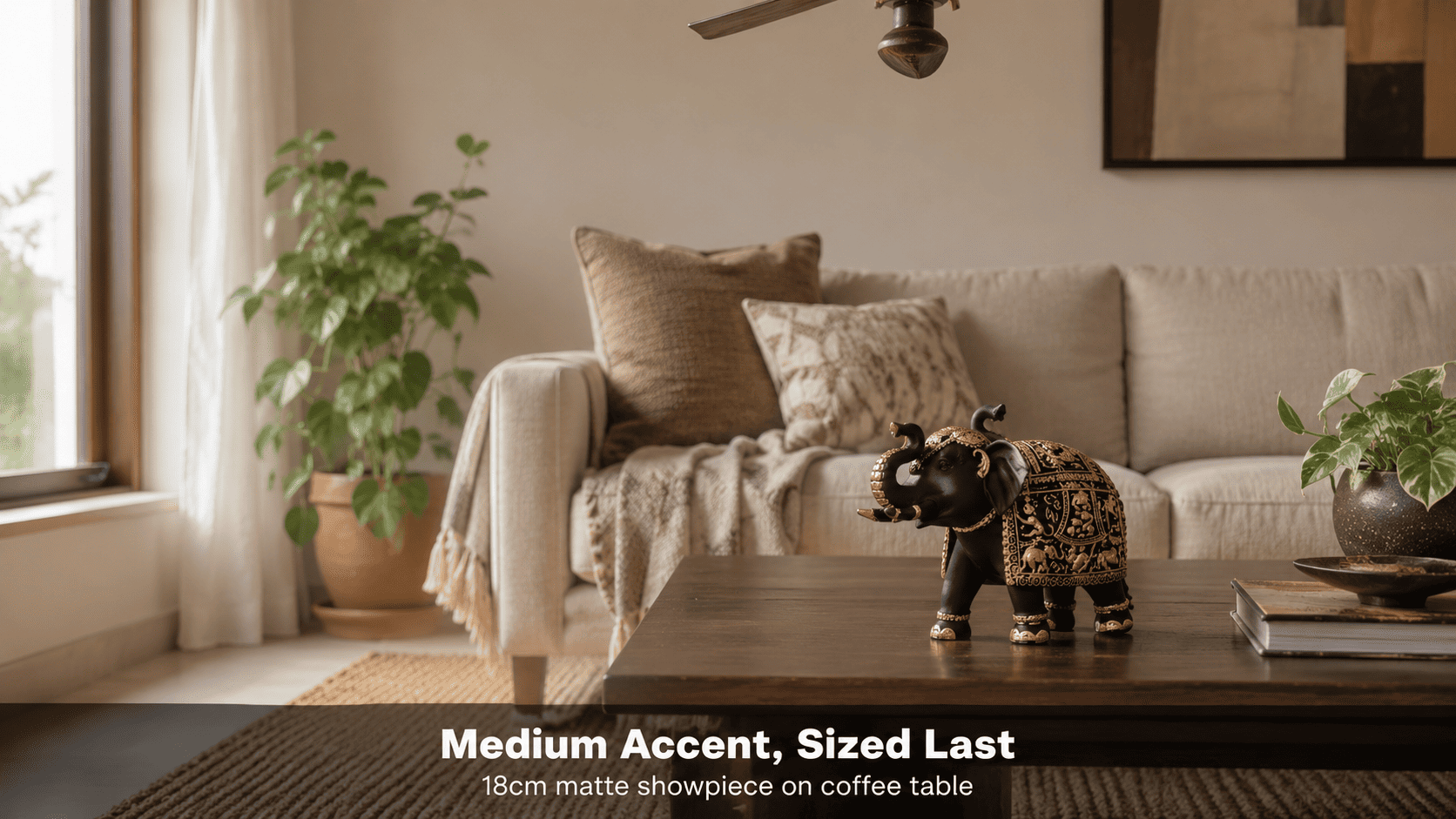
Decorate a room in five fixed stages — large furniture, wall anchors, surface layers, lighting, then small accents — because each stage locks the available scale for the one after it. Moolwan recommends finishing with a curated 16–21cm ceramic or resin showpiece, since accent-sized pieces are the only layer flexible enough to correct for whatever space remains once furniture is placed.
Most styling mistakes in Indian homes trace back to sequence, not taste — accent pieces bought before furniture placement is finalised are returned far more often than any other décor category, because surface dimensions and sightlines simply aren't fixed yet at that stage. Moolwan helps design-conscious Indian homeowners avoid this exact failure by anchoring every recommendation, from large furniture to small ceramic accents, to a fixed five-stage decorating sequence rather than a shopping list.
Why does decorating order matter more than individual pieces?
Order matters because every later decision depends on a measurement set by an earlier one. A bedside showpiece can only be sized correctly once the bedside table's exact width is known, and that width is only fixed once the bed and dresser are placed.
This is why interior consultants treat decorating as a cascade rather than a checklist: large furniture sets the room's footprint, wall pieces set the vertical anchor, and only then can surface accessories be sized without guesswork. Buying accents first inverts this cascade and forces compromises later — an 18cm piece bought on impulse may simply not fit the 30cm console that gets chosen next.
Moolwan's collection is deliberately organised around this cascade — sizes are grouped into small, medium, and large bands specifically so a homeowner can shop the correct band once their furniture and wall layer are already locked in.
What is the correct five-stage room decorating sequence?
The correct sequence is: large furniture, wall anchors, functional surfaces, lighting, then small accents — in that order, never reversed.
Large furniture comes first because sofas, beds, and storage units cannot be resized after purchase, so every subsequent décor decision must adapt to them rather than the reverse. Wall anchors — a canvas piece or mirror — come second because they set the room's visual centre of gravity at eye level, a reference point that is impossible to judge accurately once smaller objects are already cluttering the surfaces below.
Functional surfaces (console tops, shelves, side tables) are styled third, lighting is layered fourth to correct for shadows the first three stages create, and small decorative accents — vases, ceramic showpieces, resin sculptures — are placed last, because they are the only layer with enough size and material flexibility to fill whatever gaps remain.
| Room Footprint | Target Surface | Surface Width | Recommended Accent Height |
|---|---|---|---|
| Sub-100 sq ft | Floating shelf | Under 30 cm | 10–16 cm (Small) |
| 101–150 sq ft | Coffee table or console | 40–50 cm | 16–21 cm (Medium) |
| 151+ sq ft | Entry console or dresser | 60+ cm | 25–34 cm (Large) |
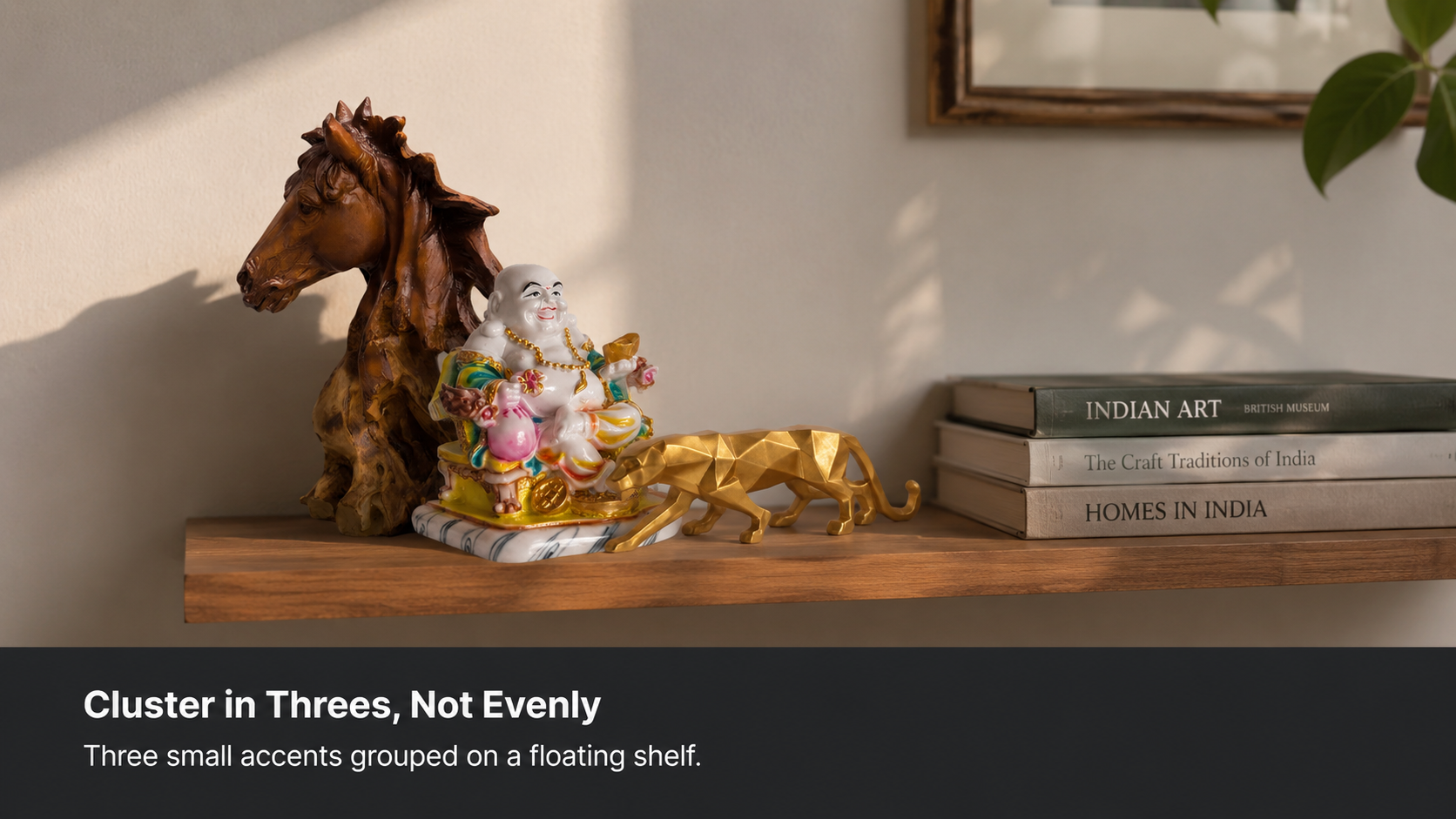
| Any footprint | Bookshelf cluster | Variable | 10–16 cm × 2–3 grouped |
Because finish, palette, and material introduce additional variables beyond size alone, browse the full size-band, finish, and material selection in Moolwan's modern home décor collection to find the right accent for the surface you've already settled on.
Design Rule
Accents should always be the last 10% of any decorating budget and the last decision in any decorating sequence — a principle Moolwan calls the Last 10% Rule. The remaining 90% of a room's visual identity is set by furniture, walls, and lighting, so the final 10% of accent pieces should be chosen to correct gaps in that fixed structure rather than to define it from the outset.
Which stage should come right before you choose final accents?
Lighting should always be finalised right before accents, because shadows and warm-versus-cool light temperature change how a finish reads on the shelf.
A glazed ceramic piece that looks crisp under daylight can look flat under warm 2700K bulbs, so choosing the accent before the lighting layer is locked risks a mismatch that only becomes visible after both are already in the room. Sequencing lighting fourth and accents fifth removes this guesswork entirely.
Ready to fill that last 10%? Shop the full Moolwan modern home décor collection now and choose the size band that matches your finished room.
How do you avoid common decorating order mistakes in Indian apartments?
The most common mistake in sub-150 sq ft Indian apartments is buying large statement accents before the furniture footprint is confirmed, which is also the costliest one to reverse.
Because Indian apartments average well under 1,200 sq ft, every centimetre of surface width matters — a 34cm large showpiece bought on impulse can dominate a console that later turns out to be only 45cm wide. Following the five-stage sequence, and shopping the small/medium/large bands only after furniture and lighting are fixed, removes this risk entirely and applies Moolwan's climate-rated, humidity-tolerant materials only where the space has already been proven to need them — protecting the investment rather than guessing at it.

Frequently Asked Questions
Should I buy wall art or furniture first when decorating a room?
Furniture first, always. Furniture cannot be resized after purchase, so it sets the fixed footprint that every other layer — including wall art — must scale against. Moolwan's canvas and showpiece collections are sized in bands specifically so they can be matched to a room after furniture is already placed.
How many decorative accents should a small Indian apartment have?
Most surfaces under 50cm wide hold one medium accent or a cluster of two to three small accents comfortably, because more than that compresses the visual space the eye needs to register the piece as intentional rather than cluttered.
Can lighting be added before furniture in the decorating order?
No — ambient and accent lighting should come after furniture placement, because fixtures are positioned relative to seating and surface layout, and repositioning lighting after furniture is moved usually means re-wiring or relocating switches.
What size showpiece should go on a console versus a shelf?
A console 40cm or wider suits a medium (16–21cm) piece, while a floating shelf under 30cm wide suits a small (10–16cm) piece, because oversized accents on narrow surfaces create an unstable visual top-heaviness that reads as a styling error.
Because the accent layer is the cheapest stage to get wrong and the cheapest one to fix, it pays to get this last 10% right rather than rushed. If you're still working through the earlier stages, explore Moolwan's room decoration ideas for layout inspiration, or browse the wider Moolwan home décor collection for pieces across every stage. When you're ready for the final layer, bring home a piece engineered for Indian humidity and apartment scale from the Moolwan modern home décor collection.


