
Cart
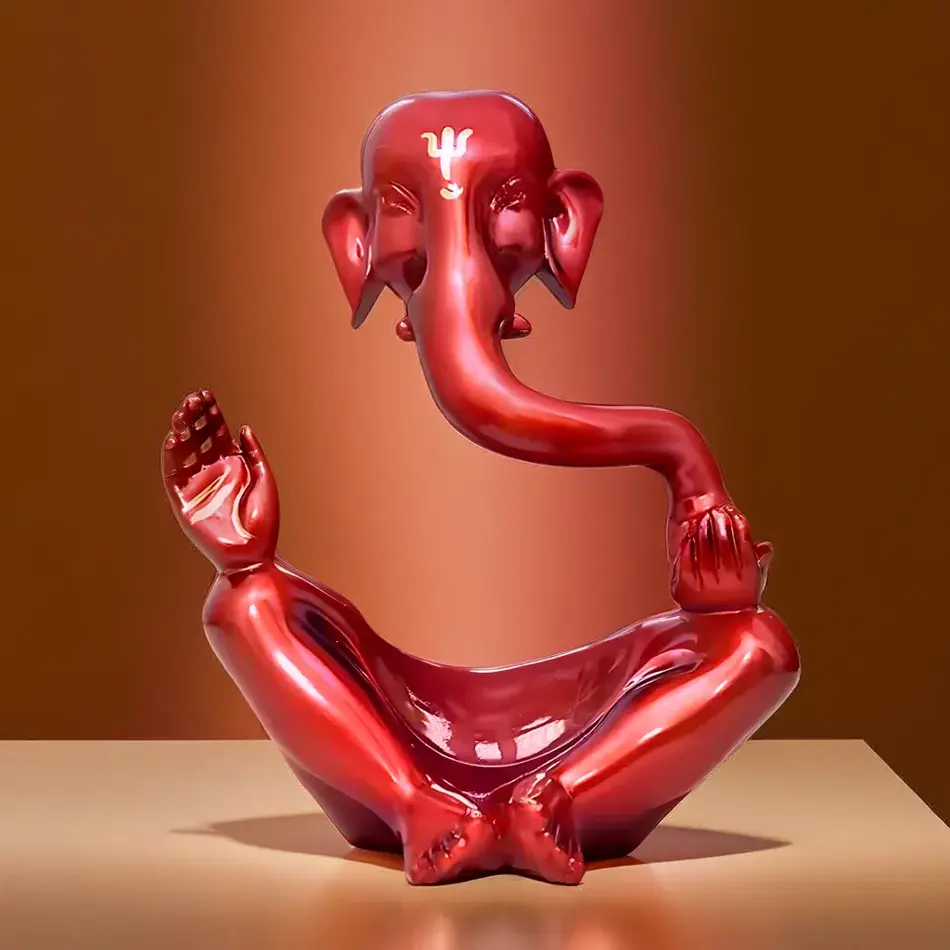
Hello, fellow Ganesh enthusiasts! It's that magical time of year again when our beloved elephant-headed deity comes home for a visit! Ganesh Chaturthi is just around the corner, and if you're like me, you're probably wondering how to welcome Lord Ganesha with the perfect statue that says, "Hey there, Remover of Obstacles, come on in and make yourself comfortable!" Finding the right Ganesh statue isn't just about home decor—it's about inviting prosperity, wisdom, and those good vibes into your home. Whether you're a seasoned Ganesh Chaturthi celebrator or a first-timer wondering which way Ganesha's trunk should swing, I've got you covered with everything you need to know about bringing this auspicious deity home. So let's trunk-dive into the wonderful world of Ganesh statues! From elegant vibrant centerpieces to charming corner fillers, Stunning Ganesh statue for home on Ganesh Chaturthi with artistic resin showpieces can truly transform your celebration experience.
Gone are the days when we'd bid farewell to our beloved Ganesha by immersing clay idols in water bodies, leaving behind a trail of chemicals and non-biodegradable materials. Today, eco-friendly Ganeshas are the talk of the town, and for good reason! These statues, made from natural clay, paper mache, or even plant seeds that will grow into beautiful plants after immersion, are the perfect way to honor both Lord Ganesha and Mother Earth. Think of it this way: what could be more auspicious than turning your Ganesh statue into a living plant? It's like Ganesha's parting gift saying, "Here, I'm leaving but I'm also staying... as this lovely tulsi plant!" Plus, the satisfaction of being environmentally conscious? Priceless! You can even explore Eco-friendly Ganesh statue with modern design for Ganesh Chaturthi decoration tailored to blend with your home’s minimal and artistic vibe.
When it comes to Ganesh statues, bigger isn't always better—especially if you live in a fifth-floor apartment with no elevator! Whether you're going for a majestic two-footer or an adorable palm-sized murti, consider your space constraints and how many strong friends you can recruit for the installation and immersion processes. Remember that time Uncle Raj bought a four-foot Ganesha and then couldn't get it through the door? Don't be Uncle Raj! A beautifully proportioned statue that fits harmoniously in your home is more important than one that requires you to rearrange all your furniture or demolish a wall. After all, Ganesha is the remover of obstacles, not the creator of them! Try a Compact Ganesh statue for Ganesh Chaturthi to grace corner tables and small shelves for practicality with style.
Clay has traditionally been the go-to material for Ganesh Chaturthi statues—it's natural, dissolves easily during visarjan (immersion), and has that authentic traditional feel. But if you're looking for a permanent family member rather than a temporary guest, consider statues made of brass, bronze, marble, or even crystal. Each material brings its own energy and aesthetic to your home. Brass Ganeshas have that classic golden glow that screams "prosperity," while stone ones have a timeless elegance that says, "I've been removing obstacles since before obstacles were even a thing." And for those living the minimalist life, there are even gorgeous wooden Ganeshas that would make Marie Kondo proud! Add elegance with a Resin Ganesh statue for Ganesh Chaturthi display in artistic wall décor spaces to enhance the vibe.
Ah, the eternal trunk debate! You might have heard whispers about how the direction of Ganesha's trunk can influence the energy it brings to your home. A right-facing trunk (your right when facing the statue) is said to represent success and path of karma, while a left-facing trunk symbolizes prosperity and good fortune. And if you find one with the trunk facing center? Jackpot! That's considered especially powerful and suitable for places of worship. Choose based on what you need more in your life right now—success in that upcoming job interview or a little extra cash in your bank account. Or just pick the one that makes you smile the most when you look at it. After all, Ganesha is all about joy! For example, Elegant Ganesh statue for Ganesh Chaturthi with left trunk suited for home worship fits both symbolically and stylistically.
Lord Ganesha is quite the versatile deity when it comes to striking a pose! A sitting Ganesha (often cross-legged in the Padmasana position) represents stability and meditation—perfect for your study or workspace where you need that focused energy. Standing Ganesha? That's all about action and energy—ideal for entrances or living rooms. If you're feeling a bit fancy, why not go for a dancing Ganesha (Nritya Ganapati) to bring some artistic flair and joy to your home? There's even the reclining Ganesha for those who appreciate divine relaxation! Just remember, whatever pose you choose, make sure Ganesha looks comfortable—because nobody likes a cramped deity, not even the remover of obstacles! Bring home a Graceful Dancing Ganesh statue for Ganesh Chaturthi crafted in decorative ceramic to uplift spaces with movement and joy.
Placing your Ganesh statue isn't just about aesthetic appeal—it's about creating the right energy flow in your home. Traditionally, the northeast corner (Ishan kon) is considered most auspicious for deities. But Ganesha is pretty flexible—he's happy in living rooms, study rooms, or even at the entrance of your home where he can greet visitors and ward off negative energies. Just avoid bathrooms and shoe racks (because, well, that's just rude) and keep him at eye level or higher—never on the floor. Think of it as divine real estate: Ganesha deserves a prime location with good visibility and positive surroundings. No pressure, but your prosperity might depend on it! Opt for a Ganesh statue on tray for Ganesh Chaturthi placed at entrance or display unit to instantly energize your space.
Once you've found the perfect spot for your Ganesha, it's time for the fun part—creating a festive throne fit for a deity! Traditional decorations include fresh flowers (marigolds are a classic choice), colorful fabrics, diyas or lamps, and of course, Ganesha's favorite treats (hello, modak!). Get creative with rangoli patterns around the statue, string lights that would make a Christmas tree jealous, or even a mini water feature if you're feeling fancy. Just remember to keep it tasteful—Ganesha may be the son of the destroyer of the universe, but he appreciates good aesthetics. And please, resist the urge to put sunglasses on him. Yes, he'd look cool, but some traditions are better left unmodified! You can anchor the charm with a Festive Corner Ganesh Chaturthi statue with bright metallic finish that lights up the decor naturally.
When Ganpati Bappa comes home, it's not just about plonking the statue down and saying, "Make yourself at home." There's a whole welcome ceremony involved! Start with cleaning the area thoroughly (no dusty corners for this VIP), prepare a raised platform decorated with fresh flowers and fabric, and then perform the Prana Pratishtha ceremony to invoke life into the idol. This usually involves chanting mantras, offering flowers, and the all-important aarti with camphor. Think of it as the spiritual equivalent of rolling out the red carpet, cutting the ribbon, and popping champagne all at once. And unlike your cousin who overstays their welcome, Ganesha knows exactly when it's time to leave! Consider using a Tall Ganesh statue for Ganesh Chaturthi rituals with ornate design that sets the tone from the moment he arrives.
All good things must come to an end, including Ganesha's stay at your home. Traditionally, Ganesh idols are immersed in water bodies after 1, 3, 5, 7, or 11 days—with 10 days being the most common for public celebrations. But before you tearfully wave goodbye, make sure you're doing visarjan the right way! If you've chosen an eco-friendly idol, you can immerse it in a bucket at home and use the water for plants. For clay idols, look for designated artificial ponds set up by municipalities. And remember to remove all non-biodegradable decorations before immersion. It's like helping your divine guest pack their bags properly before they head off—you wouldn't want Ganesha leaving his belongings scattered across the ocean floor, would you? You could use a Simple Ganesh Visharjan statue with minimal elements for eco-compliance to ensure a responsible farewell.
Who says tradition can't get a makeover? Today's artists are creating Ganesh statues that blend traditional symbolism with contemporary aesthetics. Think abstract Ganeshas, minimalist designs, or even tech-inspired versions (yes, there are Ganeshas holding laptops instead of modaks!). These modern interpretations are perfect for those who want to honor tradition while expressing their personal style. Some artists are even creating Ganeshas from recycled materials—turning old CDs, buttons, or even keyboard keys into divine art. It's like Ganesha got a millennial makeover and is now ready for his Instagram debut! #GanpatiGoals, anyone? Explore a Modern abstract Ganesh statue for Ganesh Chaturthi display in minimalist homes to harmonize modernity with divinity.
Feeling crafty? Why not try making your own Ganesh statue? Before you panic about your artistic abilities (or lack thereof), rest assured there are plenty of fool-proof options. Air-dry clay kits, paper mache molds, or even simple sand Ganeshas are all doable options for the craft-curious. Getting the whole family involved in creating your Ganesha can add a special personal touch to your celebrations. Plus, there's something deeply satisfying about saying, "Oh, this Ganesha? I made him myself," when guests come over. Just maybe practice a bit before the big day—you want your Ganesha to look divine, not like he's having an identity crisis! Or get inspired with a Handcrafted Ganesh idol on dholak for Ganesh Chaturthi small shelf décor, blending tradition with artistry.
Amidst all the excitement of finding the perfect statue, creating elaborate decorations, and planning grand ceremonies, it's easy to forget what Ganesh Chaturthi is really about. Beyond the festivities lies the essence of what Ganesha represents—wisdom, prosperity, and the removal of obstacles from our lives. The physical statue is simply a medium to connect with these divine qualities. So whether your Ganesha is a masterpiece from a renowned artist or a humble clay figure made with love, what truly matters is the devotion and mindfulness you bring to the celebration. As they say, it's not about how fancy your Ganesha looks, but how sincerely you welcome him into your heart!
The best Ganesha idol for your home depends on your specific needs and space constraints. For Ganesh Chaturthi celebrations, eco-friendly clay idols that can be easily immersed are ideal. If you're looking for a permanent statue, consider materials like brass, stone, or wood. Size-wise, choose one that fits comfortably in your designated space without overwhelming it. For beginners, a simple sitting Ganesha with a left-facing trunk (symbolizing good fortune) is often recommended. Remember, the most auspicious Ganesha is one that resonates with you personally and brings you joy when you look at it!
The northeast corner (Ishan kon) of your home is traditionally considered the most auspicious spot for placing your Ganesh idol during Chaturthi. However, you can also set up your temporary mandap in the living room, study, or any clean and peaceful area of your home where family members can gather for prayers. Avoid placing the idol in bathrooms, near shoe racks, or directly on the floor. Elevate the statue on a decorated platform, ensuring it's at eye level or higher. Importantly, make sure the location allows for comfortable daily worship and has enough space for offerings and decorations.
When choosing a Ganesh idol for Chaturthi, consider the material (preferably eco-friendly clay for immersion), size (manageable for your space and visarjan), and overall appearance (should be aesthetically pleasing with proportionate features). Check that the idol is well-crafted with attention to detail—Ganesha should have all attributes including trunk, big ears, and his vehicle (mouse). Consider the pose—sitting idols represent stability while dancing ones bring joy. Also important is the trunk direction: left-facing for prosperity, right-facing for success. Above all, choose an idol that creates a spiritual connection for you and complies with local environmental regulations regarding immersion.
Absolutely! Keeping a permanent Ganesh statue at home is not only allowed but considered highly auspicious in Hindu tradition. Unlike the temporary clay idols used during Ganesh Chaturthi (which are immersed after the festival), permanent statues made of materials like brass, stone, crystal, or wood can be kept year-round. Many households have a permanent Ganesha in their puja room or at the entrance. These statues are believed to bring wisdom, prosperity, and remove obstacles from family life. Just ensure you place the statue respectfully in a clean area, preferably elevated, and maintain it with regular cleaning and occasional ritual worship.
The Ganesha idol should ideally face east or west in your home, as these directions are considered auspicious for deity placement. When setting up your Ganesha, you (the worshipper) should face east or north while praying, which means the deity would be looking west or south toward you. As for the direction of Ganesha's trunk, that's a different consideration: a left-facing trunk (Ganesha's left) symbolizes prosperity and success in material wealth, while a right-facing trunk represents success in path of karma and spirituality. Whichever direction you choose, ensure the idol is placed on an elevated platform and not directly on the floor.
The duration for keeping a Ganesh idol at home during Chaturthi can vary according to family tradition and practical considerations. The most common periods are 1, 3, 5, 7, or 11 days, with 1½ days (Sthapana on day one and Visarjan by afternoon of day two) being popular for many households. Public pandals typically celebrate for the full 10 days until Anant Chaturdashi. The duration you choose should align with your ability to maintain daily worship rituals and proper care of the idol. Whatever period you select, it's important to perform the proper visarjan (immersion) ceremony with respect and devotion when the time comes.


