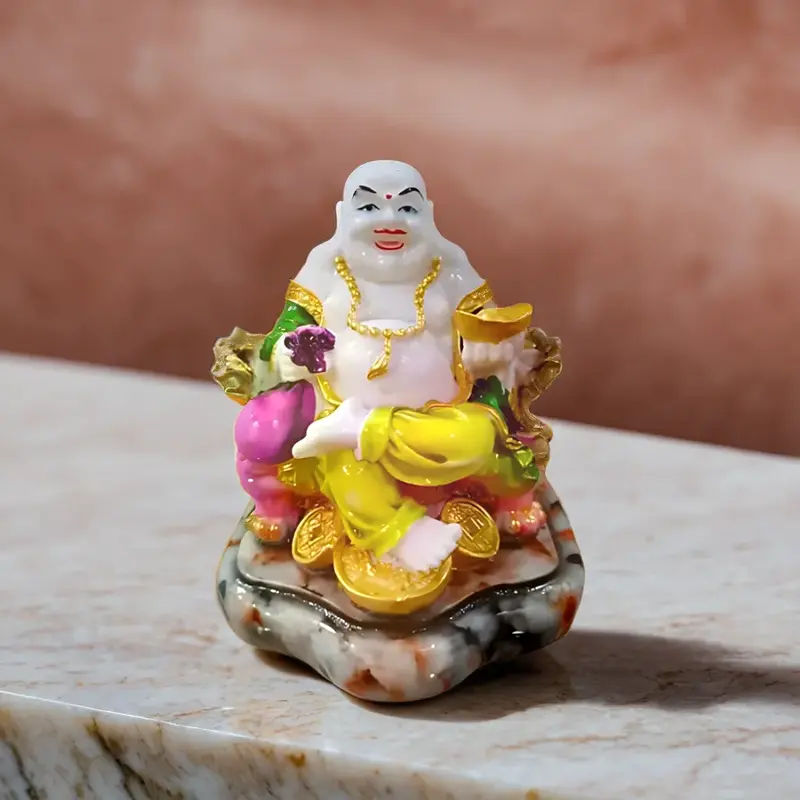
The 70-20-10 rule is a colour and proportion formula used in interior design: 70% of a room should carry the dominant colour (walls, flooring, large furniture), 20% a secondary colour (curtains, rugs, upholstery), and 10% accent colour (showpieces, artwork, decorative accessories). It prevents rooms from looking either too flat or too chaotic — and the 10% accent layer is where décor decisions matter most.
What Does the 70-20-10 Rule Actually Mean?
The 70-20-10 rule is a practical framework, not a rigid law. It gives every room a visual hierarchy — a dominant tone that anchors the space, a secondary tone that adds character, and an accent tone that creates personality. Interior designers have used this ratio for decades because it works across every room size, style, and budget.
Here is how the three layers behave in a typical Indian living room:
Moolwan helps design-conscious Indian homeowners elevate that critical 10% with décor engineered for real Indian living conditions — without inflated retail markups.
The rule applies differently depending on which room you are decorating. The ratios stay the same; the objects carrying each ratio change. Below is a room-by-room breakdown for Indian homes.
| Room | 70% Dominant | 20% Secondary | 10% Accent (where Moolwan helps) |
|---|---|---|---|
| Living Room | Walls + sofa + flooring | Curtains + rug + coffee table | Canvas wall art, resin showpieces, decorative figurines |
| Bedroom | Walls + bed frame + wardrobe | Bed linen + curtains | Bedside showpieces, small wall art, accent vase |
| Pooja/Prayer Corner | Mandir unit + wall colour | Fabric drape + flowers | Ceramic idols, bronze finish statues, ritual accent pieces |
| Dining Area | Dining table + chairs + wall | Table runner + pendant light | Table centrepiece, wall art on the adjacent wall |
| Entryway / Foyer | Flooring + console table | Mirror + storage basket | Figurine, small canvas print, accent bowl |
Ready to define your 10% accent layer? Moolwan's accent décor is sized, finished, and climate-tested for Indian homes — from compact 10cm shelf pieces to 34cm focal-point showpieces.
The 10% is where most homeowners either underinvest (leaving the room feeling empty) or overinvest in the wrong things (buying pieces that clash, fade, or break within a year). Getting this layer right requires three decisions: scale, material durability, and colour harmony.
A piece that is too small gets lost; too large and it overwhelms. Moolwan designs accent décor across three size tiers to match every surface in an Indian home: Small (10–16cm) for desks, shelves, and bathroom counters; Medium (16–21cm) for showcase cabinets and coffee tables; Large (25–34cm) as focal-point statement pieces. All pieces weigh between 150g and 600g — light enough for Indian wall brackets and standard shelves without structural concern.
India's climate is unforgiving to décor. Humidity during monsoon, summer heat above 40°C, and constant household activity mean that most imported or marketplace décor fails in under a year. Moolwan's ceramic showpieces are made with a 92% pure clay body, rated humidity-tolerant up to 85% RH and heat-resistant to 60°C — covering every Indian season. Resin accent pieces use 94% purity epoxy resin with 3H pencil-hardness scratch resistance and a humidity ceiling of 60% RH, making them safe for living rooms and bedrooms year-round.
Your 10% accent pieces should pull from one colour already present in the 20% layer — not introduce a fourth tone. If your curtains are mustard, accent pieces in warm gold, burnt orange, or deep terracotta will feel cohesive. If your rug is teal, a ceramic figurine in navy or deep sage will anchor the palette rather than fight it. This is how professional designers use the 70-20-10 rule to make rooms feel effortlessly put together.
For the living room wall, Moolwan's modern home décor collection includes canvas wall art printed on 340 GSM cotton canvas with eco-solvent UV-resistant inks on 1.5-inch kiln-dried pine frames — resistant to warping and colour fade in humid Indian conditions.
Understanding the ratio is the first step. Applying it without falling into these common traps is the real skill.
Moolwan is a D2C home décor manufacturer based in Bangalore, founded by Ruchi Malhotra under Euphorica Ventures Pvt Ltd. The brand manufactures canvas wall art paintings, modern showpieces, and curated gifts for Indian homes — all designed, produced, and sold directly, removing the retail margin that inflates most décor pricing.
What Moolwan stands for is simple: décor that is beautiful, durable, and designed for how Indians actually live. That means climate-tested materials, sizes calibrated for Indian apartments, and aesthetic choices that bridge modern design sensibility with cultural familiarity. The brand's tagline — India's Trusted Source for Modern Home Decor, Wall Art & Unique Gifts — reflects a commitment to quality over volume.
You can browse Moolwan's full home décor range across categories that include modern showpieces, resin accent pieces, ceramic figurines, and canvas art — all available with COD, free shipping, and over 3,000 satisfied customers.
Does the 70-20-10 rule work for small Indian apartments?
Yes — and it works especially well in smaller spaces because it prevents visual clutter. In a 1BHK or compact 2BHK, keeping the 70% layer in light neutral tones (off-white, warm beige) makes the room feel larger. The 20% introduces one calm colour (sage green, dusty rose, warm grey), and the 10% uses two to three small-to-medium accent pieces rather than many scattered objects. Restraint in the 10% layer is what separates a well-designed small room from a cluttered one.
Can I apply the 70-20-10 rule to a room that already has furniture?
Yes. Start by identifying what colour your existing large furniture and walls represent — that is your 70%. Look at your curtains and rug for the 20%. Your remaining décor additions (showpieces, art, cushion covers) are your 10%. You do not need to redecorate from scratch; the rule helps you identify what is missing and what to add next to achieve visual balance.
What type of showpieces work best for the 10% accent layer?
For Indian homes, ceramic showpieces and resin accent pieces perform best due to their durability in variable humidity and temperature. Moolwan's ceramic showpieces carry a 92% pure clay body rated to 85% RH humidity — covering peak monsoon conditions. Resin pieces (94% epoxy purity, 3H scratch hardness) work well on coffee tables and display shelves. Opt for one material type per room to maintain cohesion in the 10% layer.
How many accent pieces should I keep in one room?
A general benchmark: 3–5 accent objects in a standard Indian living room (approximately 200–300 sq ft). One anchor piece (Large: 25–34cm) as a focal point, two medium pieces (16–21cm) on side surfaces, and one to two small pieces (10–16cm) as detail accents. Avoid doubling accent types on the same surface — one showpiece and one canvas print on the same wall is enough.
Should my canvas wall art follow the 70-20-10 rule too?
Yes. Canvas wall art counts as part of your 10% accent layer. Choose artwork that features your accent colour as the dominant tone — this ties the wall art to the rest of the room's palette rather than making it feel like a standalone purchase. Moolwan's canvas wall art is printed on 340 GSM cotton canvas with moisture-resistant coating and UV-resistant inks, ensuring the colours stay true in Indian humidity for years. Pair wall art with a complementary decorative statue beneath it for a complete styled vignette.
Every Moolwan accent piece is designed to earn its place in your room — sized right, climate-tested, and priced direct. No middlemen. No guesswork.
Quick View



