
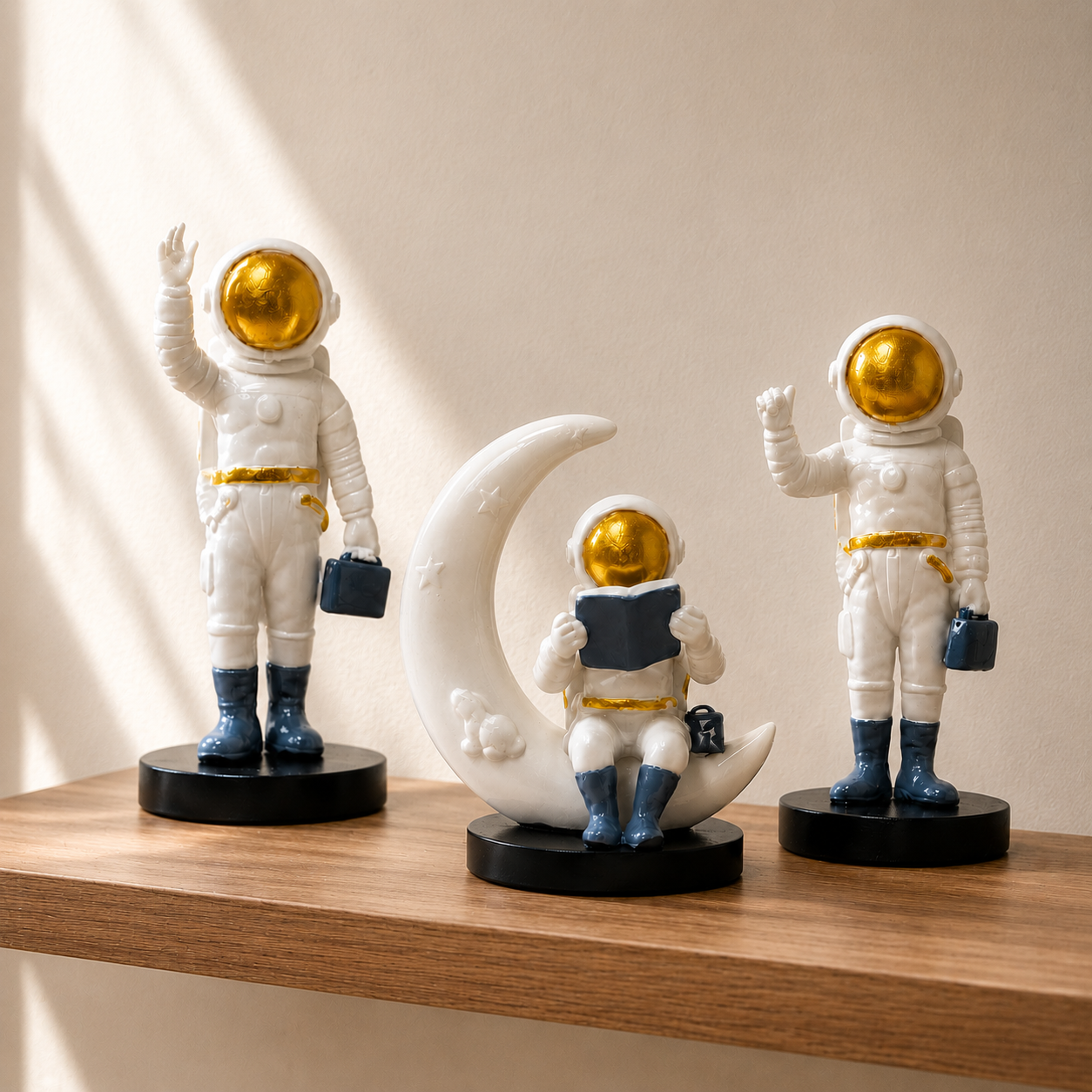
Start With One Anchor Piece, Not a Cluttered Set
Most Indian tables get decorated with three or four small trinkets bought at different times, and the result reads as cluttered rather than curated. We help design-conscious Indian homeowners fix this by anchoring the table with a single medium showpiece — 16–21cm — that becomes the focal point, then building everything else around it in smaller, quieter scale.
A single anchor works because it gives the eye one place to land. Choose a piece with genuine material weight: a resin sculpture with a matte finish, a hand-glazed ceramic vase, or a compact canvas easel print reads as intentional in a way that five loose objects never do. If you're shopping for this first piece, browse Moolwan's showpiece collection for home decor and filter by the medium size band so it doesn't dwarf a four-seater dining table.
Once the anchor is placed, resist the urge to add more objects at the same height. Everything else on the table should sit lower or narrower than the anchor, which is the core of what we call the Anchor-Accent-Air Rule: one dominant piece, one or two supporting accents, and deliberate empty space around both.
Layer Texture With Accent Objects, Then Leave Air Around Them
The second layer is texture, not more shape. A woven coaster stack, a small brass or resin tray, or a low ceramic bowl adds tactile contrast without competing with the anchor piece for attention. Keep this layer to one or two objects maximum — Indian dining tables are used daily, and anything more becomes something to move at every meal.
Air is the part most people skip. Leave at least a third of the table's visible surface completely bare around your anchor and accent pieces. This isn't a stylistic flourish — it's what makes the eye register the decor as deliberate rather than accidental clutter. On a coffee table, this often means keeping one entire quadrant empty for a coaster or a book to land without disturbing the arrangement.
For textured accent pieces sized to sit comfortably beside a centerpiece, explore Moolwan's modern home decor items — the range is built for exactly this kind of pairing, with finishes that read as considered rather than mass-produced.
Which Material Holds Up Best on an Indian Table?
| Material | Composition | Humidity tolerance | Best for | Lifespan |
|---|---|---|---|---|
| Ceramic showpiece | 92% clay | Up to 85% RH | Dining tables, monsoon-prone rooms | 5+ years |
| Resin sculpture | 94% epoxy resin | Up to 60% RH, 3H scratch-resistant | Coffee tables, everyday handling | 3+ years indoor |
| Canvas accent (mini easel) | 340 GSM cotton, UV-resistant ink | Moisture-resistant coating | Console or side tables | Long-term, fade-resistant |
Ceramic handles Indian monsoon humidity better than most decor materials because Moolwan fires it to withstand up to 85% relative humidity, which matters if your table sits near a window or an open balcony for part of the year. Resin pieces are the better choice for coffee tables that see daily contact, since the 3H pencil-hardness rating resists scratching from books, remotes, and cups.
Rotate a Seasonal Layer Without Redesigning the Whole Table
A table that looks styled year-round usually has one element that changes with the season while the anchor and accent layers stay fixed. During Diwali or a Griha Pravesh, that seasonal layer might be a small brass diya tray or a marigold-toned ceramic bowl; through the rest of the year, it can simply be fresh flowers or a single seasonal fruit bowl.
This approach solves two problems at once: it keeps redecorating cheap, since you're only replacing one small piece rather than the whole tablescape, and it keeps the table from looking static in photos and in person. Keep the seasonal piece in the same size band as your existing accent layer — swapping in something oversized will throw off the proportions you've already built.
For gifting occasions where the table needs to make an impression — a housewarming, a wedding reception centerpiece, or a festive dinner — Moolwan's showpiece collection for the living room includes pieces sized specifically for shared and hosted spaces rather than personal shelves.
Getting the Size Right for Your Table
Size mismatch is the most common reason table decor looks off in photos even when the individual pieces are beautiful. Moolwan groups décor into three size bands specifically because a coffee table, a console, and a dining centerpiece each need a different scale to look proportionate rather than lost or overwhelming.
- Small (10–16cm): side tables, bathroom counters, narrow console edges, or as one of two accent pieces flanking a larger anchor.
- Medium (16–21cm): the sweet spot for a coffee table centerpiece or a four-seater dining table anchor.
- Large (25–34cm): six-seater and larger dining tables, or as a standalone floor-adjacent statement piece near the table rather than on it.
Weight matters as much as height. Moolwan's pieces run 150g–600g specifically so they're light enough to move for daily table use in Indian homes, where the same surface often serves as a dining table, a workspace, and a place to set down groceries within the same hour.
Shop showpieces sized and finished for Indian tables — with free shipping and COD available.
Shop Table ShowpiecesFrequently Asked Questions
How many decor pieces should go on a dining table?
Two to three is the practical ceiling for a table in daily use: one anchor piece, one accent, and optionally one seasonal item. More than that turns into clutter you have to move at every meal, and it works against the empty-space principle that makes a tablescape read as intentional.
Is ceramic or resin decor better for humid Indian homes?
Ceramic tolerates higher humidity — Moolwan's ceramic pieces are rated to 85% relative humidity, against 60% for resin — which makes ceramic the safer pick for coastal cities or rooms near open windows during monsoon. Resin is still a strong choice for drier, air-conditioned interiors where scratch resistance from daily handling matters more.
What size showpiece works for a coffee table centerpiece?
Medium, in the 16–21cm range, is proportioned for most Indian coffee tables. Small pieces (10–16cm) tend to look lost as a lone centerpiece, while large pieces (25–34cm) are better suited to six-seater dining tables or floor-adjacent placement.
Can I return a table decor piece if it doesn't suit my space?
Yes. Moolwan accepts returns within 24 hours of delivery if the item is unused and in its original packaging, with a 10% restocking fee and a refund processed within 15 working days.
How do I style a table for a festival without buying a whole new set?
Keep your anchor and accent pieces fixed year-round and swap only one seasonal item — a diya tray, a marigold-toned bowl, or a small floral arrangement — sized to match your existing accent layer. This keeps the cost and effort low while still marking the occasion.
Ready to build your tablescape? Start with modern showpieces made for Indian homes.
Browse Modern Home Decor


