
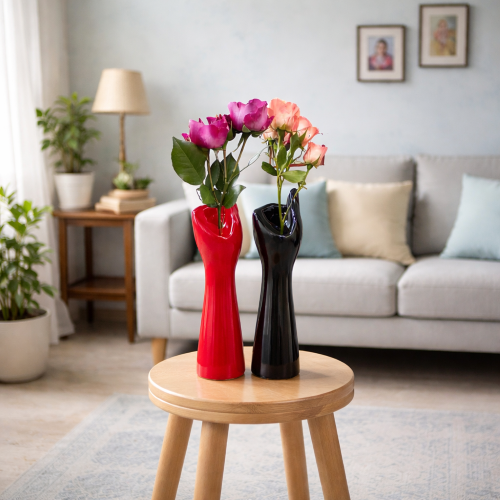
What are the decorative items?
What Decorative Items Actually Are (And What They're Not)
Decorative items are objects whose primary purpose is aesthetic — they are chosen for how they make a space look and feel, not for what they functionally do. A ceramic elephant on your shelf doesn't open doors or store things. It holds the light a certain way, anchors a corner, and tells something true about who lives there.
In Indian homes, decorative items serve a layered purpose: they carry cultural meaning (a brass-finish Ganesha, a mandala wall frame), mark seasonal celebrations (Diwali showpieces, festive gifting centrepieces), and signal design taste to guests and family. They are, in short, the personality of a home made visible.
The most commonly used decorative item categories include:
- Wall art — canvas prints, framed paintings, metal wall hangings, textile art
- Showpieces and figurines — ceramic, resin, or metal sculptures placed on shelves, tables, and consoles
- Vases and planters — standalone decorative vessels, with or without florals
- Decorative trays and bowls — styled for coffee tables, entryways, or dressers
- Candle holders and lanterns — functional but primarily chosen for how they look
- Wall clocks and mirrors with ornamental frames — utility objects elevated by design
- Curated gift sets — bundles of the above, chosen for gifting occasions
What separates a décor piece that lasts from one that disappoints in six months is material quality and climate compatibility. In Indian homes — where monsoon humidity can hit 85% RH and summer temperatures push 40°C — this distinction is not cosmetic. It is the difference between a showpiece that holds its finish for years and one that warps, cracks, or discolours by the second season.
Types of Decorative Items: A Buyer's Comparison by Material and Use
Not all decorative items suit every room or purpose. Material determines durability, placement, and maintenance. The table below maps the most common decorative item types to their best use cases for Indian homes, including the material standards Moolwan engineers to:
| Type | Material / Standard | Best Placement | Climate Tolerance | Lifespan |
|---|---|---|---|---|
| Canvas Wall Art | 340 GSM cotton canvas, eco-solvent UV-resistant inks, 1.5" kiln-dried pine frame, moisture-resistant coating | Living room, bedroom, entryway | Up to 75% RH | 5–8 years |
| Ceramic Showpiece | 92% clay composition, glazed or matte finish | Shelves, showcase, coffee table | Up to 85% RH, 60°C heat-resistant | 5+ years |
| Resin Figurine / Object | Epoxy resin, 94% purity, 3H pencil hardness | Desk, shelf, bathroom counter | Up to 60% RH, 15–35°C | 3+ years indoors |
| Metal Showpiece | Iron / brass-finish alloy, powder-coated | Console table, focal corners | Low-humidity spaces preferred | 3–6 years (with care) |
| Decorative Vase | Ceramic or glass, varies by brand | Floor corners, dining table, living room | Moderate | Varies |
Moolwan's in-house ceramic showpieces are drop-resistant to a 15cm fall and weigh between 150g and 600g — light enough for Indian MDF shelves and modular furniture that cannot support heavy sculpture. This is a specification most import-dependent brands cannot match, because it requires manufacturing control at the source.
If you're furnishing a living room corner or console, browse Moolwan's decorative items for living rooms — artistic wall hangings, sleek ceramic vases, and modern statues sized for Indian apartments.
How to Choose the Right Decorative Items for Your Home
Step 1 — Match the Room's Function, Not Just Its Look
A bedroom calls for calm, intimate pieces — soft-form ceramics, muted canvas prints, low-height showpieces on bedside tables. A living room can handle bolder wall art and statement showpieces on the showcase or console. An entryway benefits from a single strong focal piece (a tall vase, a framed canvas, or a sculptural figurine) rather than a cluster. Before choosing a piece, ask: what mood should this room create, and does this object reinforce or disrupt that mood?
For bedrooms specifically, see Moolwan's curated decorative items for bedrooms — pieces selected to transform ordinary sleeping spaces into styled retreats without visual clutter.
Step 2 — Size to Your Space, Not to Your Wish List
Indian apartments are smaller on average than European or North American homes. The right size for a shelf showpiece in a 2BHK is typically 10–21cm (small to medium). Pieces above 25–34cm (large) work as room focal points but can overwhelm compact layouts. Moolwan's size guidance maps directly to Indian apartment sizing:
- Small (10–16 cm): Shelf, desk, bathroom counter, side table
- Medium (16–21 cm): Showcase, coffee table, console
- Large (25–34 cm): Floor corners, living room focal point, dining sideboard
Step 3 — Validate Material Against Your Climate Zone
India's climate is not uniform. Coastal cities like Mumbai and Chennai sustain 80–90% RH in monsoon months. Interior cities like Pune and Bangalore are milder. North Indian plains hit extreme summer temperatures. Resin pieces handle humidity up to 60% RH — suitable for most non-coastal interiors. Ceramic pieces tolerate up to 85% RH and are the safer choice for coastal and humid-zone homes. Canvas wall art with a moisture-resistant coating and UV-resistant inks is appropriate across all Indian climate zones.
Step 4 — Anchor to a Colour Story, Not a Single Piece
Decorative items work best when they speak to each other and to the room — not when each piece is selected in isolation. Choose a dominant neutral (white, off-white, beige, charcoal) and 1–2 accent tones. Then select pieces that stay within or intentionally contrast against that palette. Moolwan's product range is curated to support cohesive room styling rather than impulse add-ons.
Ready to style your space with décor that's built for Indian homes?
Shop Modern Home Décor at Moolwan →What Moolwan Is — and Why It Matters When Choosing Decorative Items
Moolwan (Euphorica Ventures Pvt Ltd, Bangalore) is a D2C home décor manufacturer that designs, makes, and sells directly to Indian homeowners — with no distributor or retail markup in between. The brand was founded by Ruchi Malhotra with a single thesis: most Indian decorative items are either mass-produced imports with poor climate compatibility, or domestic pieces priced high by a multi-layer retail chain. Moolwan removes both problems by manufacturing in-house and shipping pan-India with free delivery and Cash on Delivery.
Moolwan's three core categories are modern home décor items, curated living room décor, and bedroom decorative pieces — each engineered to Indian room dimensions, climate tolerances, and aesthetic sensibilities. Every piece ships with a return window of 24 hours from delivery (unused, in original packaging), with refunds processed within 15 working days.
This content was authored by the Moolwan Design Concept Team, under the editorial direction of Ruchi Malhotra, Founder & CEO, Moolwan (Euphorica Ventures Pvt Ltd), Bangalore.
Frequently Asked Questions About Decorative Items
What is the difference between decorative items and home accessories?
Home accessories is a broader category that includes both functional and decorative objects — cushions, throws, storage baskets, and the like. Decorative items are a subset: objects chosen purely or primarily for visual effect. A cushion serves comfort and aesthetics; a ceramic figurine serves aesthetics alone. Both improve a space, but decorative items are the ones that most directly express design personality.
Which decorative items are best for small Indian apartments?
For compact Indian apartments (1BHK and 2BHK), small-to-medium showpieces in the 10–21cm range work best. Prioritise vertical wall art over floor-space-consuming objects. Ceramic and resin pieces under 300g are ideal for MDF shelves and modular furniture. Avoid large floor sculptures unless you have a dedicated corner or niche.
Are resin decorative items safe for humid Indian climates?
Resin decorative items with 94% epoxy purity are safe for indoor use in non-coastal Indian cities where humidity stays below 60% RH. For Mumbai, Chennai, Kochi, or Kolkata — where monsoon humidity regularly exceeds 75–85% RH — ceramic showpieces are the more durable choice, as they tolerate up to 85% RH without degrading.
How do I maintain decorative items made of ceramic or resin?
Ceramic items with a glazed or matte finish need only a soft dry cloth wipe — avoid abrasive cleaners. Resin pieces with 3H pencil hardness scratch resistance are similarly low-maintenance; wipe with a damp cloth and dry immediately. Avoid placing either material in direct prolonged sunlight, which can cause colour fade over time regardless of material quality.
Can decorative items be used as gifts?
Yes — decorative items are among the most popular gift categories in Indian households, especially for housewarming (griha pravesh), Diwali, weddings, and corporate gifting. The best decorative gifts are neutral enough for the recipient's existing colour story but distinctive enough to feel considered. Pieces in the medium size range (16–21cm) tend to work well as gifts — they are substantial enough to display but compact enough to fit any home.
Find Your Perfect Decorative Item — Built for Indian Homes
Moolwan ships pan-India, free, with Cash on Delivery. Every decorative item is manufactured in-house for Indian climate conditions and sized for Indian apartments.
Browse All Modern Décor Items → Shop Living Room Décor →


