Quick Answer
In 2026, Indian homes are trending toward warm minimalism, textured neutral palettes, curved furniture silhouettes, and heritage-fused decor — all layered over durable, climate-engineered pieces rather than fast-decor trends that fade in a monsoon season. We help Indian homeowners build rooms that read as current today and considered five years from now.
The five decor trends shaping Indian homes right now are: warm minimalism, textured neutral layering, Indian heritage fusion, curved and organic silhouettes, and climate-durable materials. Each trend is driven by one shift — homeowners want rooms that photograph well but also survive Indian humidity, heat, and daily use. A trend that looks good in a showroom and cracks by monsoon isn't a trend worth buying into.
Trend cycles used to mean replacing decor every year. That's changing. Indian buyers are now evaluating décor the way they evaluate appliances — by lifespan, not just aesthetics. This is why materials like 92% clay-composition ceramic (heat-resistant to 60°C, humidity-tolerant up to 85% RH) and 94%-purity epoxy resin (3H pencil hardness, 60% RH tolerance) are becoming the quiet standard behind trend-forward pieces, rather than an afterthought.
The practical effect: a showpiece that looks like 2026's warm-minimalist trend should also survive a Bangalore monsoon or a Delhi summer without warping, fading, or cracking. If you're updating your room decoration ideas this year, treat material specs as a filter, not a footnote.
Warm minimalism replaces stark white minimalism with clay, sand, and terracotta tones layered against matte-finish surfaces. It keeps a room visually calm while still feeling lived-in — a direct response to Indian homeowners wanting less clutter without losing warmth. Matte-finish ceramic pieces in the 16–21cm medium range work well as coffee-table anchors for this look.
Instead of bold color blocks, 2026 interiors layer texture within a neutral palette — raw cotton canvas, brushed resin, unglazed ceramic — so the room gains depth without adding visual noise. This is where 340 GSM cotton canvas wall art with UV-resistant eco-solvent inks earns its place: texture reads clearly in person and holds color under Indian sunlight far longer than standard prints.
This trend pairs contemporary silhouettes with motifs rooted in Indian craft — think a modern resin sculpture referencing temple architecture, or wall art with a contemporary take on traditional patterns. It solves the tension many Indian homeowners feel between wanting a modern home and not wanting it to feel disconnected from their roots. Browse Moolwan's modern home decor items collection for pieces built specifically on this fusion.
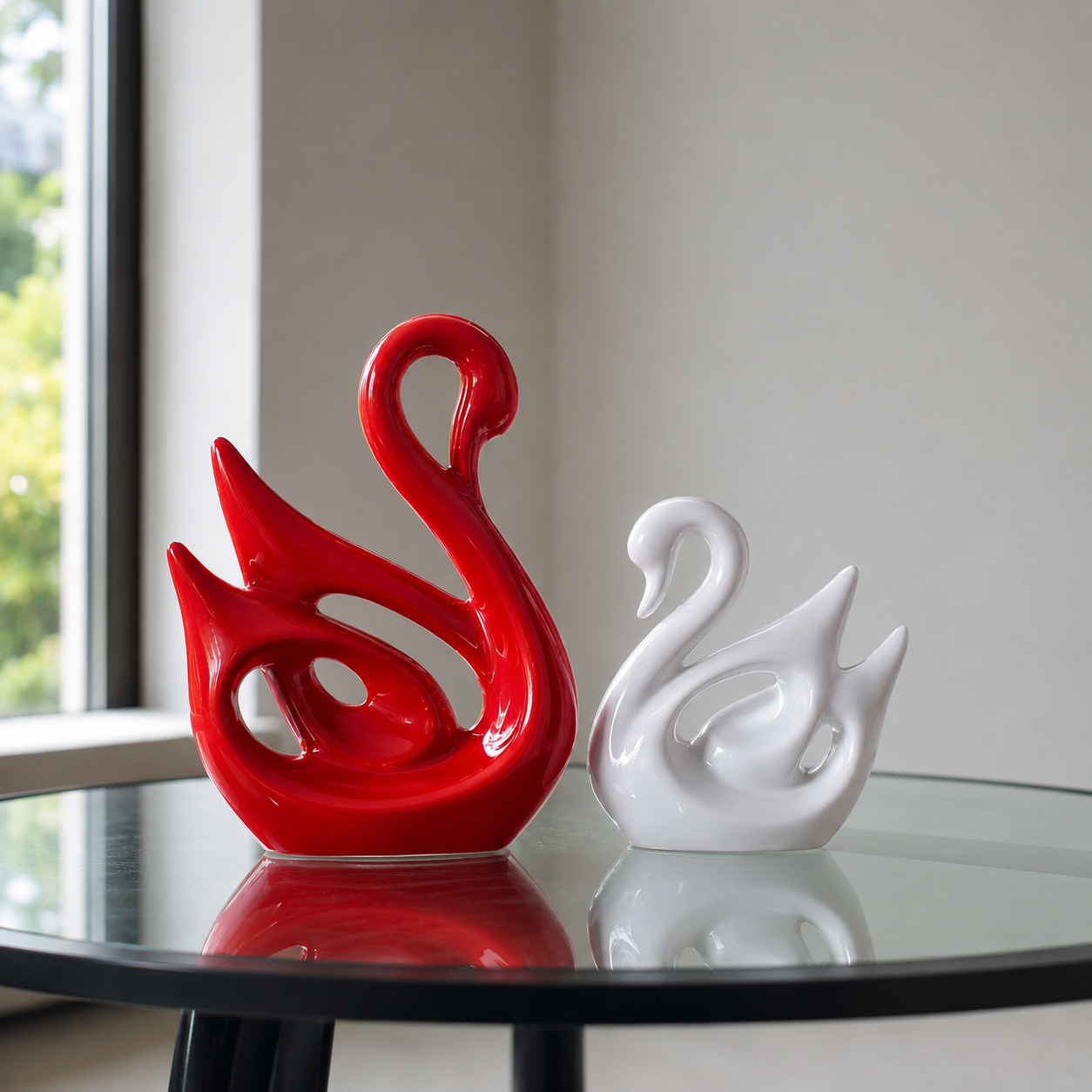
Sharp-edged furniture and accessories are giving way to rounded, organic forms — curved vases, soft-edged frames, sculptural showpieces. Rounded silhouettes photograph better in smaller Indian apartments because they reduce visual harshness in tighter sightlines, making rooms feel larger than their actual square footage.
The final trend isn't a look — it's a buying standard. Homeowners are now checking humidity tolerance and heat resistance before checking price. A large 25–34cm ceramic piece with 85% RH tolerance and 5+ year lifespan is being chosen over a cheaper import that discolors within a monsoon season. For a full range of statement-ready pieces engineered this way, explore Moolwan's home decor items collection.
Ready to bring 2026's trends into your home?
Shop Modern Home Decor →Most Indian homes go wrong not by picking the wrong trend, but by over-committing to one. Moolwan's 70/20/10 Trend Layering Rule solves this: keep 70% of your room in timeless, neutral pieces that won't date; use 20% for the season's trend colors or textures; reserve the final 10% for one bold, trend-forward statement piece. This ratio keeps a room feeling current without needing a full redecoration every year — and it's the same ratio our design team applies when curating new collections.
| Trend | Best For | Ideal Size | Material Fit |
|---|---|---|---|
| Warm Minimalism | Living rooms, small apartments | Medium (16–21cm) | Matte ceramic |
| Textured Neutral Layering | Bedrooms, reading corners | Wall art, any size | 340 GSM canvas |
| Indian Heritage Fusion | Entryways, dining rooms | Medium–Large | Epoxy resin |
| Curved Silhouettes | Small apartments, shelves | Small (10–16cm) | Glazed ceramic |
| Climate-Durable Statement | Living rooms, focal walls | Large (25–34cm) | 92% clay ceramic |
Which 2026 home design trend works best for small Indian apartments?
Curved silhouettes and warm minimalism work best in compact spaces. Small (10–16cm) rounded pieces reduce visual clutter and make tighter rooms feel more open than sharp-edged decor does.
Are trend-based decor pieces less durable than classic pieces?
Not if they're engineered correctly. Moolwan's trend pieces use the same 92% clay ceramic and 94%-purity resin as our classic range, so durability doesn't drop just because the style is current.
How often should I update my home decor to stay on trend?
Using the 70/20/10 rule, you only need to refresh the 20–30% trend layer each year — the timeless 70% base stays put, which keeps both cost and effort low.
What's the easiest way to start incorporating 2026 trends at home?
Start with one statement piece — a large ceramic showpiece or a textured canvas print — rather than redoing an entire room. This delivers the visual shift for the lowest cost and effort.
Build a room that's trend-current and built to last.
Shop Home Decor Items →Written by Ruchi Malhotra, Founder & CEO, Moolwan (Euphorica Ventures Pvt Ltd), Bangalore. Moolwan is a manufacturer-direct home décor brand engineering ceramic, resin, and canvas décor for Indian climate conditions.
Quick View



