By Ruchi Malhotra, Founder & CEO, Moolwan (Euphorica Ventures Pvt Ltd), Bangalore
The dominant 2026 table decor trends in Indian homes are sculptural single-piece centrepieces over matched sets, warm metallic finishes (brass and antique gold) instead of chrome, and mixed-texture styling that pairs a ceramic or resin showpiece with raw materials like cane, stone, or wood. We help design-conscious Indian homeowners style tables that photograph well and survive daily use — not just look good in a showroom.
Table styling has moved away from symmetrical, matched showpiece sets toward curated, asymmetric arrangements built around one strong anchor piece. This shift is driven by smaller apartment footprints, a preference for pieces that double as conversation starters, and growing comfort with mixing traditional Indian motifs against modern silhouettes.
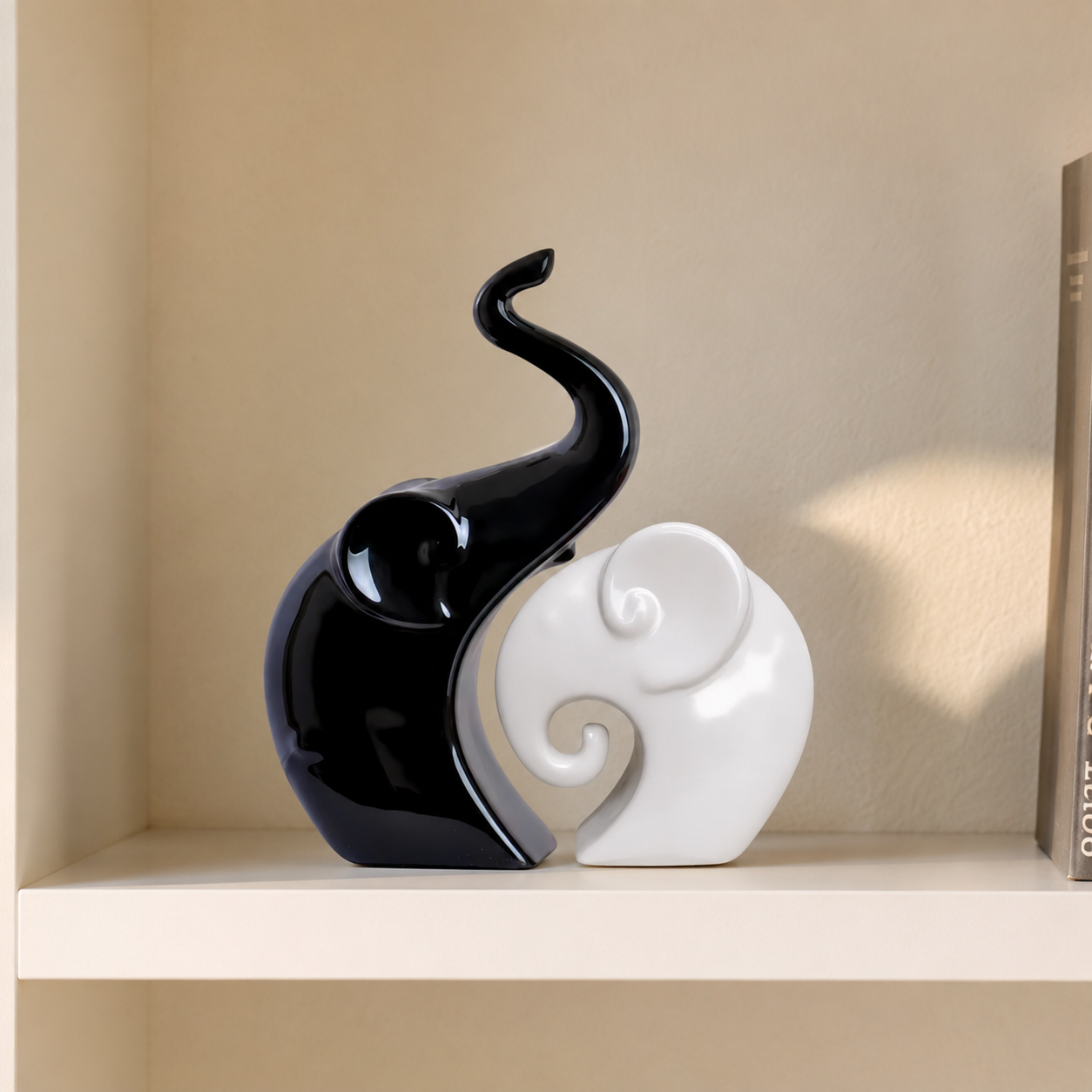
One striking showpiece — a modern art figure or an animal set like an elephant or deer family set — replaces three or four smaller trinkets.
Antique gold, brass, and bronze finishes are replacing chrome and silver, pairing naturally with terracotta, cane, and wood tabletops.
Ceramic showpieces are styled beside raw textures — stone coasters, jute runners, unglazed clay — for a handmade, unforced look.
Coffee and console tables favour pieces under 21cm tall so sightlines stay open across small Indian living rooms.
Buyers increasingly ask about direction before material — a resin couple statue or ceramic elephant set is chosen for the south-west corner as often as for its finish, reflecting how Indian dining and living tables now balance aesthetics with home energy principles.
If you're rebuilding a tablescape from scratch, start with the anchor piece before adding anything else. Browse Moolwan's Modern Home Decor Items collection to see which silhouettes are trending as 2026 centrepieces.
Every trend suits a different table type and household. Use this comparison before committing to a style, since a piece that works on a dining table can overwhelm a narrow console.
| Trend | Best Table Type | Typical Material | Ideal Size Range | Upkeep |
|---|---|---|---|---|
| Sculptural single piece | Coffee table, console | Resin, ceramic | Medium (16–21cm) | Low — wipe clean |
| Warm metallic accents | Dining table centre | Brass-finish resin | Small–Medium (10–21cm) | Low |
| Mixed-material vignette | Console, shelf | Ceramic + wood/cane | Small (10–16cm) | Medium |
| Low-profile centrepiece | Coffee table | Ceramic, resin | Small (10–16cm) | Low |
| Vastu-directional pieces | Dining table, entry console | Ceramic, resin | Medium–Large (16–34cm) | Low–Medium |
Trends change every season, but Indian tables face monsoon humidity, direct sun through balcony doors, and daily wiping — conditions that punish the wrong material faster than they punish an unfashionable design. Moolwan builds every table showpiece to survive that environment, not just to photograph well on day one.
Moolwan's ceramic showpieces — used in trending sets like the Deer Family Set and Duck Showpiece — are built from a 92% clay composition, heat-resistant to 60°C and humidity-tolerant up to 85% RH, so they hold their glaze through an Indian monsoon without clouding or cracking. They're rated for a 15cm drop and carry a 5+ year lifespan under normal table use.
Resin pieces — the material behind trending metallic finishes like the Golden and Black Panther Jaguar figures — use 94% purity epoxy, giving a scratch resistance of 3H pencil hardness and a 3+ year indoor lifespan. They perform best between 15–35°C and up to 60% RH, which suits most Indian living and dining rooms but makes them a better fit for indoor tables than open balconies.
Verdict: for humid, high-traffic tables — dining tables, kitchen counters — choose ceramic. For sculptural centrepieces on a coffee table or console away from direct moisture, resin's finer detailing and metallic finishes are the stronger pick.
Most tablescapes fail not from bad taste but from bad proportion — either one lonely object on a bare surface, or five competing pieces with no hierarchy. Moolwan's stylists use a simple three-part framework on every table we design for.
One large-to-medium piece (25–34cm for a dining table, 16–21cm for coffee tables) that sets the visual weight — a couple statue, an animal family set, or a sculptural vase.
One or two smaller pieces (10–16cm) that echo the anchor's colour or material without repeating its shape — a candle holder, a small planter, a pair of coasters.
Deliberate empty space around the grouping. Leave at least a third of the table surface bare so the anchor piece has room to be seen, not crowded.
Weight guidance matters here too: Moolwan's table showpieces run 150g–600g, light enough that a fully styled anchor-accent grouping won't strain a glass-top table or a wall-mounted console shelf — a real concern in smaller Indian apartments where furniture is chosen for space efficiency, not load-bearing capacity.
See the Anchor-Accent-Air rule applied to real pieces across Moolwan's showpiece range.
Shop Showpieces →2026's dining tables favour a single low-profile centrepiece — a ceramic Buddha planter or a small elephant family set — flanked by table runners in jute or linen rather than a full matching set. This keeps the surface clear for actual meals while still reading as styled.
Coffee tables are the one surface where the sculptural single-piece trend shows up strongest: a modern art figure or a couple statue set slightly off-centre, paired with a stack of books and one small accent planter — never more than three objects total.
Consoles benefit from height variation — a taller anchor piece (25cm+) balanced by a low, wide accent like a duck or animal pair. If your console sits under a mirror or gallery wall, keep the tabletop grouping simple; let Moolwan's home decor hanging items collection carry the visual interest above the surface instead of competing with it.
Ready to build your table's anchor piece? Explore the full modern decor edit before the season's best sellers run out.
Shop Modern Home Decor →Two to three at most: one anchor centrepiece and one or two small accents. More than that crowds the surface and works against the current trend toward sculptural, single-piece styling.
Yes. Warm metallics — antique gold and brass finishes on resin pieces — are one of the strongest trends this year, replacing the cooler chrome and silver tones popular a few years ago.
Moolwan's medium size band (16–21cm) is the sweet spot for coffee tables in Indian apartments — large enough to register as a centrepiece, small enough to leave the "air" the Anchor-Accent-Air rule calls for.
Ceramic, generally. Moolwan's ceramic pieces tolerate humidity up to 85% RH versus 60% RH for resin, making ceramic the safer choice for dining tables and kitchen counters exposed to monsoon humidity.
Yes — Moolwan accepts returns within 24 hours of delivery if the item is unused and in original packaging, subject to a 10% restocking fee, with refunds processed within 15 working days.
Moolwan manufactures every table showpiece in-house and prices direct — no middlemen markup, no climate-mismatched imports. Build your 2026 tablescape with pieces engineered for Indian homes.
Quick View



