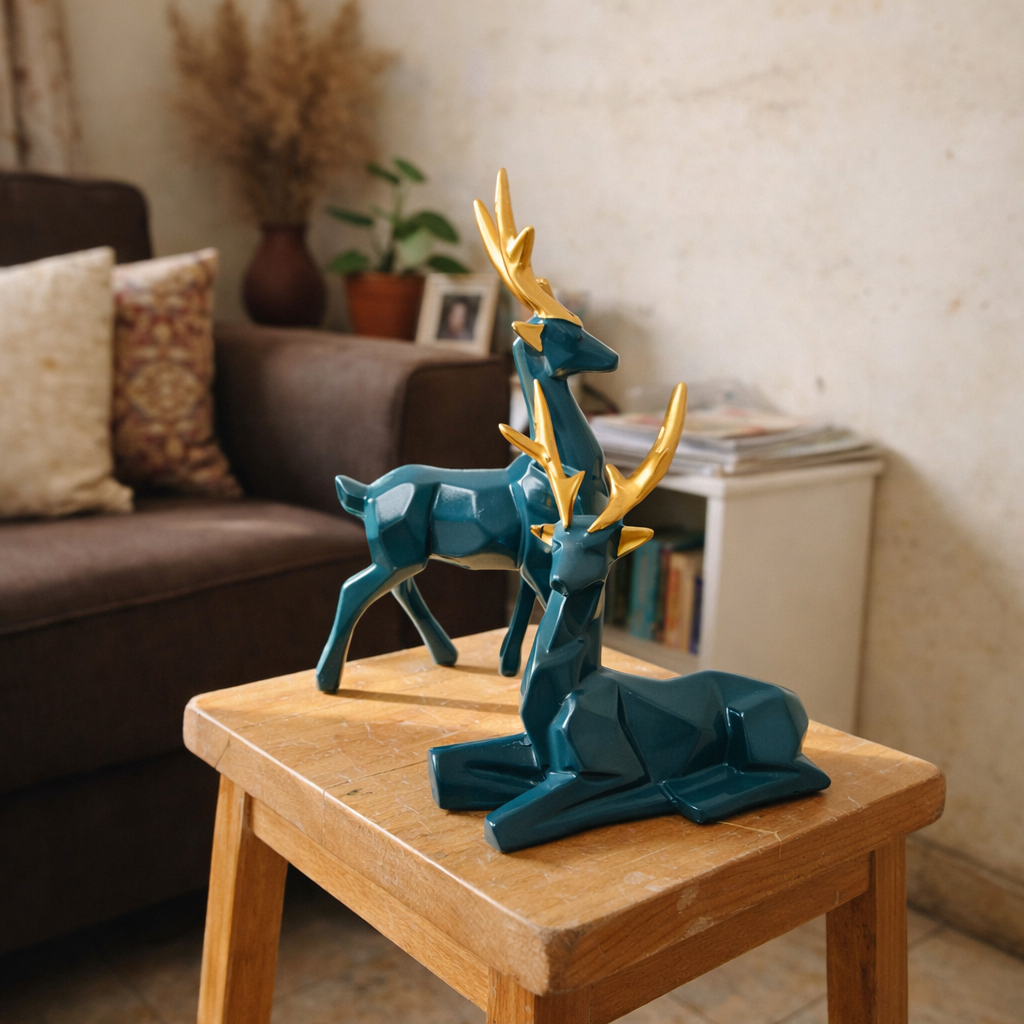
An oversized living room needs at least two furniture zones instead of one, each anchored by a rug, a light source, and a décor focal point. Pushing every piece against the walls is the single biggest layout mistake in large Indian living rooms — it leaves the centre hollow and the room feeling unfinished, no matter how much furniture is in it.
We help Indian homeowners with oversized living rooms — typically 250 sq ft and above — solve the "too much space, not enough presence" problem through zoned layouts anchored by décor, not just furniture. The fix is rarely more sofas. It's intentional grouping, sightline planning, and objects placed to hold visual weight in the gaps that furniture alone can't fill.
Large rooms fail visually not because they lack furniture, but because that furniture is arranged in a single perimeter ring. A 300 sq ft living room styled like a 150 sq ft one leaves a dead zone in the middle — the eye has nowhere to land, and the room reads as unfinished even when every wall is furnished. Indian apartments with open-plan living-dining layouts are especially prone to this, since the sofa set gets pushed back to "make the room look bigger," which does the opposite.
The correction is zoning: splitting one oversized room into two or three purposeful areas — a primary seating zone, a secondary conversation or reading zone, and a visual anchor zone near the entry or window — each with its own rug, lighting, and focal object. This is standard practice in Western open-plan design, adapted here for Indian proportions, Vastu-conscious furniture orientation, and the tendency toward fewer, larger pieces rather than many small ones.
For any living room over 250 sq ft, divide the floor into three zones and give each one a non-negotiable anchor:
Each zone needs its own light source and its own décor moment. A room with three lit, styled zones reads as designed. A room with one large furniture ring around empty carpet reads as unfinished, regardless of budget spent.
Explore Moolwan's living room décor collection to find pieces sized correctly for each of these zones — this is where most large-room styling actually goes wrong, since generic décor is sized for compact apartments, not oversized layouts.
Furniture layout in an oversized room isn't a style choice — it's a spacing calculation. Sofas need 90–100cm of walking clearance on at least two sides for the room to feel navigable rather than obstructed. Coffee tables should sit 35–45cm from seating edges. Rugs anchoring a seating zone need to be large enough that at least the front legs of every seated piece rest on them — a floating rug under only the coffee table makes an oversized room look smaller, not bigger.
| Room Size | Recommended Zones | Décor Piece Size Band | Anchor Placement |
|---|---|---|---|
| 150–250 sq ft | 1 primary zone | Medium (16–21cm) | Coffee table or console |
| 250–400 sq ft | 2 zones (seating + secondary) | Medium to Large (16–34cm) | Console + accent side table |
| 400+ sq ft | 3 zones (seating + secondary + visual anchor) | Large focal pieces (25–34cm) with Small accents (10–16cm) | Entry console, window ledge, feature wall |
Furniture alone cannot fill an oversized room's visual gaps — décor does that job. A feature wall behind the primary sofa zone, styled with a large canvas piece, gives the eye a single strong stopping point instead of scattering attention across bare wall. Browse Moolwan's modern home décor collection for pieces sized specifically for these focal-wall moments in larger rooms.
Vertical space is the most underused resource in oversized Indian living rooms with high ceilings. Hanging décor above console tables or between windows draws the eye upward and stops the room from feeling flat and floor-heavy. Moolwan's home décor hanging items collection is built for exactly this — filling vertical dead zones that furniture layout alone can't address.
Ceramic and resin showpieces hold up better than delicate imported décor in this role, since Indian living rooms — especially those with large windows or balcony access — see more heat, humidity, and dust movement across a bigger floor area. Moolwan's ceramic pieces are engineered from a 92% clay composition, heat-resistant to 60°C and humidity-tolerant up to 85% RH, so an anchor piece placed near a sunlit window ledge in Zone 3 won't warp, fade, or crack the way lower-grade imported ceramics do within a year.
Ready to style your zones? Shop décor sized for oversized Indian living rooms.
Shop Living Room DécorThree zones — a primary seating group, a secondary gathering area such as accent chairs or a window bench, and a visual anchor zone like an entry console or feature wall. Two zones is the minimum for anything past 250 sq ft; below that, one well-anchored zone is enough.
Large pieces (25–34cm) for the primary focal wall or console, Medium pieces (16–21cm) for secondary zones and coffee tables, and Small pieces (10–16cm) reserved for accent clusters rather than standing alone — a single small piece gets visually lost in a large room.
No. Pushing every piece to the perimeter is the most common layout mistake in oversized Indian living rooms — it hollows out the centre and makes the space feel emptier, not bigger. Floating furniture into defined zones with adequate walking clearance reads as intentional and full.
Hanging décor placed above consoles, between windows, or on feature walls draws the eye upward and prevents a large room from feeling flat. This matters more in oversized rooms than small ones, since floor-level furniture alone can't carry a tall room's visual weight.
Get zone-ready décor built for Indian climate and space — ceramic, resin, and canvas pieces sized correctly for large rooms.
Browse Modern Home DécorWritten by Ruchi Malhotra, Founder & CEO, Moolwan (Euphorica Ventures Pvt Ltd), Bangalore. Moolwan manufactures ceramic, resin, and canvas home décor in-house for Indian homes — engineered for local climate, priced direct, and sized for real Indian room proportions.
Quick View



