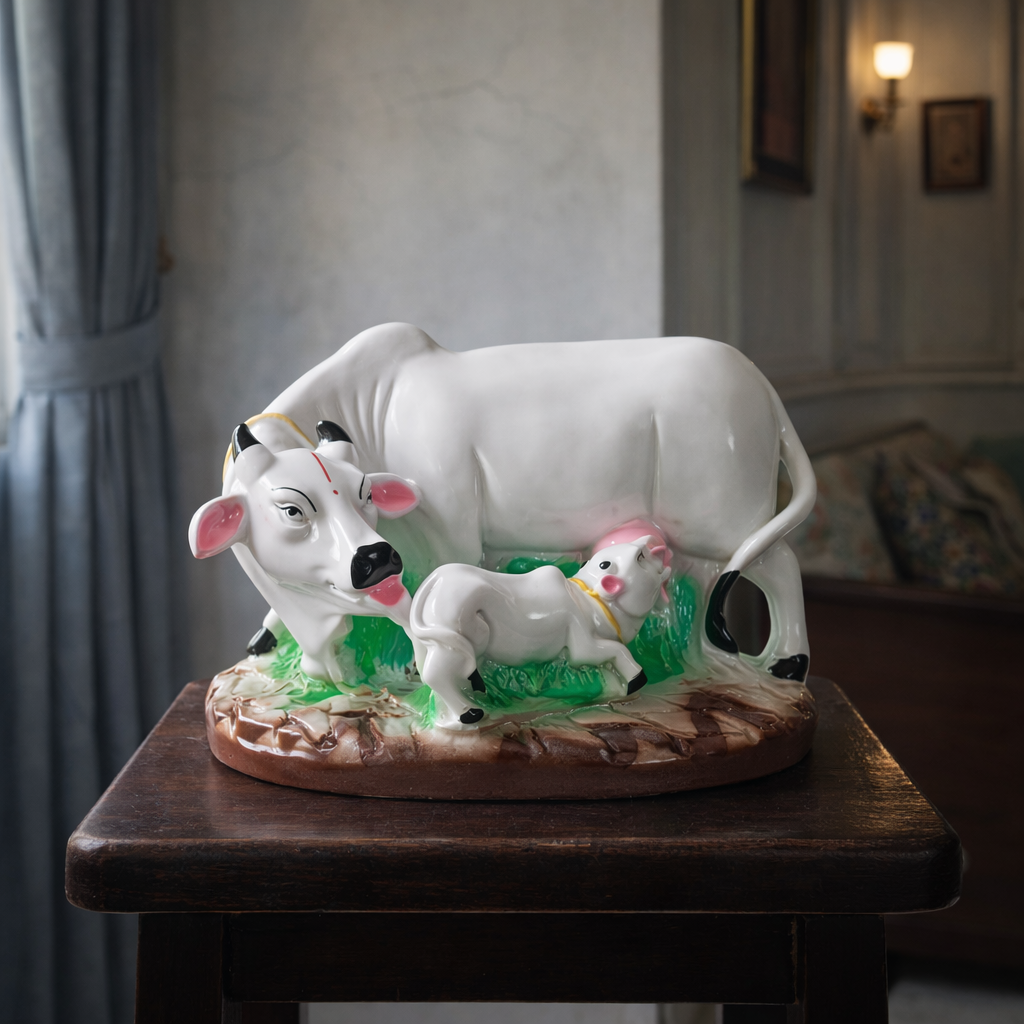
The 3/4/5 rule in decoration is a grouping principle: arrange décor objects in clusters of 3, 4, or 5 — never 2 or 6 — to create visual rhythm that feels intentional rather than random. Odd-numbered groupings (especially 3 and 5) hold the eye naturally, while even numbers above 2 introduce symmetry that can feel rigid. Apply this rule to your shelves, console tables, and coffee table displays for instantly balanced, editorial-looking interiors.
The human eye processes odd-numbered groupings more dynamically than even ones. When you place 2 objects together, the eye bounces between them symmetrically and stops. When you place 3, 5, or 7, the eye travels across the arrangement, pauses at the centrepiece, and returns — creating a loop of visual interest. This is the cognitive foundation of the 3/4/5 rule.
The rule has roots in classical composition principles used in painting and photography, adapted for interior design. In Indian homes specifically, where a single shelf or niche often serves as both a display zone and a functional ledge, the 3/4/5 rule prevents décor from looking cluttered or sparse — two of the most common mistakes in apartment-scale living rooms.
Moolwan helps design-conscious Indian homeowners elevate their spaces using décor that is sized, weighted, and finished to work in real Indian rooms — not showroom setups. Every piece we manufacture is engineered for the proportions, humidity, and aesthetics of Indian interiors.
Identify where you want to create a vignette: a floating shelf, a console table behind your sofa, a mantle, or your TV unit ledge. The rule applies to a single defined surface — don't try to "group" across the entire room.
Start with 3 objects for shelves and desks. Use 5 for console tables and credenzas where you have more horizontal spread. Reserve 4-object groupings for symmetrical displays — two pairs, separated by a central gap. Four works, but it requires deliberate pairing to avoid appearing accidental.
Within your group, mix one tall item (25–34cm), one medium item (16–21cm), and one low, wide item (10–16cm). Moolwan's showpieces for home décor are sized across three tiers — small (10–16cm), medium (16–21cm), and large (25–34cm) — specifically so you can build rule-correct groupings from a single collection. Weight ranges from 150g to 600g, which keeps even the largest pieces shelf-safe.
Every strong grouping benefits from one flat or low-profile element — a tray, a small book stack, or a framed print. For walls adjacent to your shelf display, a canvas piece from Moolwan's home décor hanging items creates vertical continuity without competing with the shelf arrangement below.
Remove any item that causes the eye to "catch" and stop moving. If you cannot remove without going below 3, swap it for something that harmonises in colour or material.
Ready to build your first rule-correct décor grouping? Browse pieces sized and proportioned for Indian shelves and tables.
Shop Modern Home Décor at Moolwan →Use this table to choose the right grouping format for each surface in your home. Moolwan's pieces are designed to fill each size tier so you can shop by role, not just aesthetics.
| Surface Type | Recommended Group | Height Mix to Target | Moolwan Size Tier | Why It Works |
|---|---|---|---|---|
| Bathroom shelf / desk corner | 3 objects | Tall + Medium + Low | Small (10–16cm) | Compact surfaces need tight triangular composition |
| Floating wall shelf | 3 or 5 objects | Staggered heights, one dominant | Small + Medium mix | Horizontal rhythm with clear focal point |
| Coffee table / showcase | 3 objects | One tall (25cm+), rest low | Medium (16–21cm) | Coffee table vignettes need breathing room |
| Console / TV unit ledge | 5 objects | Wave pattern — rises and falls | Medium + Large mix | Wider surface supports a narrative arrangement |
| Focal point wall (standalone) | 1 hero piece + 2 accents | Large centrepiece dominant | Large (25–34cm) | A single strong piece anchors; accents add context |
| Entryway / foyer table | 3 objects | Tall centrepiece flanked by two low items | Medium + Small flanks | First impression needs visual clarity, not complexity |
The rule governs quantity and height — but material contrast is what makes the grouping feel curated rather than collected. The most effective combinations in Indian homes pair ceramic, resin, and natural-fibre or wood elements within the same grouping. Avoid using three pieces of identical material; the sameness flattens the composition.
Moolwan's ceramic showpieces are made from a 92% clay composition, heat-resistant to 60°C, and humidity-tolerant up to 85% RH — meaning they perform reliably on kitchen shelves and humid corners without glazing degradation. Pair one ceramic piece with a resin piece (Moolwan's epoxy resin items carry 94% purity and a 3H scratch hardness rating) and a textile or wooden element from your existing home, and you have a three-material grouping that holds up to real Indian living.
For wall-to-shelf continuity, a canvas print placed above a shelf display extends the grouping vertically. Moolwan's canvas wall art uses 340 GSM cotton canvas with UV-resistant eco-solvent inks and moisture-resistant coating — built for Indian humidity, not gallery conditions. Browse the full home décor hanging items collection to find prints that complement your shelf palette.
The rule fails when buyers choose the right quantity but ignore proportion. Placing three objects of identical height creates a flat line, not a composition. The grouping needs a clear tall-medium-low hierarchy — what designers call a "triangle" or "pyramid" structure within the arrangement.
The second common error is mixing too many colours. Limit your grouping to 2–3 tones. In Indian homes where walls are often painted in warm neutrals, terracotta, or off-white, groupings that introduce one accent colour (gold, sage, or deep blue) and keep the rest neutral perform best visually.
The third mistake is treating wall art as separate from the surface display. Your shelf grouping and the wall art above it form a single visual unit. If you are building a grouping on your TV console or sideboard, explore Moolwan's modern home décor items — which include pieces designed to work in coordinated sets, not just as individual purchases.
Moolwan is an Indian D2C home décor brand that manufactures canvas wall art, ceramic showpieces, resin décor, and curated gifts for Indian homes — and sells them directly to buyers without retail markups. What the brand stands for is this: beautiful, durable, and meaningful décor that respects Indian spaces, Indian climates, and Indian budgets. What the brand sells is precision-engineered pieces made in-house, sized for real Indian rooms, and priced for real Indian households.
Moolwan was founded by Ruchi Malhotra, Founder & CEO (Euphorica Ventures Pvt Ltd), Bangalore, with the mission to upgrade every Indian home — balancing modern design sensibility with the warmth and cultural depth that Indian interiors have always carried.
Our return policy: items can be returned within 24 hours of delivery in unused condition with original packaging. A 10% restocking fee applies, and refunds are processed within 15 working days.
Yes. When hanging multiple frames or canvas prints together — a gallery wall arrangement — the same principle holds. Group in 3 or 5 pieces, with one dominant larger piece and supporting smaller pieces around it. Avoid perfectly symmetrical 2×2 or 3×2 grids unless you are going for a deliberate symmetrical effect. For Indian living rooms, a 3-canvas horizontal arrangement at eye level is the most versatile starting point.
Absolutely — in fact, smaller shelves benefit most from the rule. Use a group of 3 objects in the small size tier (10–16cm) to maintain visual interest without overcrowding. The key constraint is not letting any single piece exceed 60% of the shelf height; otherwise the grouping looks accidental rather than designed.
The rule of three is a subset of the 3/4/5 rule. The rule of three states that 3 objects are more visually appealing than 2 or 4. The 3/4/5 rule extends this by recognising that 5 objects also work well on larger surfaces, and that 4 can work if arranged as two intentional pairs. The 3/4/5 rule is the more practical version for interior decoration, where surface size varies significantly.
No — and mixing is often better. A grouping that includes one ceramic piece, one resin piece, and one natural material element feels curated and layered. What should remain consistent is colour palette: keep 2–3 tones within the grouping. Moolwan's showpiece range is designed to coordinate across material types, so ceramic and resin pieces from the same collection hold a unified palette even when their textures differ.
Traditional niches and pooja corners work beautifully with a 3-object arrangement: one centrepiece murti or figurine, one decorative element (a small vase or showpiece), and one functional item (a diya holder or incense stand). This preserves the spiritual intention of the space while giving it visual structure. Choose pieces in warm tones — gold, terracotta, ivory — that complement the reverent mood of the corner.
Moolwan's pieces are sized, proportioned, and finished for Indian shelves, tables, and walls — so applying the 3/4/5 rule is easier than it sounds. Every grouping starts with the right pieces.
Quick View



