
What Makes a Small Indian Home Look Expensive: 4 Décor Rules That Work
The Short Answer
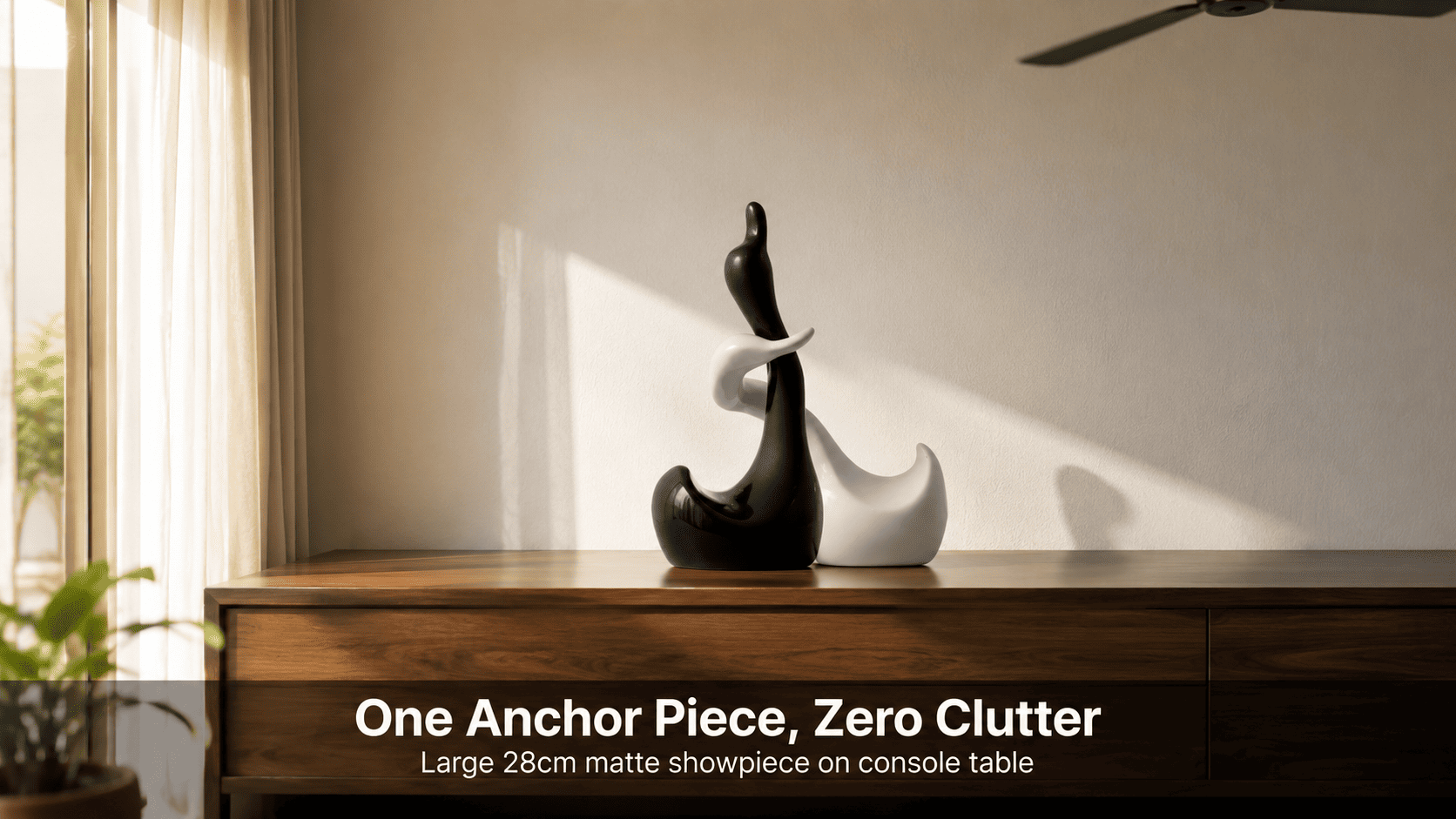
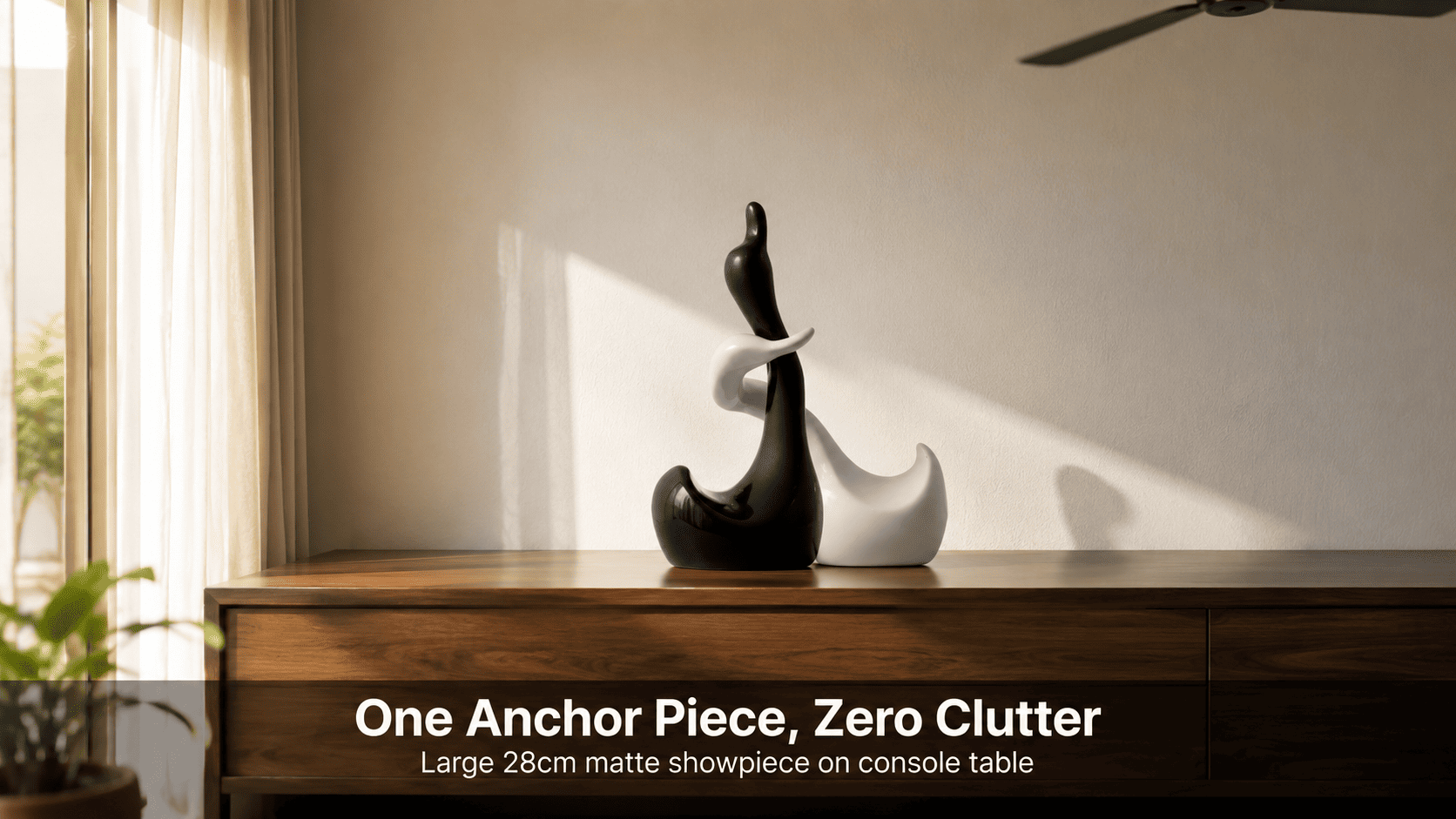
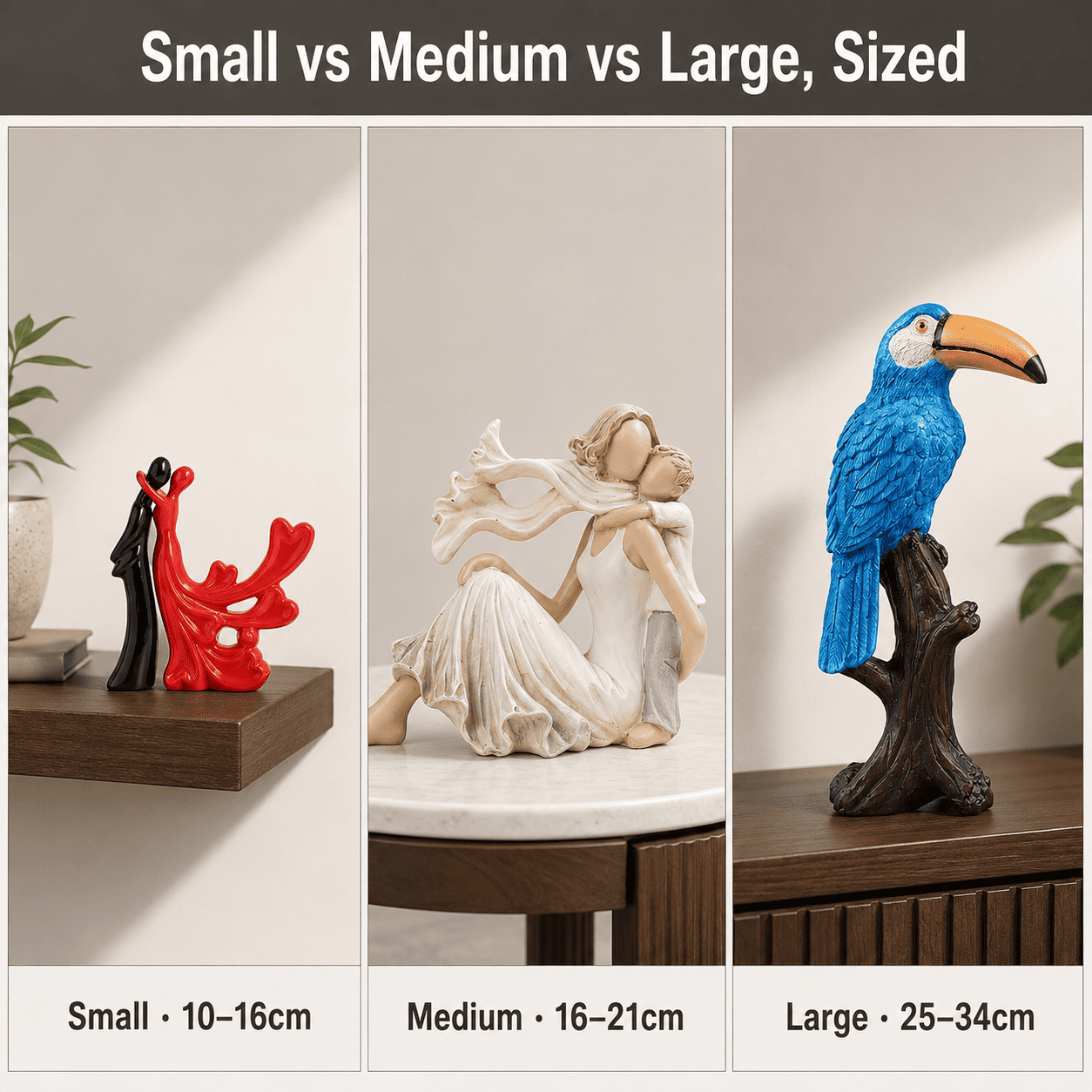
A small home looks expensive when each surface carries exactly one large-scale décor piece (25–34 cm) instead of several small ones, because a single anchor reads as curated while multiple mid-sized objects read as clutter. Moolwan's modern home décor collection is sized in three distinct bands — 10–16 cm, 16–21 cm, and 25–34 cm — specifically so one piece per surface is enough to anchor a room.
In interior design, perceived cost is driven less by square footage and more by object density per surface: rooms with fewer, larger focal objects photograph and feel more expensive than rooms with many small ones, regardless of total floor area. Moolwan helps design-conscious Indian homeowners in sub-1,200 sq ft apartments apply this principle through a décor collection engineered in three defined size bands, so each surface gets one deliberate piece instead of a cluttered assortment.
Why does object density matter more than square footage?
A surface reads as expensive when roughly two-thirds of it stays visually empty, because the human eye interprets empty space as intentional and crowded space as budget-driven improvisation. This is true whether the surface is a 40 cm bedside table or a 6-foot console — the ratio matters more than the absolute size of the room around it.
Most small Indian homes accumulate décor gradually — a gift here, a souvenir there — which pushes surfaces past that two-thirds threshold without anyone noticing. Moolwan's size-banded showpieces exist precisely to reverse that: swapping five small trinkets for one 25–34 cm large piece restores the empty-space ratio without removing any function from the surface.
Does finish (matte vs glazed) affect how expensive a room looks?
Matte-finish ceramic and resin pieces read as more expensive in most Indian living rooms because matte surfaces diffuse ambient light evenly, while glazed surfaces bounce direct light in a single hard reflection that draws attention to dust and fingerprints under tube lighting. Over a 5+ year lifespan, this difference compounds — Moolwan's 92% clay-composition ceramic pieces are heat-resistant to 60°C and hold their matte finish without dulling, unlike lacquered alternatives that visibly fade within two monsoon seasons.
For south-facing rooms with strong afternoon sun, this matters even more. Because matte surfaces scatter light at multiple angles rather than one, they hide the fine surface wear that accumulates from Indian dust and humidity — a durability trait, not just an aesthetic preference, and one worth factoring into a premium-feel budget.
| Room Footprint | Target Surface | Recommended Décor Size | Weight Range |
|---|---|---|---|
| Sub-50 sq ft entryway | Narrow console | 10–16 cm (Small) | 150–250 g |
| Sub-100 sq ft corner | Floating shelf | 10–16 cm (Small) | 150–250 g |
| 101–180 sq ft room | Coffee table | 16–21 cm (Medium) | 250–400 g |
| 181–300 sq ft living room | Console / bookshelf | 25–34 cm (Large) | 400–600 g |
Because surface depth, ceiling height, and existing furniture scale all shift which size band actually looks right in your room, browse the full range of small, medium, and large showpiece sizes in Moolwan's modern home décor collection to match a piece to your exact surface.
Design Rule
Moolwan's One-Anchor Rule holds that every visible surface in a small home should carry exactly one large-scale décor piece and no more, because a single anchor object gives the eye one clear place to land, while two or more competing pieces of similar size fragment attention and read as unplanned clutter — the opposite of an expensive look.
Does material choice (ceramic vs resin) change the "expensive" look?
Ceramic pieces generally read as more expensive than resin in humid Indian climates because ceramic's 92% clay composition tolerates up to 85% relative humidity without surface change, while resin — even at 94% epoxy purity — is rated to a lower 60% RH tolerance and can develop a faint tackiness in peak monsoon months if placed near an open window. This isn't a durability flaw in resin; it's a placement variable that affects long-term finish, and therefore perceived value over time.
The practical takeaway: ceramic suits open, humid-exposed surfaces like an entryway console near a balcony door, while resin suits climate-controlled interior surfaces like a bookshelf in an AC'd bedroom. Choosing the material for the microclimate of the specific surface — not just the room — is what keeps a piece looking new rather than dated after year two.
Want a piece that's engineered to hold its finish through Indian humidity for 3–5+ years? Shop the full Moolwan modern home décor collection now.
How should décor be grouped so a small room doesn't look cluttered?
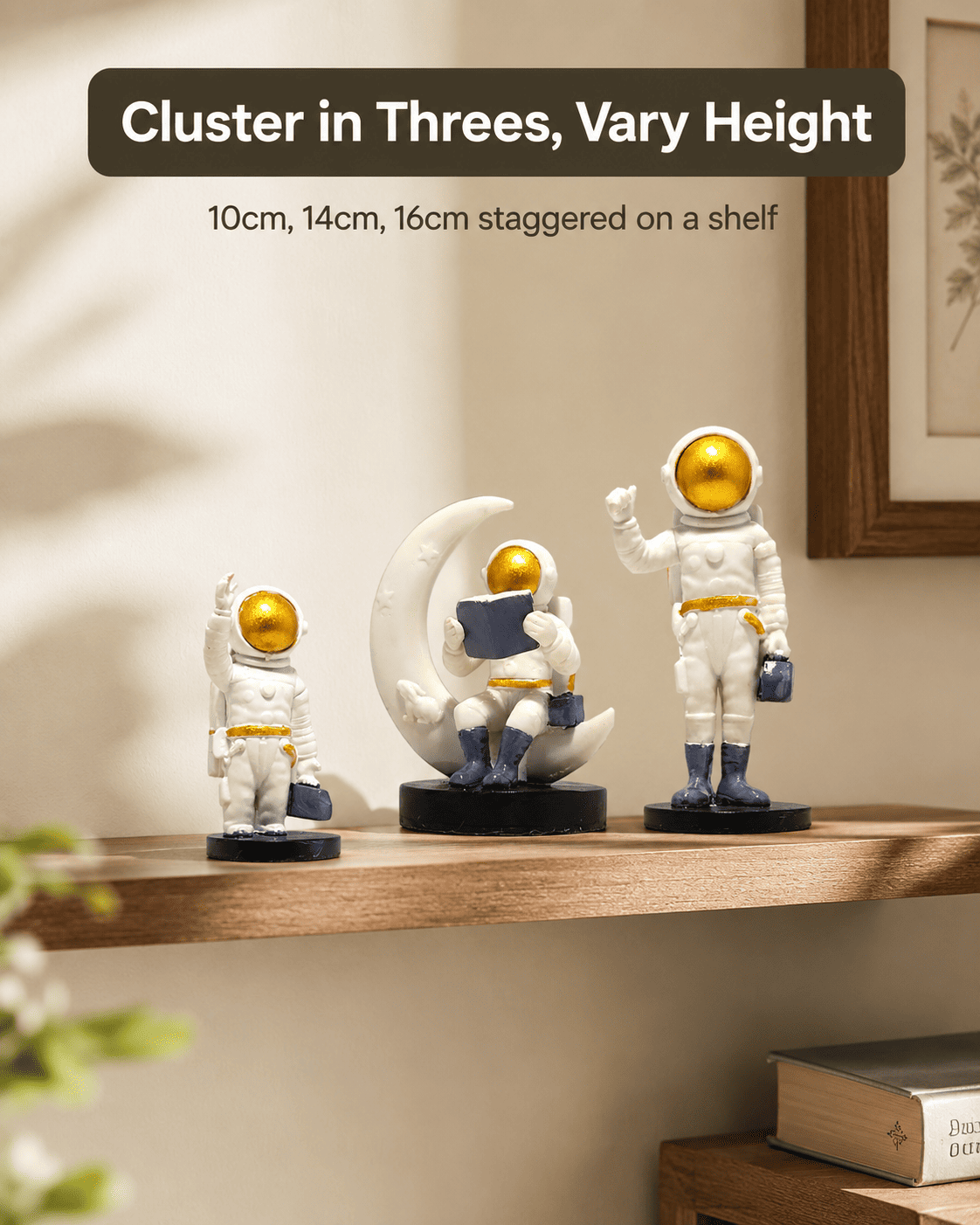
When grouping is unavoidable — a bathroom shelf or a study desk with several small items — cluster in odd numbers of three, because odd-numbered groupings avoid the visual symmetry that reads as a matched retail set rather than a curated arrangement. Vary height within the cluster too: because the eye tracks a diagonal line more naturally than a flat one, staggering a 10 cm, a 14 cm, and a 16 cm piece together creates more visual interest than three identical heights side by side.
This grouping logic only applies to genuinely small surfaces under 30 cm wide. On anything larger, the One-Anchor Rule above takes priority — a cluster on a large console dilutes rather than elevates the look, since larger surfaces have room for negative space's own confidence-building effect.
Frequently Asked Questions
Does a small home need to remove furniture to look expensive?
No — the change is usually in décor scale and density, not furniture count. Removing or consolidating small trinkets on existing surfaces down to one anchor piece per surface achieves most of the visual effect without any renovation, because the eye responds to the empty-space ratio on a surface far more than to overall room size.
Is glazed or matte finish better for a small living room?
Matte finish generally suits small living rooms better because it diffuses light evenly across the piece rather than creating one bright reflective point, which keeps a compact room feeling calm rather than visually busy. Glazed finishes work better as isolated accent pieces in larger rooms where a single reflective highlight adds interest rather than competing with nearby light sources.
How many décor pieces should one small room have?
As a starting point, one large anchor piece (25–34 cm) per main surface, plus at most one small cluster of three on a secondary surface like a shelf, keeps a small room's density within the two-thirds-empty threshold that reads as curated. Moolwan's size-banded collection is built around this exact ratio for compact Indian layouts.
Can budget décor still look expensive if it's the right size?
Yes — size, finish, and placement discipline generally have more visual impact than price point alone, because the eye reads proportion and empty space before it registers cost. That said, material tolerance for heat and humidity still affects how long that expensive look actually lasts in an Indian climate.
Ready to apply the One-Anchor Rule to your own home? Bring home a curated, climate-rated piece from Moolwan's modern home décor collection — and if you're still comparing sizes and finishes, the wider modern home décor range and the full home décor collection are worth a look too, since both are engineered to the same humidity and heat tolerances for Indian homes.


