The Short Answer
Ceramic elephants (pairs, trunks up, facing the entrance), brass or resin Laughing Buddhas on the east-facing living room shelf, and wind chimes hung near a north or northeast window are the three ornaments most consistently linked to good luck in Indian homes. Placement and material matter as much as the object itself — a lucky ornament in the wrong direction or a fragile finish that cracks within a year defeats its own purpose.
Ceramic elephants, brass Laughing Buddhas, and wind chimes are the ornaments Indian homeowners buy most often for good luck — but the difference between a lucky ornament and a decorative dud comes down to two things: where you place it and what it's made of. We help design-conscious Indian homeowners choose décor that holds both meaning and material integrity, so this guide breaks down exactly which ornaments work, where they belong, and what specs to check before you buy.
Five ornament types dominate Vastu and Feng Shui-informed décor choices in Indian households, each tied to a specific intention rather than generic "good luck."
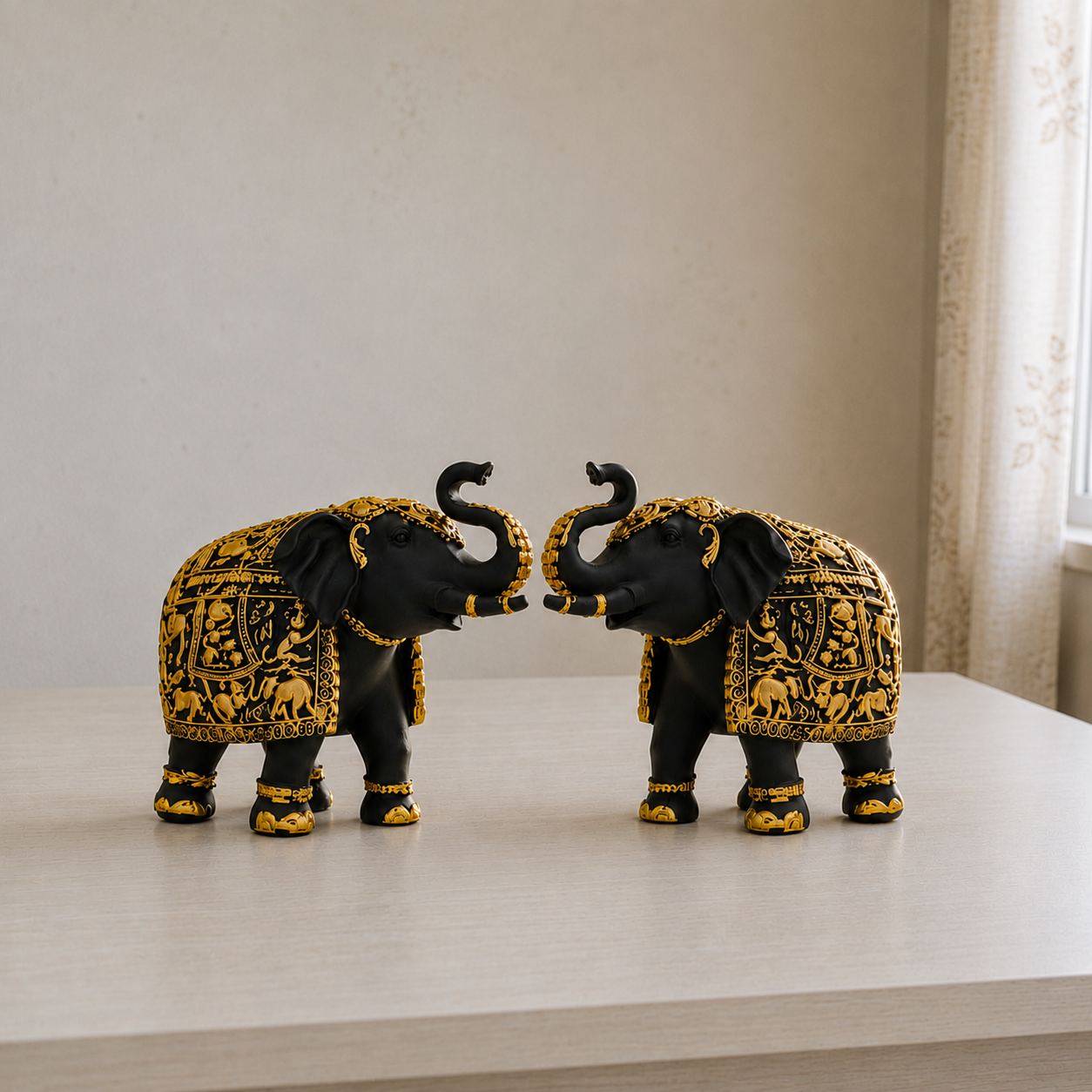
Ceramic or resin elephants symbolise strength and steady progress. They're most effective as a pair, trunks raised, placed facing the main door or a living room entry point — never facing a wall or facing outward through a window, which is said to "send the luck away."
The Laughing Buddha represents contentment and financial ease. A resin or brass figure on an east-facing shelf, ideally at eye level rather than on the floor, is the traditional placement. Avoid the bathroom or bedroom.
Wind chimes (metal, 5- or 6-rod) are used to circulate stagnant energy near entryways, staircases, or the northeast corner of a home — the zone Vastu treats as the entry point for positive energy.
Tortoise figurines (metal or resin, never real shell) signify longevity and are placed low, often on a side table in the north zone of the living room.
Horseshoe wall hangings, typically resin or metal, are hung open-end-up above the main door — a placement rule so widely followed that reversing it is considered to cancel the intended effect. Browse Moolwan's modern home décor collection for pairs, figurines, and wall pieces sized for Indian apartment entryways and shelves.
| Ornament | Symbolises | Best Placement | Recommended Size |
|---|---|---|---|
| Ceramic elephant pair | Strength, steady progress | Facing main entrance, trunks up | Medium (16–21cm) |
| Laughing Buddha | Contentment, financial ease | East-facing shelf, eye level | Small–Medium (10–21cm) |
| Metal wind chime | Energy circulation | Entryway, staircase, NE corner | Lightweight, 150–300g |
| Resin tortoise | Longevity | North zone, low placement | Small (10–16cm) |
| Horseshoe wall hanging | Protection, luck retention | Above main door, open-end up | Medium (16–21cm) |
A lucky ornament that chips, discolours, or cracks within a year isn't lucky — it's a wasted purchase. Most mass-produced showpieces sold in Indian markets use low-clay-content ceramic or low-purity resin that can't handle India's humidity swings (30–85% RH across seasons) or the heat near west-facing windows.
Moolwan manufactures ceramic showpieces at 92% clay composition, heat-resistant to 60°C, with a 5+ year lifespan and 15cm drop resistance — specifications that matter because a Laughing Buddha placed on a sunlit shelf or a tortoise figurine near a frequently-used doorway needs to survive daily handling and seasonal humidity up to 85% RH without cracking.
Resin ornaments — common for horseshoe hangings and smaller figurines — should be checked for epoxy purity. Moolwan's resin pieces use 94% purity epoxy, giving 3+ years of indoor lifespan and 3H pencil-hardness scratch resistance, tolerant up to 60% RH and 15–35°C. This is the range most Indian living rooms and entryways sit within across the year, unlike imported resin pieces engineered for drier, temperate climates.
This is also where middleman markups hurt buyers the most: a resin horseshoe or ceramic elephant pair bought through multiple resale layers often costs 2–3x more than the same specification bought direct from the manufacturer, with no quality guarantee attached. Ready to buy with confidence? Shop Moolwan's showpieces for home décor — manufactured in-house and priced direct.
The biggest styling mistake with lucky ornaments is clustering all five types in one corner. This looks cluttered and, ironically, works against the "energy flow" principle most of these traditions are built on. Instead, distribute ornaments across the specific zones they're meant for.
Keep this zone to one or two objects: a horseshoe above the door frame and, just inside, a ceramic elephant pair on a console table facing inward. A wind chime near the door is optional but should not overlap with the horseshoe — one protective object per doorway is the standard rule.
This is where the Laughing Buddha and any secondary showpieces belong. A medium showpiece (16–21cm) works as a coffee-table or showcase centrepiece, while small pieces (10–16cm) suit bookshelf or side-table placement without competing for visual attention.
You don't need to choose between a minimalist modern living room and traditional lucky décor. Matte-finish ceramic elephants or a single brass-toned Buddha figurine read as intentional design choices rather than clutter, especially when paired with neutral wall art. For pieces that bridge both worlds — decorative first, symbolic second — explore Moolwan's unique décor items for elegant living rooms, curated specifically for Indian homes balancing modern and traditional aesthetics.
Bring Home Décor That's Built to Last, Not Just Look Good
92% clay ceramic. 94% purity resin. Manufactured in-house, priced direct — no middlemen.
Shop Lucky ShowpiecesMoolwan is India's D2C source for modern home décor, wall art, and curated gifts — built on the belief that Indian homes shouldn't have to choose between authentic design meaning and everyday durability. Most décor sold in Indian markets is mass-produced without climate engineering or is priced up by layers of middlemen. Moolwan manufactures canvas wall art, ceramic showpieces, and resin décor in-house, tests every category against Indian humidity and heat conditions, and prices direct to the buyer.
This piece was written by the Moolwan Design Concept Team and reviewed by Ruchi Malhotra, Founder & CEO, Moolwan (Euphorica Ventures Pvt Ltd), Bangalore.
Moolwan's return policy reflects this direct-to-buyer confidence: returns are accepted within 24 hours of delivery for unused items in original packaging, with a 10% restocking fee and refund processed within 15 working days — details worth knowing before you commit to a lucky ornament for a specific spot in your home.
Yes, but assign each one its own zone rather than clustering them. A Laughing Buddha on the east shelf and a tortoise figurine in the north corner of the same living room work fine together because they occupy separate zones and don't visually or symbolically compete.
In Vastu-informed placement, yes — elephants are placed facing inward toward the home or the main door, never facing outward through a window or exit. This is considered the difference between inviting positive energy in and letting it escape.
Small showpieces (10–16cm) at 150–350g are sized for shelves, desks, and bathroom counters without overwhelming compact spaces. Medium pieces (16–21cm) suit a coffee table or showcase where the ornament is meant to be a focal point.
Both can work if the specifications are right. Moolwan's ceramic pieces tolerate up to 85% RH humidity, while resin pieces are rated to 60% RH — so for coastal or monsoon-heavy regions, ceramic with verified humidity tolerance is the safer long-term choice.
No — this is a common misconception carried over from folklore about specific items like clocks or knives. Elephants, Buddhas, wind chimes, tortoises, and horseshoes are commonly self-purchased in Indian homes and carry the same intended meaning either way.
Find the Right Lucky Ornament for Your Home Today
Direct-from-manufacturer pricing, Indian-climate-tested materials, and sizes made for real Indian homes.
Browse Modern Home DécorQuick View



