The Short Answer
For an Indian dining room, choose one large canvas wall art piece (60–90cm wide) or a 3-panel set above the table on the longest unbroken wall, sized to roughly 70% of your table's width. Canvas holds up better than framed prints in dining rooms because it resists the moisture and cooking-oil residue that settles on walls near kitchens.
We help Indian homeowners choose dining room décor that survives daily cooking humidity, matches formal and casual dining moods, and doesn't compete with the table as the room's focal point. This is where most people get it wrong — they pick decorative items sized for a living room and hang them in a space with different heat, humidity, and sightline demands.
Dining rooms sit closer to kitchens than any other social space in an Indian home, which means higher ambient humidity, occasional heat from cooking, and more airborne oil residue than a bedroom or living room ever sees. Wall art here needs to tolerate that environment without warping, yellowing, or losing its finish within a year.
Moolwan's canvas wall art is printed on 340 GSM cotton canvas with eco-solvent UV-resistant inks and stretched over 1.5-inch kiln-dried pine frames with a moisture-resistant coating — specifications built for exactly this kind of exposure, not decorative fluff. Lighter ceramic or resin wall-mounted pieces work too, provided you check their humidity tolerance before buying.
Moolwan's 70/30 Wall Ratio Rule
Your dining wall art should span roughly 70% of the table's width and sit with its center point 145–155cm from the floor — matching average Indian seated eye level. A single large piece (25–34cm depth pieces or 60–90cm canvases) reads as intentional; anything smaller looks like an afterthought stuck above furniture it wasn't chosen for.
If your dining area opens directly into the living room — common in most Indian apartments — keep the two wall art choices visually related but not identical. You can browse Moolwan's modern home decor collection for pieces that share a palette across both spaces without matching exactly.
Not every wall art material is built for the humidity and heat cycling a dining room sees daily. Here's how the three most common options compare on the specs that matter for this specific room:
| Material | Humidity Tolerance | Heat Resistance | Best For |
|---|---|---|---|
| Canvas (340 GSM) | Moisture-resistant coating, built for daily kitchen proximity | UV-resistant inks, won't fade near windows | Main focal wall above the table |
| Ceramic showpiece | Tolerant up to 85% RH | Heat-resistant to 60°C | Wall shelves, sideboards, accent corners |
| Resin wall piece | Limited to 60% RH — check ventilation first | Stable 15–35°C range | Well-ventilated dining rooms, away from stovetop |
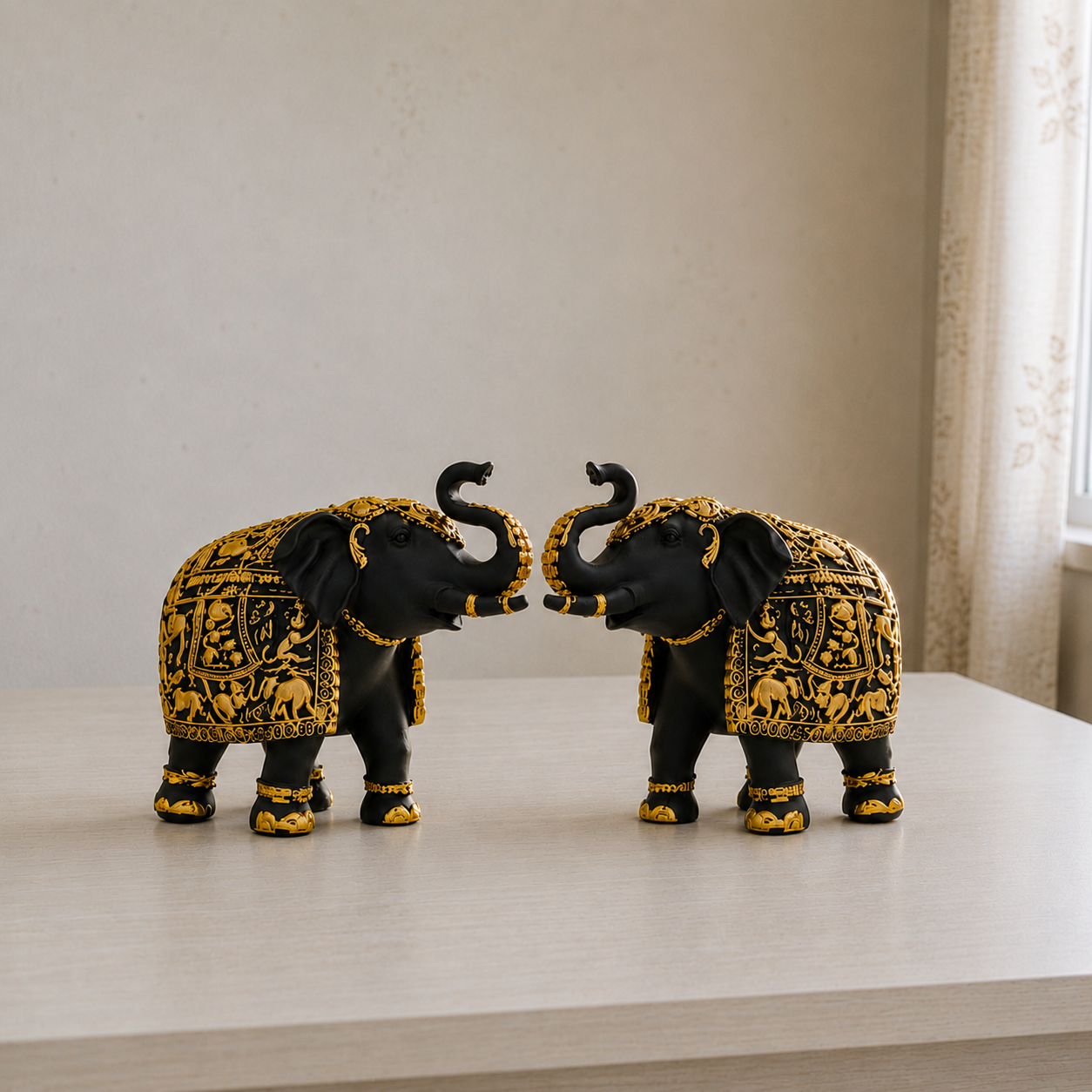
If humidity control in your kitchen-adjacent dining room is a concern, canvas is the safer long-term choice. For accent pieces on a sideboard or console table rather than the wall itself, you can explore Moolwan's antique-style showpiece collection, which pairs well beneath a large canvas without crowding the wall above it.
Ready to find the right size for your dining wall?
Shop Dining Room DecorDining rooms host guests more often than any other room, which makes them the space where the tension between modern and traditional aesthetics is most visible. A single abstract or botanical canvas keeps the room contemporary while leaving room for traditional elements — brass accents, a wooden dining set — to carry the cultural weight instead.
Avoid busy multi-panel photo grids in dining rooms specifically; they compete with table settings and serveware for visual attention during meals. One confident piece, correctly sized under the 70/30 rule above, does more for the room than five small ones.
Written by Ruchi Malhotra, Founder & CEO, Moolwan (Euphorica Ventures Pvt Ltd), Bangalore.
For dining tables under 4 feet, choose a Medium piece (16–21cm depth accents) or a single 45–60cm canvas. Follow the 70% width rule against your table, not your wall, since the table is the visual anchor guests actually see.
Yes, but choose canvas over resin or paper prints. Canvas with a moisture-resistant coating handles direct exposure to cooking steam and heat better than other materials, and won't need replacement within a year.
Related, not identical. Share a color palette or theme across both open-plan spaces, but use a different scale and subject so each room still reads as its own zone.
Center the piece 145–155cm from the floor, and leave 20–25cm of clearance between the top of the table's backsplash or sideboard and the bottom edge of the frame.
Moolwan — Direct From Our Studio
Manufacturer-direct wall art, sized and climate-tested for Indian dining rooms.
Shop Wall Art CollectionQuick View



