
Which showpiece is lucky as per Vastu?
Vastu Shastra assigns an energy function to every direction in your home. The right showpiece in the right zone does not just look good — it aligns your space with prosperity, health, and stability. At Moolwan, we help design-conscious Indian homeowners find showpieces that are both aesthetically modern and Vastu-intentional, without having to choose between the two.
The 6 Luckiest Showpieces as per Vastu — and Where to Place Each One
Vastu's placement logic is grounded in the Panchabhuta (five elements) and Ashtadisha (eight directions). Each direction has a ruling element and deity; placing a showpiece aligned to that element amplifies the energy of that zone. Here are the six most auspicious showpieces for Indian homes, with their correct placement rules:
1. Laughing Buddha — North-East Zone, Main Entrance Level
The Laughing Buddha is the most universally auspicious Vastu showpiece for Indian living rooms. Place it at the main entrance, facing inward — toward the interior — at eye level or above. According to Vastu, the north-east zone is governed by the water element and Kuber (deity of wealth), making it the ideal sector for this symbol of abundance and happiness. Never place the Laughing Buddha on the floor, in a bedroom, or facing outward toward the door.
2. Lord Ganesha — East Wall or Puja Room Entrance
Lord Ganesha is placed at the entrance of the home or on the east-facing wall of the puja room — east is the direction of the rising sun and new beginnings. A seated Ganesha is preferred for home interiors; the dancing form (Nritta Ganapati) suits creative or studio spaces. Keep the idol above floor level at all times. Never position Ganesha in a bathroom or directly opposite a toilet wall.
3. Tortoise (Kachua) — North or North-East
The tortoise symbolises longevity, protection, and financial stability. Place it in the north or north-east of your living room — the zone that Vastu associates with the water element and Kuber's energy. A crystal or resin tortoise facing north draws career and financial growth; a metal-toned one placed in the north-west supports social connections and helpful relationships. Keep it on a clean, raised surface — never on bare floor.
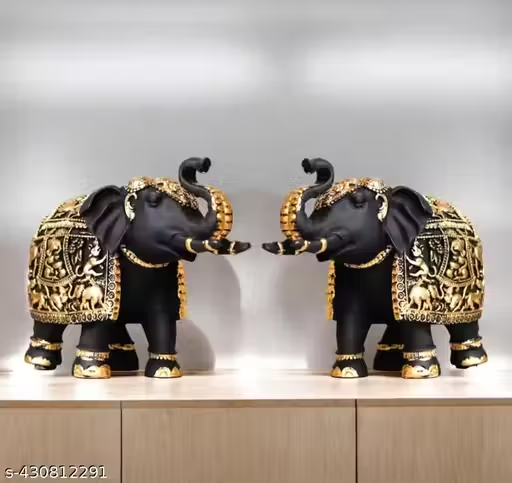
4. Elephant with Raised Trunk — East Wall or Main Entrance
An elephant with its trunk raised upward is a Vastu symbol for strength, fortune, and protection. Place it at the main door (facing inward, trunk toward the room) or on the east wall of the living room. A pair of elephants flanking an entrance is considered doubly protective. A downward trunk represents grounding and fertility and is also acceptable — but the upward trunk is Vastu's general recommendation for prosperity and forward momentum.
5. Seven Running Horses — South Wall
A group of seven running horses symbolises speed, career success, and unstoppable momentum. Vastu specifies placement on the south wall — the zone governed by Yama and associated with ambition, discipline, and professional growth. The horses must always be running toward the interior of the room, never toward a door or window leading outward, as outward-facing movement is read as energy leaving the home.
6. Fish Pair — North or North-East
A pair of fish represents continuous flow, abundance, and renewal. Place a fish showpiece in the north or north-east zone — directly aligned with the water element's energy sector. Avoid placing fish décor in the south or south-west zones, which are governed by fire and earth respectively; opposing elements create energy imbalance rather than activation.
Looking for Vastu-aligned showpieces that also complement a modern Indian interior? Browse Moolwan's showpiece collection for Indian living rooms — starting ₹150, trusted by 3,000+ customers, with free shipping and COD available across India.
Vastu Lucky Showpieces: Placement Reference Table
Use the table below as your quick Vastu placement reference before deciding where to position your next showpiece. Each row maps a symbol to its correct direction, ruling element, the life area it activates, and the ideal material.
| Showpiece | Vastu Direction | Ruling Element | Life Area Activated | Ideal Material |
|---|---|---|---|---|
| Laughing Buddha | North-East / Entrance | Water | Wealth, happiness | Ceramic, resin |
| Lord Ganesha | East / Puja room | Earth | New beginnings, obstacle removal | Ceramic, brass-finish resin |
| Tortoise | North or North-East | Water | Longevity, financial stability | Crystal, resin, ceramic |
| Elephant (trunk up) | East or Entrance | Earth | Strength, protection, fortune | Ceramic, resin |
| Seven Running Horses | South | Fire | Career success, momentum | Resin, metal-finish resin |
| Fish Pair | North or North-East | Water | Abundance, prosperity flow | Ceramic, resin |
Does the Material of a Vastu Showpiece Actually Matter?
Yes — material carries elemental weight in Vastu. Each material maps to one of the Panchabhuta elements, and choosing a mismatched material can dilute or contradict the zone's energy. Here is what to know before you buy:
- Ceramic showpieces carry Prithvi (earth) energy — ideal for south-west (stability), east (beginnings), and puja zones. Moolwan's ceramic showpieces are made with 92% clay composition, heat-resistant to 60°C, and humidity-tolerant up to 85% RH — critical in Indian cities like Mumbai, Chennai, or Kolkata where monsoon humidity routinely spikes past 70%.
- Resin showpieces are versatile across all indoor zones. Moolwan uses 94% purity epoxy resin with 3H pencil hardness (scratch-resistant) and a 3+ year indoor lifespan. The material holds fine sculptural detail well — essential for Ganesha and deity figurines where facial expression and mudra accuracy matter.
- Crystal and glass are ideal for north and north-east water zones — they amplify the reflective, fluid quality of the element.
- Avoid plastic entirely for Vastu purposes. Plastic is a synthetic, petroleum-derived material with no elemental classification in Vastu texts and is considered energetically inert.
Size also governs energy presence. Moolwan's size guidance: small showpieces (10–16cm) suit desks, bathroom shelves, and narrow wall niches; medium (16–21cm) work best for showcase cabinets and coffee tables; large (25–34cm) are focal-point pieces for a puja niche or a dedicated shelf altar. Explore Moolwan's modern home décor range for showpieces sized and engineered for Indian interiors — including climate-tested materials for India's heat, humidity, and dust.
What Vastu Says You Must Never Place in Your Living Room
Vastu is as much about what to remove as what to add. The following showpiece types are considered inauspicious and should be cleared from your living room regardless of their aesthetic appeal:
- Broken or chipped idols — any crack disrupts energy flow. Replace them immediately; do not keep them out of sentiment.
- War, battle, or violent imagery — paintings or showpieces depicting weapons, armies, or predator animals attacking prey create aggressive energy in a home space.
- Single bird figures (especially lone cranes or swans) — solitary birds represent loneliness in Vastu. Always keep birds in pairs.
- Sinking ship or stormy water imagery — symbolises loss and instability. Replace with calm water, fish, or a flowing river motif.
- Idols placed on the floor or facing outward toward the main door — divine and auspicious energy should always face inward, toward the occupants.
- Cactus or thorny plant forms in showpiece décor — even as a decorative object, thorns represent obstruction in Vastu's symbolic language.
The goal is a home that holds energy rather than disperses it. Vastu-forward Indian homes are not cluttered altars — they are intentional, curated spaces where every object earns its place. If you are re-evaluating your living room's current décor, start by removing any of the above before adding anything new. Then explore Moolwan's curated décor collection for showpieces, statues, and wall hangings that sit within Vastu principles without looking traditional or dated.
Frequently Asked Questions
Which direction should the Laughing Buddha face in the living room?
The Laughing Buddha should face inward — toward the interior of the room — when placed at or near the main entrance. If positioned on a living room shelf, orient it east or north-east. Never face the Laughing Buddha toward the main door (outward), as Vastu considers this to direct positive energy away from the home rather than into it.
Is the tortoise showpiece lucky for all homes, or only certain directions?
The tortoise is considered universally auspicious in Vastu, with no restriction by home type or building orientation. Placement, not the building itself, determines its effectiveness. A resin or crystal tortoise placed in the north zone, facing north, is most consistently recommended for strengthening financial stability and career growth across all home layouts.
Can I keep a Ganesha showpiece in the bedroom?
Most Vastu and Hindu religious guidelines advise against deity idols in the bedroom, particularly where the occupant's feet may point toward the idol during sleep. If the bedroom has a dedicated east-facing puja corner or niche, a small Ganesha at eye level is acceptable. For general use, the living room entrance or east wall is the correct placement.
What is the best material for Vastu showpieces — ceramic or resin?
Ceramic carries natural earth (Prithvi) energy and is the preferred material for Vastu- active zones like south-west and east. Resin is acceptable across all zones — Moolwan's resin showpieces use 94% purity epoxy resin with 3H pencil hardness, making them durable through India's heat, humidity, and seasonal temperature swings. Both materials significantly outperform plastic for Vastu purposes.
How many showpieces should I keep in the living room as per Vastu?
Vastu recommends between 7 and 9 intentional objects in the living room — more creates energy congestion; fewer leaves zones under-activated. Place one Vastu-specific piece per active zone (north, east, south, entrance) and keep the Brahmasthan — the geometric centre of the room — completely clear of all heavy objects and showpieces.
Bring Vastu-aligned beauty into your home — without compromising on design.
Shop Vastu Showpieces at Moolwan →
Starting ₹150 · Trusted by 3,000+ Indian homeowners · Free Shipping · COD Available


